Frequent tray-batch cracker bakers
If you prepare several lunchboxes at a time, heat distribution across trays, usable shelf space and controls you can set consistently matter more than a long list of programmes.


For regular tray baking, start with a fan-assisted single built-in oven if it fits your existing housing. A double oven makes more sense when you often need a separate cavity for another dish; a freestanding cooker suits a replacement that also needs a hob. Whichever format you choose, check the exact model’s fit, connection requirements and evidence of even heating rather than assuming its cooking-mode name guarantees evenly baked crackers.
If you prepare several lunchboxes at a time, heat distribution across trays, usable shelf space and controls you can set consistently matter more than a long list of programmes.
If an oven must fit existing cabinetry, or you are replacing a cooker and hob together, settle the appliance format, opening dimensions and connection requirements before comparing cooking features.
If you bake crackers occasionally but dislike cleaning residue from the cavity and door, compare the cleaning method and removable parts of the exact models you are considering.
Choose the oven format around the space and cooking tasks you actually have, then compare how individual models handle tray baking and cleaning.
Consider it when: You have suitable built-in housing and mainly bake cracker trays in one oven cavity.
Trade-off: One cavity cannot cook another dish independently at a different temperature; the opening and electrical connection must suit the model.
Consider it when: You regularly bake crackers alongside food that needs its own oven space or temperature.
Trade-off: It needs suitable taller housing, and the extra cavity offers little for cracker-only baking.
Consider it when: You need to replace both oven and hob rather than fit an oven into cabinetry.
Trade-off: The whole cooker footprint, hob and fitting arrangements become part of the decision.
| Concern | What to check | Who this matters to |
|---|---|---|
| Even tray baking | Look for a fan or hot-air mode, then compare independent heat-distribution and temperature-accuracy results for the exact model where available. | If I bake thin crackers across a tray or on several shelves, I want batches that do not need constant adjustments to compensate for uneven browning. Around 45% of consumers would put baking consistency first. |
| Kitchen fit and cooking space | Check the installation opening and connection requirements; decide whether you need a separate cavity or a cooker with a hob. | When replacing an appliance, I need it to fit my kitchen, and I may need to cook another dish while the crackers bake. Roughly 33% of consumers would prioritise fit and cooking flexibility. |
| Cleaning effort | Compare the exact model’s cleaning system, removable door parts and care instructions. | If seasoned or oily batches leave residue, I want to know what cleaning the cavity and door will involve. About 22% of consumers would make upkeep their primary concern. |
Bosch and Beko describe airflow features on particular ovens, but a feature name alone cannot establish how evenly another model will brown a tray. Which? assesses heat distribution and control accuracy when testing built-in ovens.
Use a fan or hot-air mode as a starting criterion, then look for independent results for the exact oven if consistent batches are important to you.
Built-in models described as 60 cm ovens can have different installation dimensions. The cited Bosch and Neff models also specify connection by an electrician.
Measure the cabinet opening and check the exact model’s installation instructions and electrical requirements before arranging fitting.
An incompatible opening or connection can delay installation and may require changes to the planned fitting.
Coatings, steam-assisted cleaning and removable door glass address different cleaning tasks; their availability varies between models.
Check what the chosen oven’s system does and what its manual asks you to do before and after cleaning.
A freestanding cooker replaces more than a built-in oven when the hob is part of the change. Delivery, fitting and removal arrangements can affect how the replacement is carried out.
Confirm which services are available for your appliance and address before committing to a cooker.
These brands provide examples of the oven formats and features discussed here; check the specification of the particular model rather than applying a feature to every oven from the brand.
A reference for 60 cm-class built-in single ovens with hot-air cooking; the HQA534BS3B is a built-in example.
A reference for built-in single fan ovens, including the 60 cm BBIF22100.
A reference for comparing a feature-rich built-in single oven with a built-in double-oven format.
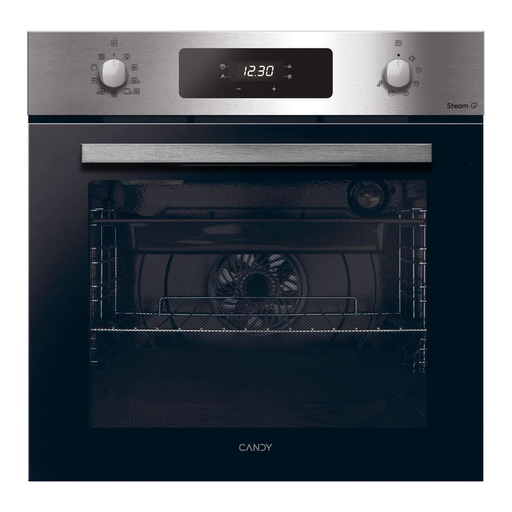
These built-in single ovens are relevant if you are keeping a separate hob and choosing an oven for tray baking. The selection includes electric ovens and one gas model; confirm the available supply and installation requirements before narrowing your choice.
 No image available
Consider this electric built-in model if cleaning after cracker batches is a priority. Pyrolytic cleaning is specified in its product name; check the manual for preparation and ventilation requirements, and confirm the cabinet opening before ordering.
 No image available
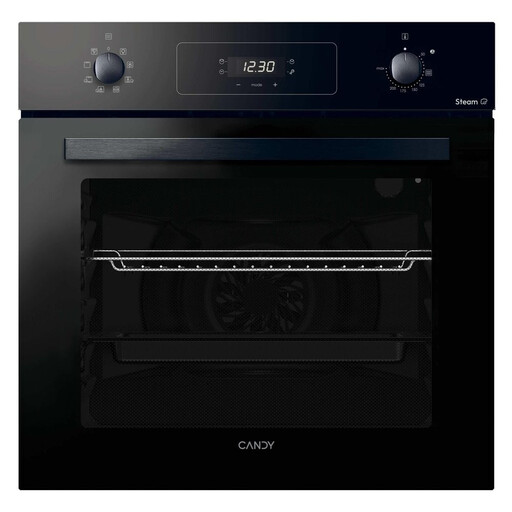
Consider this electric built-in oven if you want a stated cavity volume while comparing tray-baking options. Its 65L figure does not establish usable tray dimensions; confirm those and the cabinet opening. Check the exact electrical connection arrangement before installation, as the product information gives conflicting descriptions.
 No image available
Consider this model if you are replacing a built-in oven and want to assess baking on more than one shelf. Check tray clearance and model-specific evidence of heat distribution rather than treating the number of cooking levels as a result. Its fitting information calls for hardwiring by a qualified electrician; confirm the cabinet opening and electrical supply.
 No image available
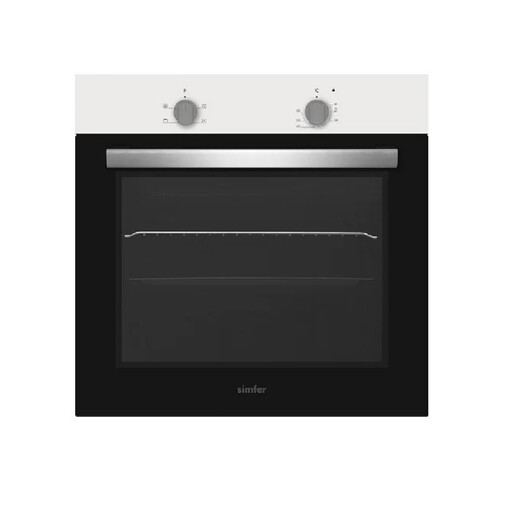
Consider this model for a built-in replacement where a fan setting for cracker trays matters. Check the actual tray fit and cabinet cut-out in the installation documentation; an oven’s exterior or packaging dimensions are not a substitute for the required opening.
 No image available
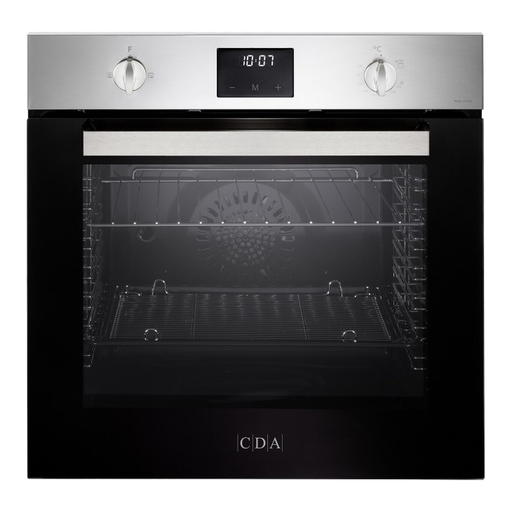
Consider this gas model for built-in fan-oven baking only after confirming that it suits your kitchen’s gas supply. Check the stated fuel and any conversion requirements, along with the installation opening and cleaning instructions, before ordering.
A fan or hot-air mode is a useful starting point for thin crackers spread across a tray, but it does not guarantee even browning. If repeatable batches matter to you, compare independent heat-distribution and temperature-accuracy results for the exact oven as well as its stated cooking modes.
Not for cracker baking alone. A double oven is more relevant if you regularly need another dish cooking separately or at a different temperature; otherwise, a compatible single fan oven is the more direct format to investigate.
Check the exact model’s installation opening, ventilation instructions and electrical connection requirements against your kitchen before arranging fitting. A nominal 60 cm description alone does not establish that an oven will fit an existing cabinet.
Plain, fully cooled dry crackers are different from perishable lunchbox foods. If the lunchbox also contains dairy, meat or other foods that spoil quickly, follow appropriate cold-storage guidance for those foods; the crackers do not change their storage needs.