
24/7 Customer Support

Free returns

Same-day & Next-day Delivery

Quality Guaranteed

Unlock Your Welcome Offers: FREE Delivery | Up to 80% OFF | Free 30-day JoyPlus trial
Download the APP
Navigating the supermarket aisle for peanut butter can feel surprisingly complex. What was once a simple choice between smooth and crunchy has become a maze of labels promising "natural" ingredients, "high protein" benefits and "no added" this or that. As a Product Recommendation Officer at Joybuy, my role is to help you see past the marketing clutter and choose a product that genuinely fits your needs, whether for a post-gym snack, a family breakfast or a culinary creation.
Many shoppers fall into a couple of common traps. Firstly, the "healthy spread" illusion, where jars are packed with hidden sugars and palm oil, undermining your health goals. Secondly, the ambiguity of the word "natural," which doesn't always mean what you think. A truly natural peanut butter should have a very short ingredients list, but many use the term loosely while still including unnecessary additives. Let's break down what really matters.
To make a confident choice, focus on these key parameters. They are the non-negotiable details that separate a quality spread from a jar of disappointment.
The most reliable indicator of quality is the ingredients list. For a truly natural peanut butter, the list should be incredibly short: ideally, just peanuts. Many of the finest options contain 100% peanuts butter, sometimes with a pinch of salt for flavour.
Be wary of products with a long list of ingredients. The two main additions to look out for are:
This is often down to personal preference, but the texture can affect how you use the peanut butter.
The roast of the peanuts also plays a role. A light roast can yield a milder, sweeter flavour, while a darker roast provides a deeper, more intense nuttiness.
Peanut butter is a popular high protein spread, particularly among fitness enthusiasts. To verify this, check the "per 100g" column on the nutritional information panel. A quality peanut butter typically offers between 24g and 27g of protein per 100g. Compare this with the sugar content; a product with high protein but also high sugar may not be the best choice for health-focused diets. Brands like Meridian peanut butter and Pip & Nut are well-regarded for their focus on simple, high-protein formulations.
Based on these criteria, here are a few options tailored to different needs and lifestyles.
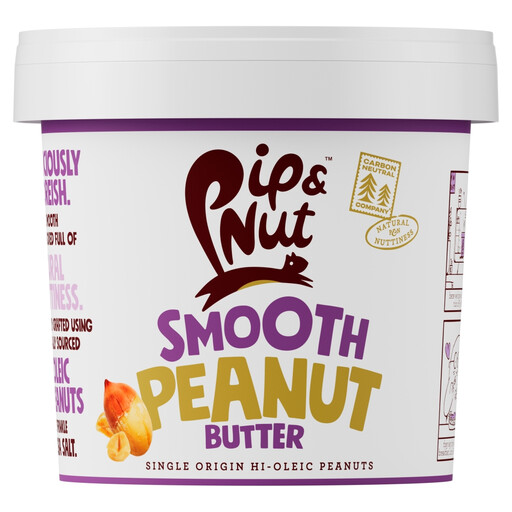
Why This Fits Their Persona: For those who use peanut butter daily for fuel, this 1kg peanut butter tub offers excellent value. It's a go-to for adding a protein boost to shakes, porridge or post-workout snacks without compromising on quality.
It sidesteps the "healthy halo" trap by having just two ingredients: Argentinian hi-oleic peanuts (99.5%) and sea salt. There is no palm oil and no added sugar.
High protein content at 27g per 100g. The use of hi-oleic peanuts provides a higher level of monounsaturated fats compared to standard peanuts.
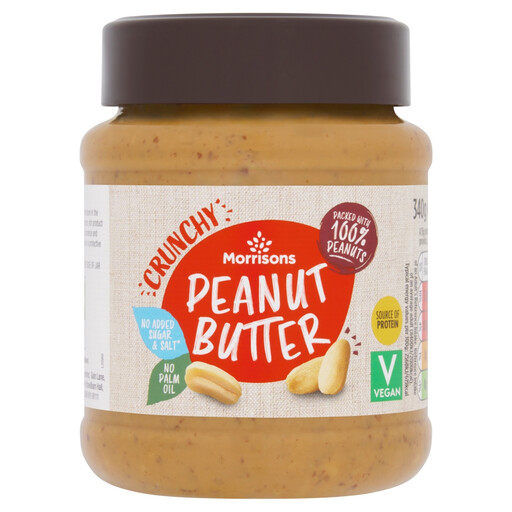
Why This Fits Their Persona: This is an excellent choice for family breakfasts and lunchboxes. It provides a wholesome, satisfying spread that children and adults can enjoy, without the extra cost of boutique branding.
It completely avoids the "misleadingly natural" trap with an ingredient list that contains only one item: 100% Peanuts. There is nothing else to decipher.
Pure and simple, offering great value for a crunchy peanut butter with no additives. It is versatile for spreading, baking or adding to savoury dishes.

Why This Fits Their Persona: This is for the home cook who sees peanut butter as an ingredient, not just a spread. It's designed for creating authentic Asian dishes, from hot pot dipping sauces to dressings for cold noodles.
This product is purpose-built and transparent about its composition. It avoids the trap of being a generic spread by clearly positioning itself as a culinary paste for specific dishes.
The blend of 80% peanut butter and 20% sesame paste creates a rich, aromatic and complex flavour profile that is difficult to replicate at home. It's a convenient shortcut to authentic taste.
We have compiled a complete, real-time list of products that fully satisfy these strict selection criteria and UK safety regulations.
This is completely normal and a good sign. In peanut butter made without added emulsifiers like palm oil, the natural oils from the peanuts will separate and rise to the top over time. Simply stir the oil back into the peanut butter until it reaches a smooth, consistent texture again.
When comparing products from the same brand made with the same ingredients, the nutritional difference between smooth and crunchy is negligible. They typically have almost identical protein, fat and carbohydrate content. The choice between them should be based on your texture preference and intended use.
For most peanut butters, including natural varieties, storing them in a cool, dry place like a pantry is sufficient. You do not need to refrigerate them. Some people prefer to refrigerate natural peanut butter after stirring to slow down oil separation and create a thicker consistency. Always check the jar's label for specific storage instructions and consume within the recommended timeframe after opening, which is usually around three months.