
24/7 Customer Support

Free returns

Same-day & Next-day Delivery

Quality Guaranteed

Unlock Your Welcome Offers: FREE Delivery | Up to 80% OFF | Free 30-day JoyPlus trial
Download the APP
Tired of staring at the same four walls but hesitant to commit to the cost and effort of traditional decorating? Whether you are a renter looking for a damage-free update or a homeowner wanting a quick style refresh, peel and stick wallpaper offers a brilliant solution. This versatile material allows you to create a stunning feature wall, upcycle old furniture or add a splash of personality to any room without the need for messy paste or professional help.
As the Joybuy Product Recommendation Officer, my role is to help you navigate the options. This guide will walk you through key considerations for choosing the right design and highlight a few of our top recommendations to help you start your next DIY project with confidence.
Before you fall in love with a pattern, a little preparation goes a long way. Keep these practical points in mind to ensure a smooth application and a finish you will be proud of.
The success of any removable wallpaper project lies in the surface it is applied to. For the best results, your walls or furniture should be smooth, clean and dry. Most vinyl wall covering products adhere poorly to textured, dusty or damp surfaces. A quick wipe-down and ensuring the wall is fully dry is a non-negotiable first step. For freshly painted walls, it is advisable to wait at least three to four weeks for the paint to fully cure before application.
Avoid the frustration of running out of wallpaper mid-project. Measure the height and width of your wall to calculate the total square footage. Always check the coverage area of a single roll and purchase a little extra—around 10%—to account for pattern matching and any trimming mistakes. Many products feature a grid on the backing paper, which is incredibly helpful for achieving straight, precise cuts.
The pattern you choose can dramatically alter the feel of a room. Large-scale botanical wallpaper can make a bold statement on an accent wall, while smaller, more subtle patterns can add texture without overwhelming a space. Most peel and stick options are made from PVC vinyl, a durable material that is often wipeable, making it a practical choice for hallways, living areas and even as a DIY wallpaper for furniture projects like cabinet doors or drawer fronts.
Here are a few standout options that combine style with practical, user-friendly features.
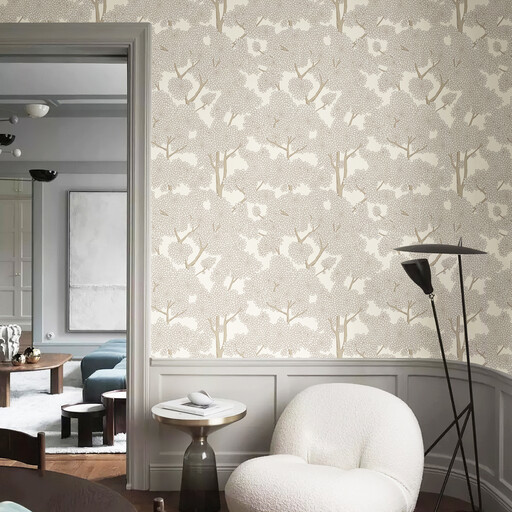
Why It Stands Out: The elegant grey botanical branch print offers a serene and sophisticated aesthetic. Its soft, neutral design is incredibly versatile, complementing Scandinavian, modern and minimalist interiors without demanding all the attention.
Pros:
Who is it for? This is an excellent choice for anyone looking to create a calm and restful atmosphere in a bedroom, living room or home office. Its understated elegance makes it a safe yet stylish pick.
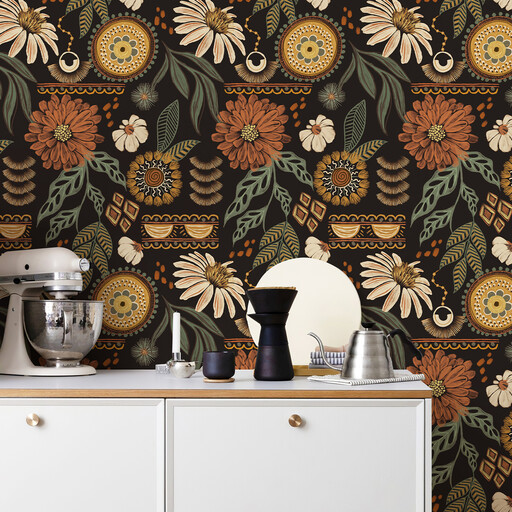
Why It Stands Out: With its deep brown, art-inspired botanical print, this wallpaper brings a warm, artisan feel to a room. The rich colour and intricate design create a sense of depth and character, making it ideal for adding a touch of high-end style to smaller spaces.
Pros:
Who is it for? Perfect for those wanting to make an impact in a small area. Consider it for an entryway, the back of a bookcase or as a stylish backdrop for a television wall.
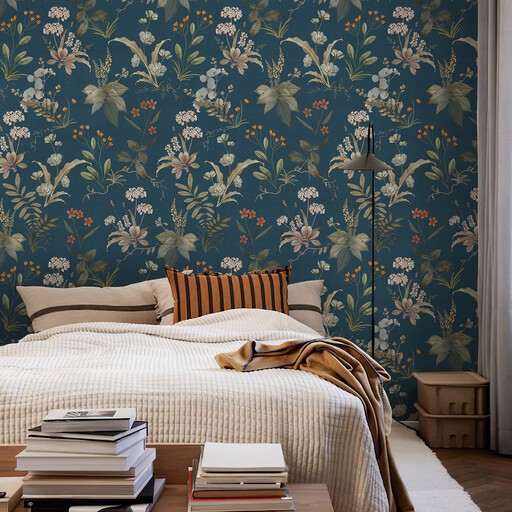
Why It Stands Out: This design is all about making a statement. The dramatic falling flower layout on a dark background adds personality and a touch of luxury. The longer roll length (200 inches) is a significant advantage for creating a full accent wall, as it results in fewer seams for a cleaner, more professional look.
Pros:
Who is it for? This is for the decorator who isn't afraid of colour and pattern. It is an ideal choice for a feature wall behind a sofa, a bed headboard or to bring life to a hallway.
If the deep tones of the Falling Flowers design have sparked your interest, you may wish to explore other styles in this popular colour family. For more inspiration, feel free to browse our curated collection of blue wallpapers.
Yes, one of its main advantages is that it is designed to be removable. As a form of temporary wallpaper for renters, it can typically be peeled off without leaving residue or damaging the surface, provided the wall was in good condition and properly prepared beforehand. For stubborn sections, gently warming the surface with a hairdryer can help loosen the adhesive.
Absolutely. This is a popular and creative way to upcycle tired or dated furniture. You can apply it to any smooth, clean and non-porous surface, such as cabinet doors, drawer fronts, tabletops or shelving units. It is a cost-effective method for a DIY wallpaper for furniture project.
When applied to and removed from a properly prepared and fully cured painted wall, peel and stick wallpaper should not cause damage. However, if the paint was already peeling or if the wall has an older, delicate finish, some lifting may occur. It is always a good idea to test a small, inconspicuous area first if you are concerned.