
24/7 Customer Support

Free returns

Same-day & Next-day Delivery

Quality Guaranteed

Unlock Your Welcome Offers: FREE Delivery | Up to 80% OFF | Free 30-day JoyPlus trial
Download the APP
A good jar of pesto sauce is a kitchen lifesaver, capable of transforming a simple bowl of pasta or a plain sandwich into a flavourful meal in minutes. However, the supermarket aisle is crowded with options, and not all jars are created equal. It's easy to be swayed by appealing labels and promises of "authentic Italian flavour," only to get home and find a sauce that's oily, bland or packed with unexpected ingredients.
As the Joybuy Product Recommendation Officer, my role is to help you see past the marketing and make informed choices. Before you add a jar to your basket, let's look at the common pitfalls that lead to buyer's remorse.
To ensure you're getting a flavourful and well-made sauce, focus on these three key parameters on the product label.
The type of oil used is one of the biggest indicators of quality. Extra virgin olive oil provides a peppery, fruity depth that is central to authentic pesto. Sunflower or rapeseed oils are more neutral and are often used as a cost-saving measure.
Equally important is the percentage of the main ingredient. For a classic basil pesto, look for a high percentage of basil (ideally over 35%). For a red pesto or sun-dried tomato pesto, check the quantity of tomatoes. A higher percentage generally means a more intense and authentic flavour.
The choice of nuts and cheese defines the pesto's character.
Always check the allergens list. Many pestos contain nuts and dairy. If you're looking for an organic pesto, check for official certification from bodies like the Soil Association. For those seeking a kick, a chilli pesto can add exciting heat, but check the ingredients to see if the spice comes from fresh chillies, dried chilli flakes or a blended paste like harissa.
Instead of a generic list, we've matched some standout pesto sauces to the people we believe will enjoy them most.
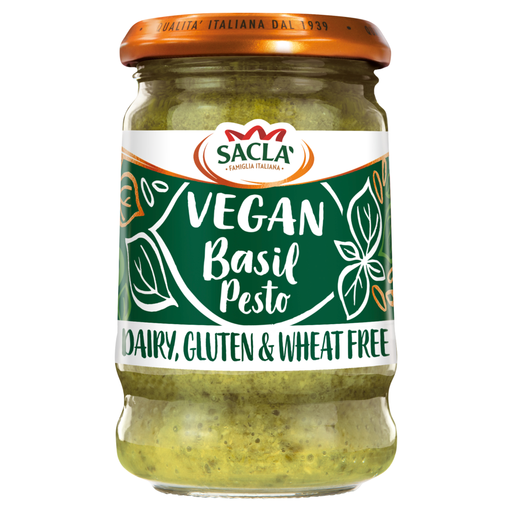
Why This Fits Their Persona: This is an ideal choice for anyone following a plant-based diet or with a dairy intolerance. It delivers a classic basil pesto experience for quick and easy meals like pesto pasta or risotto, without compromising on dietary needs.
It is transparent about its formulation, clearly stating it is a vegan recipe. It avoids the "nut and cheese" trap for vegans by using cashew nuts and natural flavourings to create a savoury taste, rather than pretending to be a traditional cheese-based sauce.
Completely dairy-free and gluten-free. It uses a high percentage of basil (52%) for a vibrant, fresh flavour.
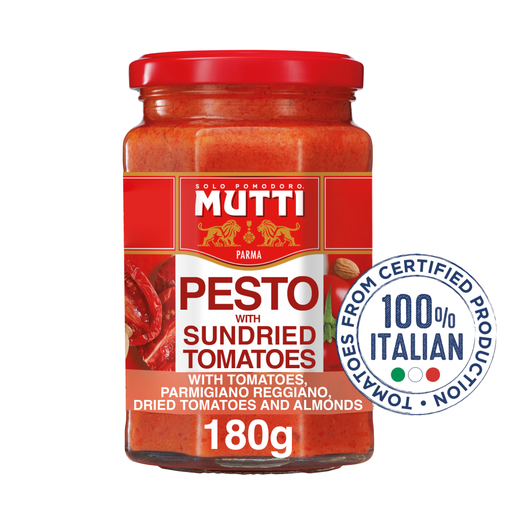
Why This Fits Their Persona: For the home cook who appreciates genuine Italian quality and wants a rich, deep sun-dried tomato flavour. This red pesto is perfect for those who value provenance and high-quality ingredients in their pantry staples.
It sidesteps the "filler" trap by using a very high proportion of tomato purée (59.5%) as its base. It also specifies the use of Parmigiano Reggiano P.D.O. Cheese, a protected ingredient, signalling a commitment to authentic quality.
Made in Parma, Italy, with a rich, tangy flavour profile from a combination of tomato purée and sun-dried tomatoes. The addition of almonds and capers provides a unique, crunchy texture.

Why This Fits Their Persona: This is for the foodie who is bored of standard pesto and wants to add a complex, spicy kick to their meals. It's a versatile ingredient that works as a fiery pasta sauce, a marinade for roasted vegetables or a spread for sandwiches.
It avoids the "Italian misnomer" trap by clearly positioning itself as a fusion product—a chilli pesto with harissa influences. The ingredient list is transparent about its unique blend, including rehydrated paprika, cumin and a hint of rose flavouring.
A unique, chef-inspired flavour profile with a balanced, warming heat. It is also suitable for vegans, using inactive yeast to provide a savoury depth.
We have compiled a complete, real-time list of products that fully satisfy these strict selection criteria and UK safety regulations.
Most manufacturers recommend consuming the pesto within one to two weeks of opening, provided it is kept refrigerated with the lid tightly sealed. Always check the specific product label for guidance. To help it last longer, you can add a thin layer of olive oil on top of the sauce before putting it back in the fridge. This creates a barrier against air and helps preserve its freshness.
Certainly. Pesto is an incredibly versatile ingredient. Beyond being a classic sauce for pesto for pasta, you can use it as a flavourful spread in sandwiches and wraps, as a base for homemade pizza instead of tomato sauce or as a marinade for grilled chicken, fish or roasted vegetables. A spoonful can also be stirred into soups or mixed with mayonnaise to create a delicious dip.
One is not inherently "healthier" than the other; their nutritional profiles simply differ based on their core ingredients. Green basil pesto is typically rich in basil, nuts and olive oil, offering healthy fats and nutrients from the greens. Red pesto derives its character and colour from tomatoes, particularly sun-dried tomatoes, which are a good source of lycopene. The most important factor is the specific formulation of the jar you choose. To make a health-conscious choice, compare the nutritional labels for salt, sugar and saturated fat content.