
24/7 Customer Support

Free returns

Same-day & Next-day Delivery

Quality Guaranteed

Unlock Your Welcome Offers: FREE Delivery | Up to 80% OFF | Free 30-day JoyPlus trial
Download the APP
Shaky, unprofessional-looking video can undermine even the most compelling content. Whether you are a vlogger capturing daily life, a traveller documenting your adventures or simply want smoother videos of family moments, a wobbly camera can be frustrating. The good news is that you no longer need expensive camera equipment to achieve cinematic-quality footage. A modern phone gimbal can transform your smartphone into a powerful filmmaking tool.
Navigating the market for a portable phone stabiliser can be confusing, with countless models boasting different features. This guide is designed to help you understand the key considerations and browse some of our top recommendations for 2026, so you can find the right device to elevate your videography.
Before diving into specific products, it helps to understand what features make a significant difference. Here are a few key points to consider during your search.
The core function of a gimbal is to counteract unwanted movement. A 3-axis smartphone stabiliser is the industry standard for achieving truly smooth video. It works by using motors to correct for movement on three axes: tilt (up and down), pan (left and right) and roll (rotational). This mechanical stabilisation is far more effective than the electronic image stabilisation (EIS) found in most smartphones, especially when you are walking, running or capturing dynamic action shots.
For content creators and travellers, convenience is paramount. Many modern gimbals now come as complete vlogging kits. Look for a foldable, lightweight design that is easy to carry. A gimbal with a tripod and light built-in eliminates the need to carry extra accessories. An integrated extension rod is also a valuable feature, allowing you to capture wide-angle selfies or unique low-angle shots without additional gear.
Today’s gimbals are more than just stabilisers. Many incorporate an AI tracking gimbal system that can automatically follow a subject, keeping them perfectly in frame. This is incredibly useful for solo creators filming themselves. Before purchasing, always check the gimbal's compatibility with your specific smartphone model, whether it's a gimbal for iPhone or an Android device. Pay attention to the supported phone weight and dimensions, especially if you use a heavy case or add-on lenses.
Here are a few phone gimbals that offer a compelling combination of features, performance and convenience for different types of users.
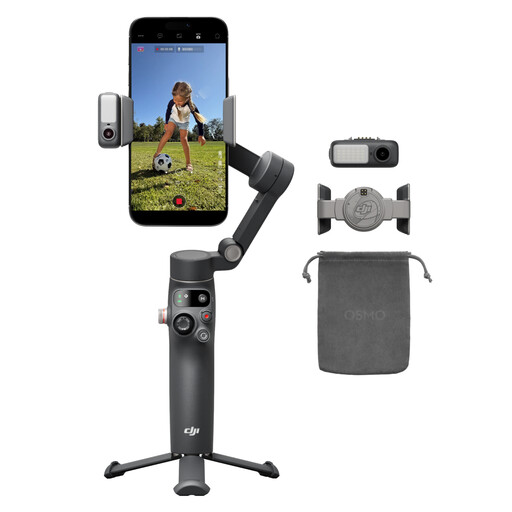
Why It Stands Out: The DJI Osmo Mobile 8 is an all-in-one solution designed for serious content creators. Its standout feature is the native tracking system that works in tandem with integrated audio reception and lighting. This means you can stay in focus, well-lit and capture clear sound without complex setups. The seamless 360° pan rotation allows for creative, immersive shots.
Pros:
Who is it for? This model is well-suited for vloggers and content creators who need a reliable, feature-rich tool that streamlines their workflow. The combination of tracking, lighting and audio support makes it a powerful device for producing high-quality content on the go.
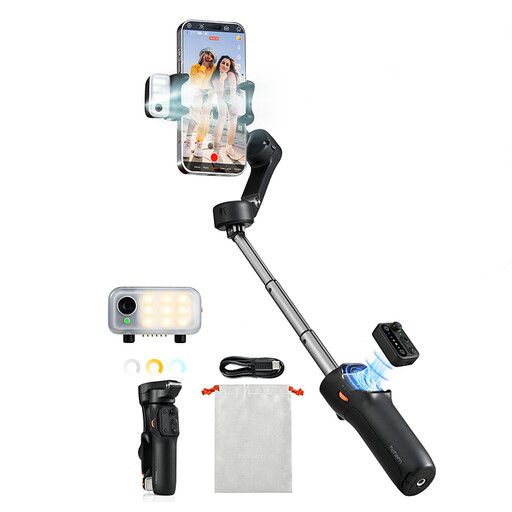
Why It Stands Out: The hohem gimbal offers impressive functionality with a focus on ease of use. Its magnetic AI tracking module works without needing an app or Bluetooth connection and can be controlled with simple hand gestures. The detachable remote control is another practical feature, allowing you to operate the gimbal from a distance when it is mounted on its tripod.
Pros:
Who is it for? This is a great option for beginners and travel enthusiasts looking for a straightforward and highly portable vlogging gimbal. The app-free tracking and detachable remote offer a level of convenience that simplifies the filming process.
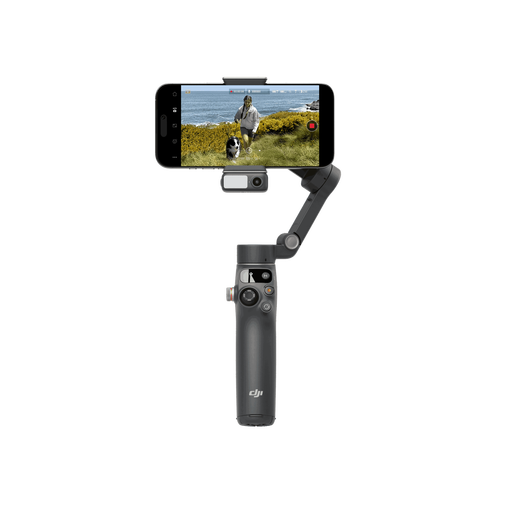
Why It Stands Out: The DJI Osmo Mobile 7P focuses on a quick and seamless user experience. Unfolding the gimbal automatically powers it on and a magnetic clamp makes attaching your phone effortless. For users of the DJI Mimo app, it offers helpful features like ShotGuides and one-tap editing templates to help you create polished videos quickly.
Pros:
Who is it for? This gimbal is ideal for users who value speed and simplicity. If you want to capture spontaneous moments without fumbling with settings, the quick-launch and easy-mount design make it an excellent choice for daily vlogging and travel.
While these all-in-one gimbals offer fantastic versatility, you may have a different setup in mind or require more specialised equipment. If you are looking for standalone tripods or longer extension rods to complement your gear, you can explore a wider range of options to build your perfect filming kit.
1. Is a phone gimbal worth it for casual use? Absolutely. While professionals rely on them, a gimbal can make a huge difference for casual videos too. If you enjoy recording your children's sports matches, pets playing in the garden or holiday memories, a gimbal will provide that smooth, polished look that makes your videos much more enjoyable to watch.
2. What is the difference between 2-axis and 3-axis stabilisation? A 2-axis gimbal stabilises tilt (up/down) and roll (rotation), which helps but does not correct for the side-to-side "wobble" you get when walking. A 3-axis gimbal adds stabilisation for the pan axis, correcting all three types of movement to produce significantly smoother, more professional-looking footage. For dynamic video, a 3-axis model is highly recommended.
3. Can I use the same gimbal for my iPhone and an Android phone? Most modern gimbals are designed to be compatible with a wide range of both iPhone and Android devices. The key is to check the gimbal's payload capacity (the maximum weight it can support) and the dimensions of its phone clamp. Always verify that your specific phone model, including its case, fits within the manufacturer's specifications before purchasing.