
24/7 全天候客户支持

免费退货

当日/次日达

品质保障

开启新人专享福利: 全场免邮 | 低至 2 折 | 免费试用 30 天 JoyPlus 会员
下载 Joybuy
The right filament is the foundation of any successful 3D print. Yet, many makers, from beginners to seasoned professionals, know the frustration of a print failing hours into the job due to inconsistent material. A poor-quality PLA filament can lead to clogs, weak layer adhesion and a finish that undermines the quality of your design.
As the Joybuy Product Recommendation Officer, my role is to help you navigate the vast market of 3D printing materials. This guide cuts through the clutter, focusing on the practical features that deliver reliable performance. We will explore what to look for in a quality filament and highlight a few standout options to consider for your upcoming projects.
Selecting a 3D printer filament goes beyond just picking a colour. To ensure consistent and high-quality results, consider these key factors.
One of the most critical specifications for any filament is its dimensional accuracy. For printers using 1.75mm PLA, the diameter must be consistent along the entire spool. Look for filaments with a tight tolerance, such as ±0.02mm. A filament that varies in thickness can cause feeding issues and nozzle jams, resulting in a failed print and wasted material. A consistent diameter is a hallmark of a reliable, clog-free filament.
The surface finish of your filament has a significant impact on the final appearance of your model. While standard PLA often has a glossy sheen, a matte PLA filament offers a sophisticated, non-reflective surface. This type of finish is excellent at hiding layer lines, giving your prints a more professional and refined look straight off the build plate. It is particularly well-suited for artistic models, architectural mock-ups and prototypes where a premium aesthetic is desired.
Most filaments come on a standard 1kg PLA spool, but the spool itself is worth considering. Tangle-free winding is essential for preventing snags during long prints. Additionally, as sustainability becomes more important, many brands are now offering spools made from recycled cardboard. This makes for a more eco-friendly 3D printing material choice, as the cardboard spool can be recycled or will degrade much faster than a traditional plastic one.
Based on features that promote reliability and print quality, here are a few recommendations from our catalogue.
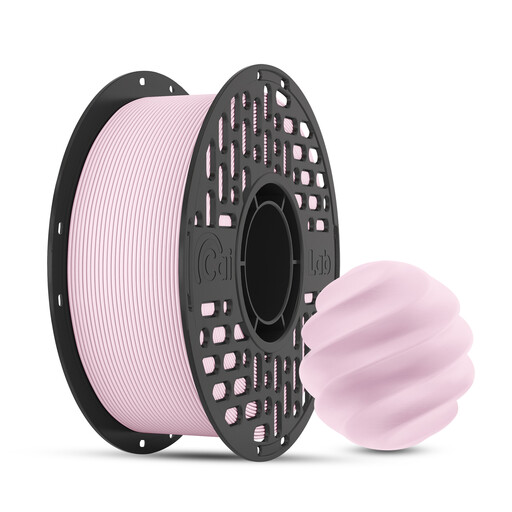
Why It Stands Out
This filament from CaiLab is designed for makers who prioritise aesthetics. Its standout feature is the premium matte finish, which provides a soft, non-glossy surface that minimises the plastic look and feel. The Maillard colour series, including this Sakura Pink, offers a unique artistic palette for creating visually striking models.
Pros
Who is it for? This filament is an excellent choice for hobbyists and artists creating decorative objects, character models and other prints where a high-quality, tactile finish is paramount.
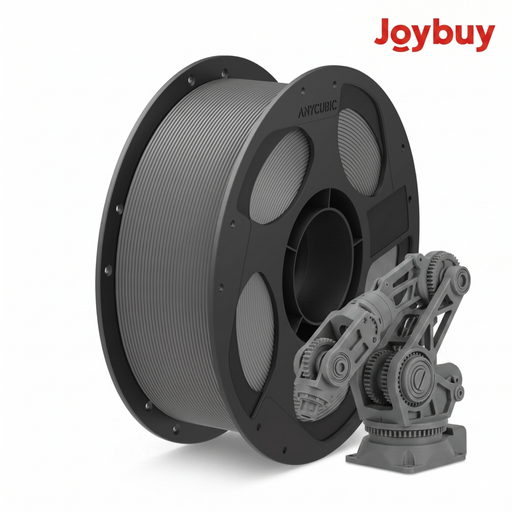
Why It Stands Out
This collaboration between JOYBUY and ANYCUBIC focuses on pure performance and reliability. Its key strength lies in its exceptionally tight dimensional tolerance of ±0.02mm, which ensures remarkably smooth and consistent extrusion. The subtle textured matte finish of the grey colour is specifically designed to hide imperfections and layer lines.
Pros
Who is it for? Ideal for both beginners and experienced makers who need a dependable, all-purpose filament for functional prototypes, mechanical parts and general DIY projects where precision is key.
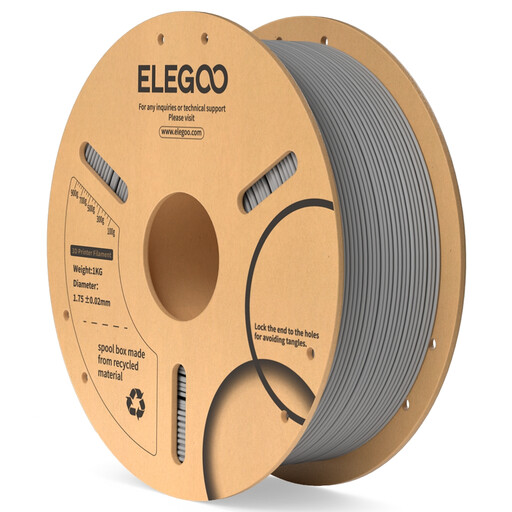
Why It Stands Out
Elegoo's PLA filament addresses two common printing frustrations: tangles and environmental impact. The filament is neatly wound on an eco-friendly cardboard spool, which is fully mechanically wound and manually inspected to ensure it is tangle-free. This focus on the user experience makes it a very practical choice for long or complex prints.
Pros
Who is it for? This is a great option for environmentally conscious makers and anyone who has experienced the headache of a tangled spool ruining a print. Its reliability makes it suitable for all types of FDM printing projects.
These recommendations represent just a small sample of the materials available. Every project has unique requirements, and the perfect filament often comes down to finding the right combination of colour, finish and material properties.
If you are searching for a different colour or a specialised type of PLA, we invite you to browse our complete collection.
Explore our full range of 3D printer PLA filament
What is the difference between standard PLA and matte PLA filament? The primary difference is aesthetic. Standard PLA typically has a glossy, slightly reflective surface, which can highlight layer lines. A matte PLA filament has a non-reflective, textured finish that diffuses light, doing a much better job of hiding those lines. This gives the final object a more uniform and professional appearance.
Is PLA filament an eco-friendly 3D printing material? Compared to petroleum-based plastics like ABS, PLA is considered a more eco-friendly 3D printing material. It is a bioplastic derived from renewable resources such as corn starch or sugar cane. Under the right conditions in an industrial composting facility, PLA is biodegradable. Choosing filaments on cardboard spools further reduces the environmental footprint of your printing hobby.
How do I prevent my 1.75mm PLA filament from clogging? Clogging is often caused by three main factors. First, choose a high-quality filament with excellent dimensional accuracy (e.g., a tolerance of ±0.02mm). Second, store your filament properly in a cool, dry place, ideally in a sealed bag with desiccant, to prevent it from absorbing moisture. Third, ensure your printer's temperature settings are correctly calibrated for the specific filament you are using, as printing too hot or too cold can cause issues.