
24/7 Customer Support

Free returns

Same-day & Next-day Delivery

Quality Guaranteed

Unlock Your Welcome Offers: FREE Delivery | Up to 80% OFF | Free 30-day JoyPlus trial
Download the APP
Tired of arriving at your destination only to find soggy sandwiches and lukewarm drinks floating in a pool of melted ice? A traditional cooler box has its limits, especially on long journeys or during a proper British heatwave. For reliable, ice-free cooling on the road, a portable car fridge is a game-changer.
Whether you're a camper, a long-haul driver or simply enjoy extended road trips, having a mobile refrigerator ensures your food stays fresh and your beverages remain perfectly chilled. As a Joybuy Product Recommendation Officer, my role is to help you navigate the options. This guide cuts through the clutter to focus on the practical features that matter, helping you find a unit that fits your vehicle and your adventures.
Before diving into specific models, it's helpful to understand the core features that separate a basic cooler from a high-performance mobile fridge.
The most significant factor is the cooling technology. Many products marketed as an electric cooler box use a thermoelectric system, which can only cool to a certain temperature below the ambient air. On a hot day, this might not be enough to keep your items truly cold.
In contrast, a 12v compressor cooler functions like your kitchen refrigerator. It uses a refrigerant and a compressor to actively lower the internal temperature, allowing it to maintain a set temperature—even freezing—regardless of how warm it is outside. For anyone serious about food safety and properly cold drinks, a compressor model is the clear choice.
Consider how you'll use your fridge. Capacity is measured in litres, and choosing the right size is crucial. A compact 12-15 litre unit is ideal for solo trips or keeping lunch cool, while a larger 40-50 litre camping fridge or motorhome refrigerator is better suited for family holidays or long-haul trucking.
Also, check the power options. Most units run on a vehicle's 12V DC outlet (the cigarette lighter socket), with many larger vehicles and trucks using 24V. A model that also includes a 240V AC adapter offers greater flexibility, allowing you to pre-cool the fridge at home before you leave. Crucially, look for a model with adjustable battery protection. This feature automatically shuts the fridge off if it detects your vehicle's battery voltage is too low, ensuring you'll always have enough power to start your engine.
Here are a few recommendations that stand out for their performance, features and suitability for different types of travellers.
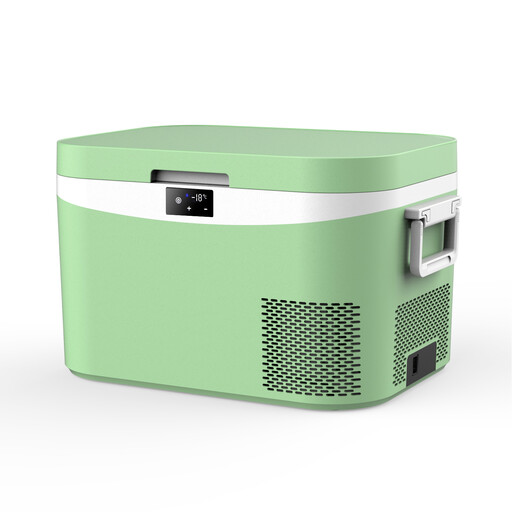
Why It Stands Out: The BINGI model is all about efficiency in a compact package. Its lightweight and shock-resistant design makes it incredibly easy to move and secure in smaller vehicles, while its DC inverter compressor provides surprisingly rapid cooling.
Pros:
Who is it for? This is an excellent choice for solo travellers, commuters who want to keep their lunch fresh or for use as a secondary drinks cooler on day trips. Its small footprint makes it ideal for cars and SUVs where space is at a premium.

Why It Stands Out: The Alpicool G22 strikes a great balance between capacity and rugged portability. It's built to handle bumpy roads, making it a reliable companion for off-road adventures and camping. It offers true freezer capability in a manageable size.
Pros:
Who is it for? Ideal for weekend campers, overlanding enthusiasts and anyone who needs a robust and reliable 12v refrigerator that can withstand the rigours of the road.
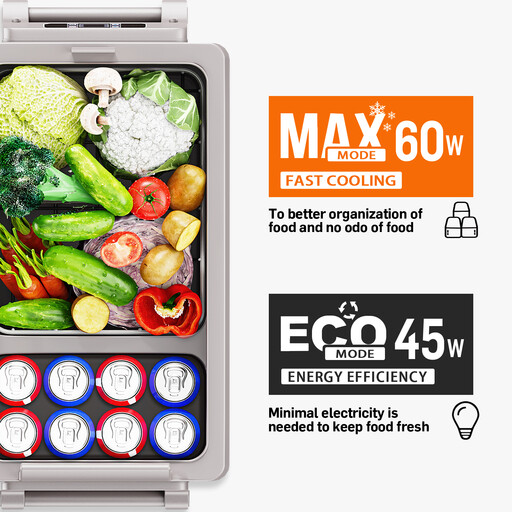
Why It Stands Out: For those who need serious capacity, the EUHOMY 49.4L model delivers. Its standout feature is the dual-zone storage, which allows you to set different temperatures for each compartment—letting you use it as a fridge and freezer simultaneously.
Pros:
Who is it for? This unit is built for motorhome owners, long-haul truck drivers, boaters and families embarking on long camping holidays who require significant, flexible and reliable cold storage.
These three models cover a wide range of needs, from daily use to extended expeditions. However, every traveller is different. If you're looking for a different size, specific features or simply want to compare more models, we have a wider selection available.
Explore Our Full Range of Portable Refrigerators
What is the difference between a portable fridge and an electric cooler box? The main difference is the cooling technology. A portable car fridge typically uses a compressor system, just like your home fridge, allowing it to reach and maintain very low temperatures (including freezing) regardless of the outside air temperature. An electric cooler box usually uses a thermoelectric system, which can only cool items to a certain degree below the ambient temperature and cannot freeze.
Can I run a 12v refrigerator in my car overnight? Yes, provided the unit has a built-in battery protection feature, like all the models recommended above. This system monitors your vehicle's battery voltage and will automatically shut off the fridge if the voltage drops to a pre-set level (usually with low, medium and high settings). This ensures you always have enough power left to start your car in the morning.
How much power does a portable car fridge use? Power consumption varies with size, ambient temperature and the temperature you set. However, modern 12v compressor cooler units are very efficient. For example, the 49.4L EUHOMY model has an average power consumption of only 45W. They work by cycling on and off to maintain the set temperature, so they do not draw power continuously, making them much more efficient than older models.