
24/7 Customer Support

Free returns

Same-day & Next-day Delivery

Quality Guaranteed

Unlock Your Welcome Offers: FREE Delivery | Up to 80% OFF | Free 30-day JoyPlus trial
Download the APP
We have all been there: you are out for the day, navigating with your phone's map, about to take a picture or waiting for an important call, and the dreaded low-battery warning appears. In a world that runs on connected devices, a dead battery can be more than just an inconvenience. A reliable power bank is no longer a gadget for tech enthusiasts; it is an everyday essential.
But with so many options on the market, choosing the right portable charger can feel overwhelming. How much capacity do you need? What does fast charging really mean? As the Joybuy Product Recommendation Officer, my role is to help you find practical solutions. This guide cuts through the jargon, focusing on the key features that matter for your needs, whether you are a professional powering a laptop on the go or just need a small charger for emergencies.
Before looking at specific models, understanding a few key specifications will help you make a more informed decision.
The capacity of a power bank is measured in milliampere-hours (mAh). This figure tells you how much energy it can store.
A high-capacity power bank is not much use if it takes all day to charge your device. The output power, measured in Watts (W), determines charging speed.
Here are a few recommendations that cater to different needs, from high-performance workhorses to pocket-friendly emergency chargers.
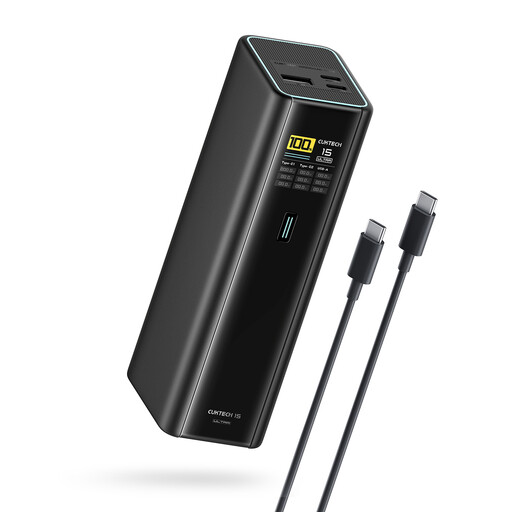
Why It Stands Out: This model is built for those who need serious power on the move. With a massive 140W total output via its USB-C port, it is one of the few portable chargers capable of powering and charging high-performance laptops, such as a MacBook Pro, at considerable speed. The 20000mAh capacity provides ample energy for multiple devices.
Pros:
Who is it for? Digital nomads, business travellers, students and tech professionals who rely on a laptop and other devices throughout the day and cannot afford to be tethered to a wall socket.

Why It Stands Out: This power bank combines a practical 10,000mAh capacity with an impressively slim power bank design. It delivers a dependable charge for daily use without adding significant bulk to your bag or pocket, backed by a brand widely associated with battery life.
Pros:
Who is it for? The daily commuter, the weekend traveller or anyone who wants a straightforward and reliable portable charger for their smartphone and other small accessories.

Why It Stands Out: The Anker Nano redefines convenience. Its standout feature is the integrated, foldable USB-C connector, which eliminates the need to carry a separate cable. This mini portable charger is small enough to fit in the palm of your hand, making it the perfect grab-and-go solution.
Pros:
Who is it for? Minimalists who hate carrying extra cables, people looking for an emergency power source for a night out or anyone who values portability above all else.
These three models cover some of the most common needs, but the world of portable power is vast. If you are looking for a different capacity, specific features like wireless charging or a different form factor, there are many other choices available.
To see a wider variety of models, feel free to Explore our full range of USB portable power chargers.
Yes, you can. UK and international aviation regulations generally restrict lithium-ion batteries based on their Watt-hour (Wh) rating. The limit for carry-on luggage is typically 100Wh. A 20,000mAh power bank (at a standard 3.7V) is equivalent to 74Wh, which is well within the permitted limit. However, power banks must be carried in your hand luggage, not in checked baggage.
This depends on your phone's battery size, but as a general rule, a 10,000mAh power bank can charge a typical modern smartphone (with a battery of around 4,000-5,000mAh) approximately 1.5 to 2 times. This is because some energy is always lost during the transfer process.
Yes. To achieve fast charging, both your device and your power bank must support the same fast-charging standard, such as Power Delivery (PD) or Qualcomm Quick Charge (QC). You will also need a cable that is rated for fast charging. For the quickest speeds, look for a USB C power bank with a 20W output or higher.