
24/7 Customer Support

Free returns

Same-day & Next-day Delivery

Quality Guaranteed

Unlock Your Welcome Offers: FREE Delivery | Up to 80% OFF | Free 30-day JoyPlus trial
Download the APP
A pressure washer can make short work of muddy cars, mossy paving and dusty garden furniture, but choosing the wrong model can create frustration rather than save time. A compact electric pressure washer may be convenient for occasional jobs, while a higher-powered 150 bar pressure washer could be more suitable for large patios and driveways.
The right choice depends on more than the highest number on the box. Before buying a pressure washer UK households can use safely and comfortably, check the real cleaning pressure, water flow, power supply, hose reach, storage and supplied accessories.
A product advertised with a high maximum bar figure may appear suitable for every task. However, maximum pressure is only one part of cleaning performance. Water flow rate, measured in litres per hour (L/h), also affects how quickly loosened dirt is rinsed away.
For example, the Outsunny 1800W model lists up to 150 bar and a 420 L/h flow rate. A lower-pressure model may still be more appropriate for painted surfaces, bicycles or car bodywork when it offers adjustable spray control.
A narrow 0° jet can concentrate substantial force in one small area. Used too close to paint, timber, pointing or soft plastics, it may cause damage. A wider fan spray distributes water over a larger area and is generally more suitable for rinsing and delicate surfaces.
Look for an adjustable nozzle, Vario Power lance or multiple spray attachments. A dedicated patio cleaner can also help contain spray and distribute water more evenly across paving.
A cordless pressure washer avoids a mains cable, which is useful for roadside car cleaning or areas away from outdoor sockets. However, battery capacity and operating time matter. The Oxerbog cordless model lists a 1,200 mAh battery and approximately 15 minutes of operating time, so it is more suited to shorter cleaning sessions than extended driveway work.
Also check whether the machine draws from a tap, bucket or bottle, and whether the included filter and hose suit your intended setup.
Use the following as a practical guide rather than a rigid rule:
A 150 bar pressure washer can provide useful capacity for stubborn outdoor dirt, but it should still be used with the correct nozzle, distance and surface setting.
An electric pressure washer normally provides consistent power for longer household cleaning tasks, but you will need a suitable outdoor electrical arrangement. Keep connections dry, use an appropriate residual-current protection arrangement where required, and follow the manufacturer’s instructions.
A cordless pressure washer offers greater mobility and may be useful for cleaning cars away from a garage. Its limitations can include shorter runtime, charging time and less suitability for extensive patio cleaning.
A short hose can mean repeatedly moving the machine. Check the high-pressure hose length, power cable length and whether the unit includes wheels or a carry handle. Integrated hose reels, lance holders and accessory storage can also reduce clutter in a shed or garage.
Before buying, confirm that the package includes the accessories you actually need. A “complete kit” may still require a separate patio cleaner, longer hose or compatible detergent bottle.
The following selections match different household priorities, rather than assuming one pressure washer suits every user.
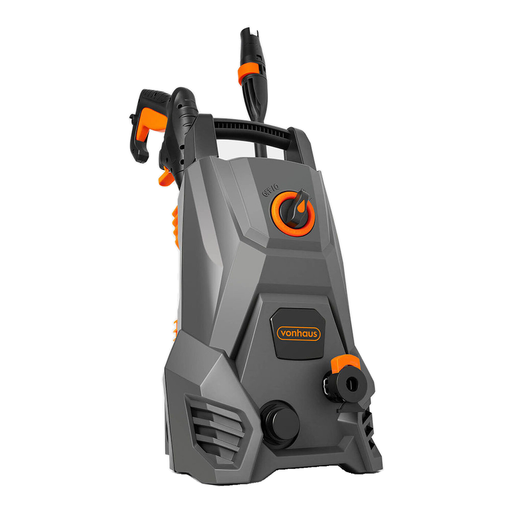
Why This Fits Their Persona: A practical option for homeowners who want one compact machine for cars, bikes, patios and garden furniture without choosing a larger unit.
Its rotatable nozzle provides jet-to-fan adjustment, reducing reliance on one aggressive spray pattern.
Lists up to 105 bar, a foam bottle, 10m combined reach, wheels and a 2-year warranty.
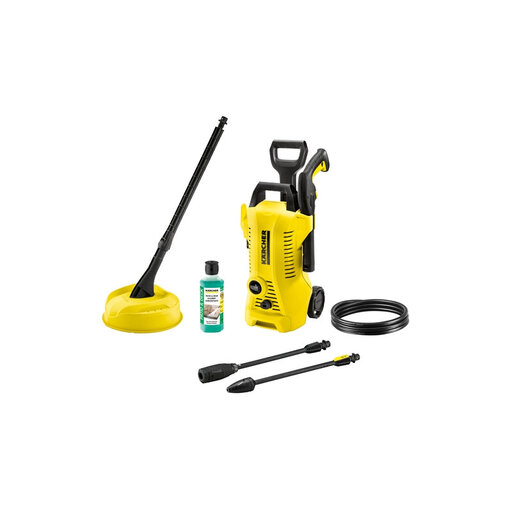
Why This Fits Their Persona: Suits users who value organised storage, pressure adjustment and a supplied patio-cleaning accessory for routine outdoor maintenance.
Power Control accessories and a three-setting Vario Power lance make it easier to select a suitable spray setting.
Includes a T 150 patio cleaner, 500ml detergent, 5m hose, wheels and a telescopic handle.
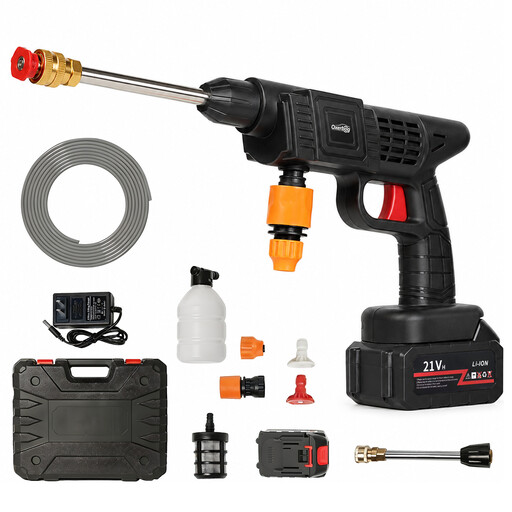
Why This Fits Their Persona: A portable pressure washer for drivers and gardeners who need cordless operation at the roadside, beside a shed or away from an outdoor socket.
Its listed 15-minute operating time makes the expected session length clear, helping buyers plan around battery limits.
Includes a 5m hose, battery, charger, foam bottle, filter, bottle connector and two nozzles.
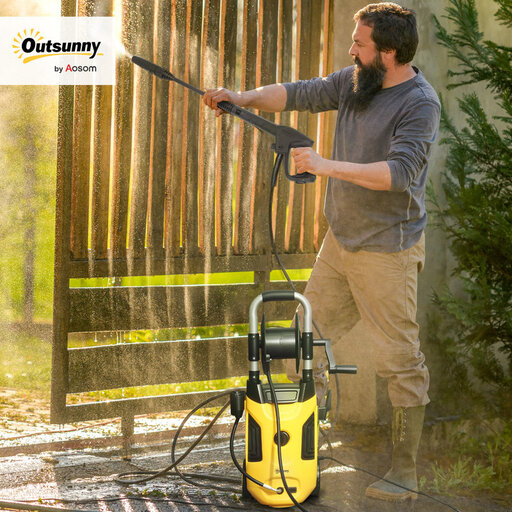
Why This Fits Their Persona: Appropriate for users comparing a higher-output electric jet washer for terraces, garden fences, exterior walls and other larger outdoor surfaces.
The adjustable 0°–75° nozzle range allows the spray pattern to be changed instead of using a single concentrated jet.
Lists an 1800W motor, up to 150 bar, 420 L/h flow, 6m hose, wheels and integrated storage.
Pressure washers use both electricity and mains water. To control running costs, avoid leaving the trigger engaged while repositioning and select a flow rate appropriate to the task. A patio cleaner may reduce overspray and help you cover paving in a more controlled way.
Before first use, check the product page and manual for the UK plug specification, warranty, safety instructions and conformity marking. Never aim a high-pressure washer at people, animals, electrical equipment, loose pointing or damaged surfaces. Wear eye protection, secure all hose connections and drain residual water before storing the machine in cold weather.
We have compiled a complete, real-time list of products that fully satisfy these strict selection criteria and UK safety regulations.
Choose a model with an adjustable nozzle or lance and use a wide spray pattern at a sensible distance. A foam bottle can help loosen dirt before rinsing. Avoid directing a concentrated jet at seals, trims, tyres or damaged paintwork.
It can handle small patches, steps or spot cleaning, but check the battery runtime and water supply first. For a complete patio, a mains electric pressure washer with a longer hose, higher flow rate or patio cleaner is generally more practical.
Lifespan depends on frequency of use, storage and maintenance. Drain water after each session, rinse detergent accessories, keep connectors clean and protect the pump and hose from frost. Following the manufacturer’s instructions is more useful than relying on a fixed lifespan promise.