Colour-and-shadow focused ballet viewers
If you return to recordings for costume colour, stage lighting and detail in darker scenes, compare the exact model’s colour, HDR and contrast-related specifications rather than choosing by brightness alone.


For ballet recordings in a dark room, start with a projector whose stated colour, HDR and motion features suit your recordings, and whose throw distance works in your room; brightness alone cannot settle the choice. A portable smart model is worth considering if moving the projector and using built-in playback matter more to you than a fixed installation, but check resolution wording, source connections and room fit before buying.
If you return to recordings for costume colour, stage lighting and detail in darker scenes, compare the exact model’s colour, HDR and contrast-related specifications rather than choosing by brightness alone.
If footwork and camera pans are your priority, check the projector’s stated motion features and whether your playback device can deliver the intended format. Epson lists frame interpolation for the EH-TW7100; it is a model-specific feature.
If the projector must fit around furniture or move between positions, check throw distance and the available optical or stand adjustments. Built-in streaming and sound may also matter if you want fewer separate devices.
For ballet recordings viewed in a dark room, decide whether image fidelity, movement and playback, or a simpler setup is your primary need. Then check that the exact projector fits both your recording source and the available position in the room.
| Concern | What to check | Who this matters to |
|---|---|---|
| Colour and dark-stage detail | Check the exact model’s resolution wording, stated colour gamut and HDR support against your recording source. | If I want costumes and lighting to retain their detail against a dark backdrop, image fidelity comes before convenience. Roughly 46% of consumers would put that need first. |
| Movement and playback | Look for model-specific motion features, then confirm the intended source format and HDMI compatibility. | When quick footwork or camera movement distracts me, I want to assess how the recording will play through my chosen setup. Movement and dependable playback would come first for around 36% of consumers. |
| Room fit and simpler setup | Measure projector-to-screen distance; check optical adjustment or stand positioning and whether the sound and streaming arrangements suit you. | If I need to move the projector or avoid separate playback and audio devices, a workable position and straightforward setup matter most. Around 18% of consumers would prioritise this need. |
A published brightness figure does not tell you how a projector will handle colour, HDR material, shadows or movement in a dark-room ballet recording.
Compare the exact models’ stated brightness units and modes alongside their imaging features, placement controls and noise specifications. Do not treat the largest brightness number as a verdict on dark-room viewing.
The projector descriptions use terms including 4K PRO-UHD, 4K UHD and 4K input support. Those labels should not be treated as interchangeable descriptions of native resolution or features.
Check the exact model’s display resolution, accepted input formats, HDR support and source-device compatibility. Confirm motion processing or lens shift separately if either matters to you.
Zoom, lens shift, keystone correction and adjustable stands offer different ways to position an image; none establishes that a particular projector will fit every room.
Measure the available projector-to-screen distance and intended image position, then compare them with the exact model’s throw and adjustment specifications.
GOV.UK provides separate market guidance for electrical equipment in Great Britain and Northern Ireland, so information for one route should not automatically be applied to the other.
If the projector is being supplied for Northern Ireland, ask the seller for the applicable Northern Ireland electrical-equipment information. For Great Britain, check the conformity information applicable to the product being supplied.
Epson’s cited home-cinema models include the installation-oriented EH-TW7100 and the portable EF-72, which call for different room-fit and playback checks.
BenQ’s W4000i is a cinema-focused model to examine if stated colour coverage and HDR handling are central to your dark-room choice.
ViewSonic’s cited home-entertainment models include RGB-laser and lamp options with different stated output and installation features.
These Joybuy projector choices focus on app-based viewing and adjustable placement for ballet recordings. Check their stated display resolution and your playback connection carefully if colour, stage shadows or movement are your deciding priorities.
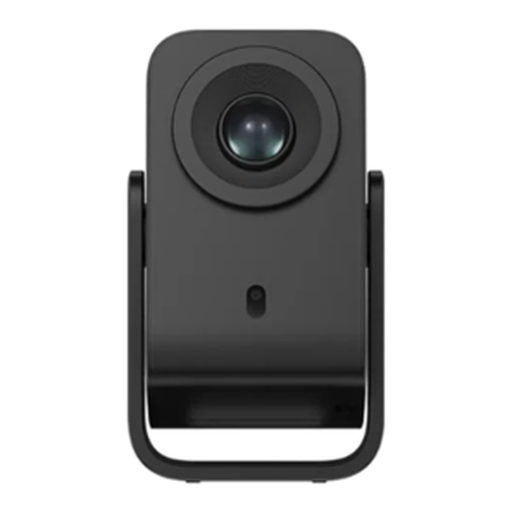 No image available
Consider this model if a portable projector and smart playback suit the way you plan to watch recordings.
The listing states 1080p FHD and 4K input support, not native 4K display resolution. Check the intended image size and the connection from your playback device.
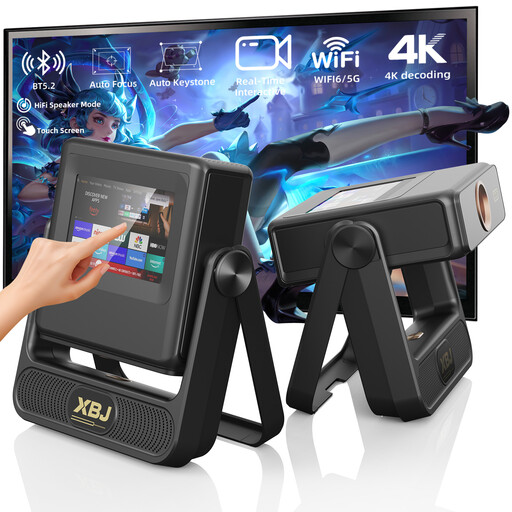 No image available
This model is worth checking if you want a smart projector with automatic focus and keystone adjustment for changing positions.
Its title states native 1080p, 4K support, Android and 900 ANSI lumens. Confirm the supported image size, playback connection and what the stated 4K support accepts before choosing it for your room.
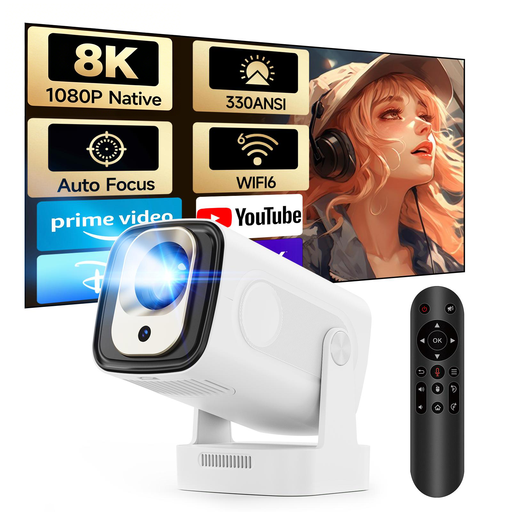 No image available
Consider this model if built-in apps and automatic focus are more important to your setup than a documented set of cinema-specific image controls.
The title lists Android 14, 330 ANSI lumens and a built-in speaker. Its resolution wording combines 4K and native 1080p, so confirm both the displayed resolution and accepted input format before buying.
Start with the exact projector’s resolution wording, stated colour and HDR capabilities, motion features and placement range. BenQ specifies colour-gamut coverage for the W4000i, while Epson lists frame interpolation and lens adjustment for the EH-TW7100; neither model’s feature list establishes how another projector will perform.
Yes, if easy positioning and integrated playback are your priorities and the model fits your intended image size. Epson lists an adjustable stand, Google TV and Bose-branded audio for its portable EF-72; check its stated output and placement requirements against your room rather than assuming portability determines picture quality.
Choose by the exact model’s image, placement and ownership specifications rather than its light-source label alone. Epson identifies the EH-TW7100 as a lamp model, BenQ lists a 4LED source for the W4000i, and ViewSonic states a 20,000-hour normal-mode RGB-laser light-source life for the LX700-4KE RGB; the longevity figure applies to that stated model and mode.
Use an appropriate electrical-equipment reuse or recycling route rather than putting an old projector in ordinary residual waste. GOV.UK explains that waste electrical and electronic equipment rules aim to encourage recovery, reuse and recycling and reduce disposal through incineration or landfill.