Viewers in brighter living rooms
If you watch cookery shows during the day or with lamps on, you need to judge whether demonstrations and on-screen instructions will remain comfortable to follow in your usual lighting.


Choose for the light in your room and the space between projector and wall before concentrating on resolution. A conventional home-entertainment model is worth considering for daytime or lamp-lit viewing, while a compact smart projector suits a flexible setup when you can darken the room. If there is little projection distance, check a super-short-throw model against your wall and furniture layout.
If you watch cookery shows during the day or with lamps on, you need to judge whether demonstrations and on-screen instructions will remain comfortable to follow in your usual lighting.
If the projector will not have a fixed position, consider how you will stream each programme and how much focusing and alignment you are willing to do each time.
If the wall is available but furniture leaves little space for a projector, measure the possible projector position before choosing a screen size or placement type.
Match the projector type to room light and placement, then check how you will get programmes onto the screen and whether recipe text will be readable at your intended image size.
Consider when: You usually watch in a living room that cannot always be darkened. BenQ positions its TK705i, rated at 3,000 ANSI lumens, for viewing with the lights on.
Check: Its required projection distance must fit your room; a brightness claim alone cannot establish how the picture will look there.
Consider when: You can darken the room and value a movable setup with integrated streaming or picture adjustment.
Check: Confirm the services you use on the exact model; portable models still need assessment in your usual room light.
Consider when: A suitable wall is available but there is little space to position a projector farther away. Epson specifies a 0.16 throw ratio for its EH-QS100W.
Check: Close-to-wall projection still calls for the exact model’s placement instructions and a suitable projection surface.
| Concern | What to check | Who this matters to |
|---|---|---|
| Readable detail | Check native display resolution separately from supported input formats. Consider recipe text at your intended image size and viewing distance. | When small captions and ingredient close-ups are central to the programme, I want to follow them without relying on a resolution claim about the input signal; roughly 31% of consumers put readable detail first. |
| Room-light visibility | Assess your usual daylight or lamp light alongside the model’s stated brightness and measurement label; ANSI and ISO lumen figures are not automatically interchangeable. | If I watch while the room is still in use, I need a picture that works with the light I can realistically control. Around 25% of consumers prioritise room-light visibility. |
| Streaming and setup | Confirm your services on the exact model, an HDMI option if needed, and the picture-adjustment features you would use. | Moving the projector or starting a programme should not mean rebuilding the setup each time; for about 25% of consumers, straightforward streaming and alignment come first. |
| Fit in the room | Measure the available projector-to-wall distance and wall area, then consult the exact model’s placement guidance. | With furniture close to the only usable wall, I need to know that the intended image will fit before anything else; roughly 19% of consumers make placement their primary concern. |
A projector can accept a 4K-labelled signal while displaying it at a lower native resolution. A Joybuy HY300Pro listing, for instance, pairs “4K Support” with a 1280 × 720 specification.
Look for the native display resolution and keep it separate from supported input or decoding formats.
Brightness listings use labels including ANSI lumens, ISO lumens and lumens. Those figures alone do not settle how an image will look at your chosen size and room-light level.
Keep the measurement label in view, assess how much light you can control and use like-for-like specifications where possible.
A projector may offer the image size you want but require a position that conflicts with your furniture or walking space. Epson’s EH-QS100W illustrates a distinct super-short-throw route with its stated 0.16 throw ratio.
Measure the intended location and use the exact model’s placement guidance before choosing an image size.
An operating-system name does not establish whether each service you use is available on a particular projector.
Check the exact services, an HDMI option for a compatible external device, and the model’s stated software-support policy.
Epson’s UK home-cinema listings include portable smart models, conventional home projectors and the EH-QS100W super-short-throw model.
The UK TK705i is a conventional home-entertainment model that BenQ positions for viewing with lights on.
XGIMI’s UK HORIZON models illustrate the smart-projector route, with model-specific streaming and picture-setup features.
These projectors offer options for movable setups and home viewing of cookery shows. Use the stated features to shortlist models, then check room lighting, projection distance and your programme source against the exact product.
 No image available
Consider this model if you want a movable setup for following recipe detail. Its title specifies native 1080P Full HD, 900 ANSI lumens, Android 14, auto keystone and 180° rotation; “8K supported” describes support, not native display resolution.
Check the image size at your measured distance, visibility in your usual room light and access to the services you use.
 No image available
For viewers who want to change projection direction between sessions, the title lists 360° rotation, Full HD 1080P, auto keystone, HDMI and a quoted 500 lumens. Confirm the model’s projection distance for your chosen image size.
Check visibility in your usual lighting and whether your streaming services or external device will work with the setup.
 No image available
Consider this model if you plan to use a separate source for cookery programmes. Its title lists Fire TV Stick compatibility, vertical and horizontal keystone correction and a quoted 1,200 ANSI lumens; “4K support” should not be read as native 4K projection.
Plan for a compatible external streaming source. Check the required throw distance and how the picture suits your room light.
 No image available
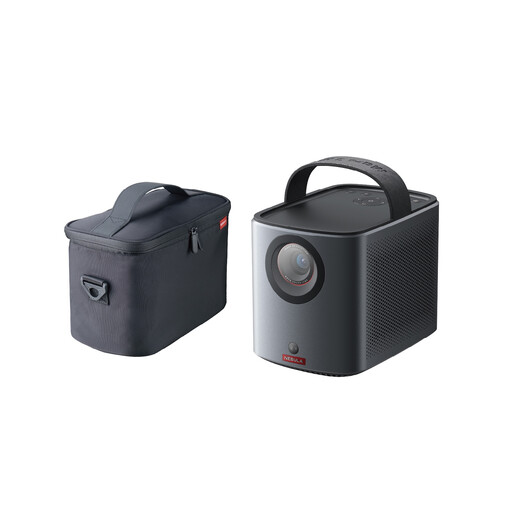
Consider the carry case bundle if you intend to move your cookery-show setup between rooms. Before choosing it, check the image size at your available distance, visibility in your usual lighting and access to your streaming services.
 No image available
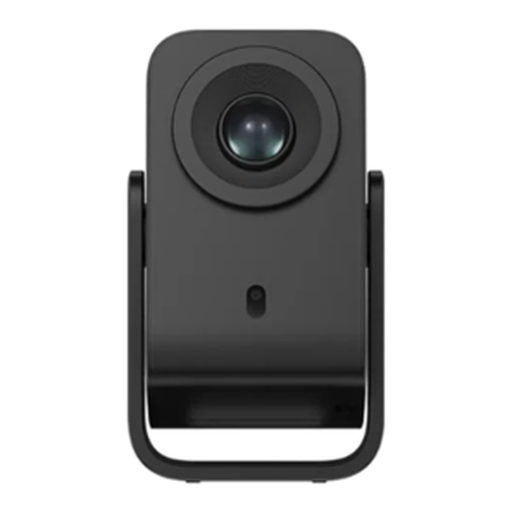
This portable model is an option when you want a flexible position for viewing cookery shows. Its title specifies 1080P Full HD and “4K supported”; confirm the native display specification rather than treating input support as native 4K.
Check its required projection distance, suitability for your room light and access to the services you watch.
No: choose a projector that fits your room light, available distance and content source before deciding whether extra image detail matters to you. For a large image with small recipe text, compare the exact native display specification or the manufacturer’s defined 4K technology; a “4K supported” label alone does not establish native 4K projection.
Check each service on the exact projector before relying on its built-in platform. Epson lists Google TV for the EF-21G and XGIMI lists Android TV for the HORIZON Pro, but those operating-system labels do not establish every service’s availability; an HDMI input may offer a route for a compatible external device.
Measure the usable wall area and possible projector position, then check the exact model’s placement guidance for your intended image size. Epson’s EH-QS100W has a stated 0.16 throw ratio for close-to-wall placement; that figure cannot be applied to a different projector.
That decision depends on your room light and the exact projector, so assess the proposed screen position under the conditions in which you normally watch. BenQ positions its 3,000 ANSI-lumen TK705i for viewing with lights on, but that model-specific claim is not a guarantee for every room or projector.