
24/7 Customer Support

Free returns

Same-day & Next-day Delivery

Quality Guaranteed

Unlock Your Welcome Offers: FREE Delivery | Up to 80% OFF | Free 30-day JoyPlus trial
Download the APP
Navigating the world of protein bars can feel like a workout in itself. Shelves are packed with options, all promising to be the perfect healthy snack bar. Yet, many UK shoppers find themselves disappointed, stuck with a box of bars that are either less healthy than advertised or simply unpleasant to eat. As a Joybuy Product Recommendation Officer, my role is to help you see past the marketing and choose a product that genuinely fits your lifestyle and goals.
Before you add another box to your basket, let's look at the common pitfalls that lead to buyer's remorse.
To avoid these traps, you need to become adept at reading the label. Here are the core parameters to check before you buy.
The nutritional panel is your source of truth. Don't just look at the headline protein number; consider it in context. A good rule of thumb is to look for bars with at least 15-20g of protein while keeping sugars under 5g per bar. Also, pay attention to the "Carbohydrates (of which polyols)" line. If this number is very high (over 15g), and you have a sensitive stomach, you may want to proceed with caution or choose a different bar. These are key indicators of a well-formulated high protein snack.
The type of protein affects both the nutritional profile and suitability for your diet.
Instead of a one-size-fits-all list, we've matched some promising options to specific user needs.

Why This Fits Their Persona: This user wants a snack that tastes like a genuine dessert to crush cravings, but without the sugar and calories of a standard confectionery bar. It's perfect for an afternoon treat or evening snack that won't derail their diet.
It directly counters the "healthy confectionery trap" by delivering an authentic, indulgent cookie flavour while containing only 1g of sugar per bar.
Features a multi-layered texture with a soft core and real cookie pieces, avoiding the typical dry protein bar feel. Packs a solid 21g of protein per 60g bar.

Why This Fits Their Persona: This user needs a convenient, on-the-go snack that is vegan, gluten-free and lower in calories. It's a lighter option for a mid-morning or afternoon pick-me-up, rather than a heavy post-workout recovery bar.
It avoids the texture trade-off often found in vegan bars. The combination of fudgy caramel and a soft chocolate coating provides a pleasant eating experience.
Fully plant-based and gluten-free, with 10g of protein and only 99 calories per 35g bar. It's a genuinely light yet satisfying snack.
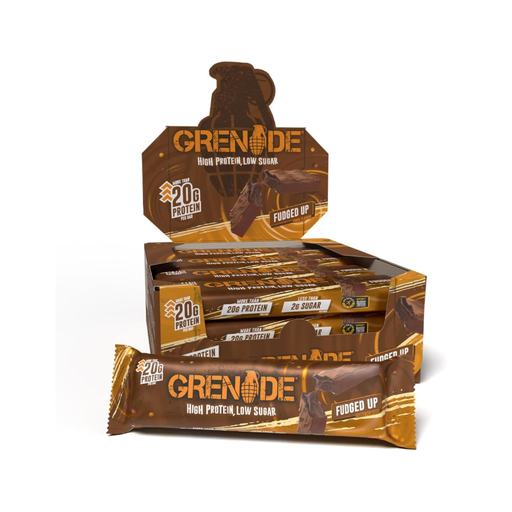
Why This Fits Their Persona: This user is a dedicated gym-goer or athlete who prioritises muscle recovery. They need a bar with a high protein payload that's convenient to consume straight after a workout. For them, quality and efficacy are paramount.
It delivers a substantial protein hit in a multi-layered format that avoids the dry, single-note texture of more basic fitness bars, making it a rewarding post-workout treat.
Provides a solid 20g of protein per bar. Crucially, it is Informed Sport accredited, meaning it is tested for banned substances and is a reliable choice for competing athletes.
We have compiled a complete, real-time list of products that fully satisfy these strict selection criteria and UK safety regulations.
While convenient, protein bars are supplements and should not completely replace whole food meals. They are best used as part of a balanced diet to help you meet your protein goals, for example, as a post-workout snack or a convenient option when you're on the move. Consuming one per day is generally fine for most active individuals.
This is often due to polyols (sugar alcohols) like maltitol or xylitol, which are used as sweeteners. The body doesn't fully absorb them, and for some people, this can lead to gas, bloating or a laxative effect. If you experience this, check the "of which polyols" value on the nutrition label and consider trying a bar with a lower amount or one that uses different sweeteners like sucralose or stevia.
Protein bars can be a useful tool for weight management because protein is very satiating, meaning it helps you feel fuller for longer. A high-protein, low-sugar bar can be a much better choice than a high-sugar, high-fat snack for controlling hunger between meals. However, they still contain calories, so they must be factored into your overall daily energy intake. They are an aid, not a magic solution.