
24/7 Customer Support

Free returns

Same-day & Next-day Delivery

Quality Guaranteed

Unlock Your Welcome Offers: FREE Delivery | Up to 80% OFF | Free 30-day JoyPlus trial
Download the APP
A tidy garden is a source of pride, but keeping shrubs, roses and small trees in check can feel like a battle without the right equipment. Blunt, uncomfortable or unsuitable tools can damage your plants and strain your hands. This guide is designed to help you navigate the options and select the right pruning shears for your garden's needs, ensuring every cut is clean, simple and effective.
We've looked at the key features that matter for UK gardeners—from blade materials to ergonomic design—to help you find a reliable tool for your routine maintenance.
Before you choose, understanding a few key features will ensure you get the best tool for the job.
The most significant difference in pruning shears is the blade design.
For general-purpose gardening involving live plants, bypass pruners are typically the more versatile choice.
The quality of the steel in your pruner's blade directly impacts its sharpness, durability and resistance to rust.
Gardening should be a pleasure, not a pain. Look for handles that are shaped to fit comfortably in your hand, preferably with a non-slip, soft-grip coating. A spring-loaded mechanism that automatically opens the blades after each cut can significantly reduce hand fatigue during repetitive tasks. Finally, a reliable and easy-to-operate safety lock is essential for secure storage.
Here are our recommendations for pruning tools that offer practical features and reliable performance for common gardening tasks.
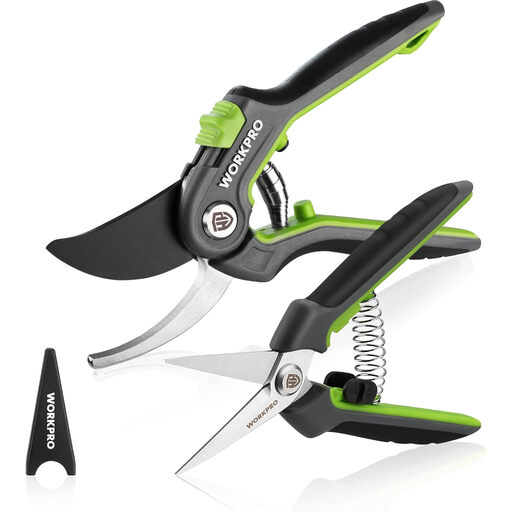
Why It Stands Out: This pruning set offers excellent versatility by including two distinct tools. You get a robust pair of bypass pruners for general tasks and a smaller, more precise pair of harvest shears for delicate work.
The main bypass pruning shears are built with sharp SK5 steel blades, designed to hold their edge and handle fresh branches up to 19 mm thick. The smaller shears use stainless steel blades, perfect for deadheading flowers, harvesting herbs or trimming fruit without damaging nearby growth.
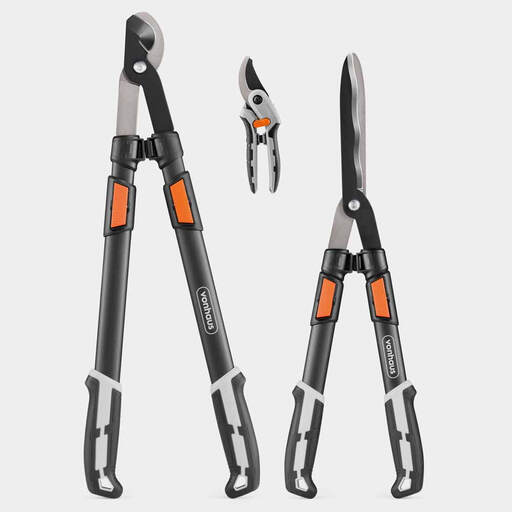
Why It Stands Out: For those with larger gardens, taller shrubs or thicker branches, this three-piece set provides the necessary reach and power. It includes standard garden secateurs, telescopic hedge shears and telescopic loppers.
The standout features are the telescopic handles on the loppers and shears. The loppers extend from 44 cm to 77 cm, providing the leverage needed to cut branches up to 4 cm thick. The hedge shears extend from 33 cm to 55 cm, making it easier to shape tall or deep hedges without over-reaching. This makes it a set of heavy duty garden shears and tree pruners in one package.
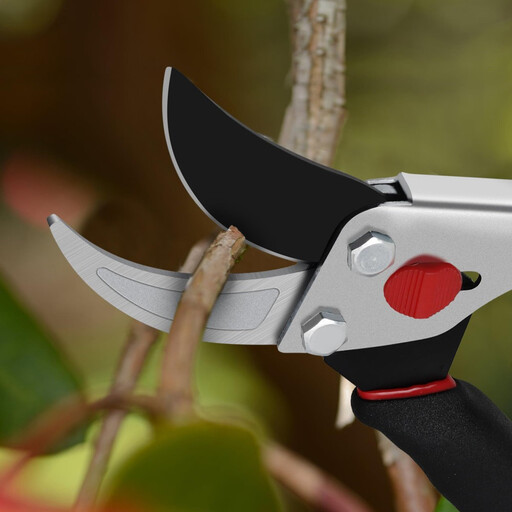
Why It Stands Out: This tool is a classic, no-fuss pair of bypass garden secateurs focused on doing one job exceptionally well. Its strength lies in its simplicity and robust construction.
The hardened carbon steel blade is precisely sharpened and features a low-friction coating, allowing it to slice cleanly through branches up to 20 mm in diameter. The chrome-plated body is durable and the ergonomic, non-slip handle provides a secure grip for controlled cutting. It’s a straightforward, reliable tool for everyday pruning.
If these recommendations aren't quite what you're looking for, or if you need other specialised tools like saws or lawnmowers, there is a wider selection available.
Explore our full range of garden equipment tools to find the perfect match for your gardening projects.
In the UK, the terms secateurs and pruning shears are often used interchangeably to describe the same handheld gardening tool used for cutting stems and small branches. "Secateurs" is simply a more traditional term, but both refer to the same item.
Proper maintenance will extend the life of your tools and ensure they perform well. After each use, wipe the blades clean with a dry cloth to remove plant sap and moisture. Periodically, apply a few drops of light oil to the pivot point and blades to prevent rust and keep the action smooth. Always store them in a dry place with the safety lock engaged.
Bypass pruners are best for cutting live, green plant material. Their scissor-like action creates a clean cut that helps the plant heal quickly and reduces the risk of disease. They are the preferred tool for pruning roses, shaping shrubs, trimming perennials and cutting back any living growth.