
24/7 Customer Support

Free returns

Same-day & Next-day Delivery

Quality Guaranteed
Download the APP
Categories
Finding a reliable power source when you're away from a mains socket can be a challenge. Whether you're on a camping trip needing to power a small appliance, a tradesperson running tools on-site or simply on a long drive wanting to charge your laptop, a dead battery is a common frustration. A pure sine wave inverter is a practical solution, converting your vehicle's 12V DC battery power into clean, stable 220-240V AC electricity—the same type you get at home.
This guide is designed to help you understand what to look for in a DC to AC inverter and to highlight a few options suited for different needs, from light-duty in-car charging to more demanding off-grid power applications.
Before selecting an inverter, it's helpful to consider a few key factors to ensure you get a model that safely and effectively meets your requirements.
Inverters are rated by their power output in watts (W). This comes in two figures:
A small car power inverter for charging a laptop (around 60-90W) and a phone (10-20W) might only need 300W of continuous power. In contrast, an RV inverter intended to run a coffee machine (1000W) or a microwave (800W) will require a much higher continuous rating. Always check the power label on your appliances.
There are two main types of inverters: modified sine wave and pure sine wave. While modified sine wave models are often cheaper, they can cause issues with sensitive electronics. Laptops, smartphones, digital cameras, medical equipment and modern TVs all contain delicate circuits that perform best with a clean power signal. A pure sine wave inverter produces electricity that is identical to or even cleaner than the power from your home's wall sockets, protecting your devices from potential damage, overheating or strange buzzing noises.
How you connect the inverter is determined by its power output.
Look for models with built-in safety protections, such as safeguards against overload, short circuits, over-temperature and under/over-voltage. These features protect both the inverter and your valuable electronics.
As a Joybuy Product Recommendation Officer, my role is to sift through the options and present practical choices. Here are three pure sine wave inverters that cater to different user needs.
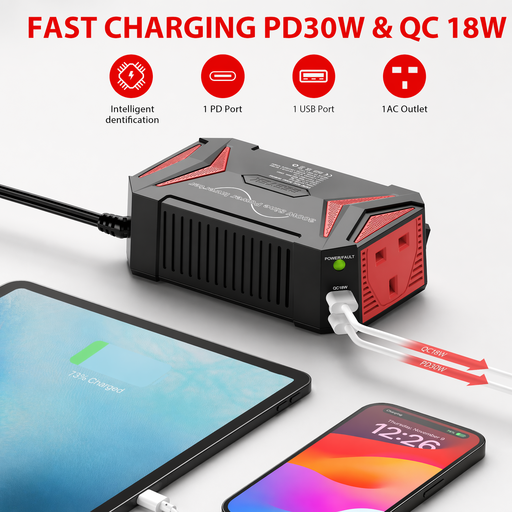
View Product: BESTEK 300W Pure Sine Wave Car Inverter
Why It Stands Out: This inverter is built for convenience and modern devices. It combines a standard AC outlet with both a PD 30W Type-C and a QC 18W USB port. According to BESTEK, its PD port can charge compatible devices up to six times faster than a standard charger, making it highly efficient for quickly powering up phones, tablets and even some laptops. Its compact size and cigarette lighter plug make it an excellent travel companion.
Pros:
Who is it for? This is a great fit for daily commuters, road trippers and mobile professionals who need a reliable way to charge multiple devices like laptops, smartphones and cameras directly from their car.
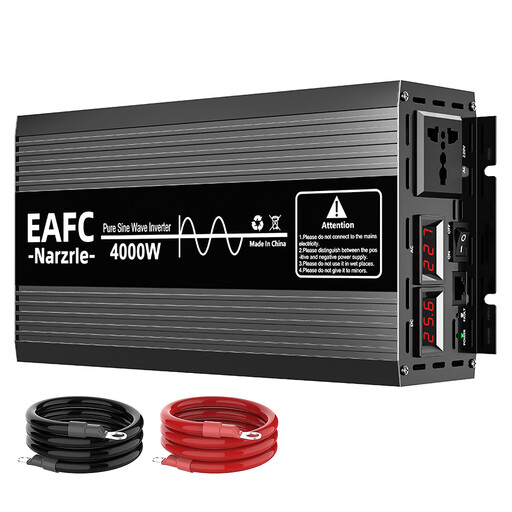
View Product: EAFC 4000W Pure Sine Wave Power Inverter
Why It Stands Out: Offering a substantial 2000W rated continuous power and a 4000W peak capacity, this EAFC model steps up into the territory of running household appliances. The dual digital displays provide real-time monitoring of input and output voltage, giving you a clear view of your power system's status. Its dual intelligent cooling fans ensure it remains stable even when powering demanding loads for extended periods.
Pros:
Who is it for? Ideal for power inverter for camping enthusiasts, RV owners and tradespeople who need to run medium-to-high-draw appliances and tools away from a mains supply. It requires a direct connection to a 12V battery.
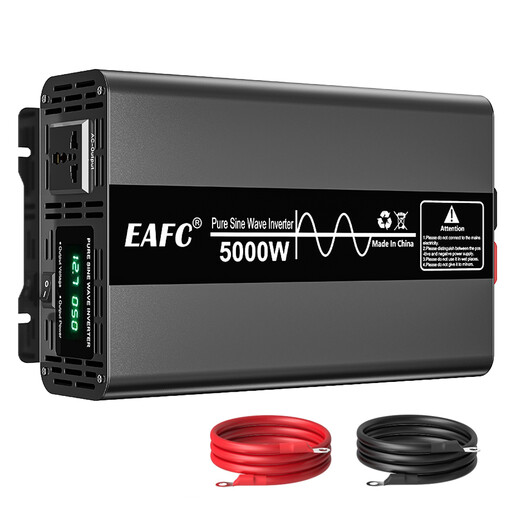
View Product: EAFC 5000W Amorphous Pure Sine Wave Power Inverter
Why It Stands Out: This is a serious power unit for demanding applications. With 2500W of continuous power and a massive 5000W peak rating, it's capable of starting and running heavy-duty equipment with motors, such as refrigerators, small air conditioners or large power tools. The detailed LCD display provides comprehensive status information, including battery percentage and internal temperature. Its robust construction is designed to operate across a wide temperature range.
Pros:
Who is it for? This 12v to 220v converter is aimed at users with significant off-grid power needs. This includes those living in motorhomes, operating mobile workshops from a van or truck or anyone seeking a powerful backup solution for home emergencies.
If these recommendations don't quite fit your specific wattage or feature requirements, there are many other models available. To see a broader selection of sizes and specifications, feel free to browse our complete collection.
Explore the Full Range of Car Power Inverters
This depends entirely on the inverter's continuous wattage rating. A 300W inverter can comfortably run laptops, drones, cameras and phone chargers. A 2000W inverter can handle all of that plus more demanding items like a coffee maker, a blender, a TV or a small drill. A 2500W+ unit can power small refrigerators, microwaves and larger power tools. Always check your appliance's wattage before connecting it.
If you are only charging a smartphone, a simple USB adapter will do. However, for any sensitive or expensive electronics—laptops, DSLR cameras, gaming consoles, CPAP machines or anything with a complex circuit board—a pure sine wave inverter is strongly recommended. It provides clean, stable power that prevents potential damage and ensures your devices run as intended.
For any inverter rated above 150W, you must connect it directly to your vehicle's battery terminals using the supplied cables. Do not use the cigarette lighter socket. Ensure the red cable is connected to the positive (+) terminal and the black cable to the negative (-) terminal. For safety and to avoid draining your battery, it is advisable to have the vehicle's engine running when using high-power appliances.