
24/7 Customer Support

Free returns

Same-day & Next-day Delivery

Quality Guaranteed

Unlock Your Welcome Offers: FREE Delivery | Up to 80% OFF | Free 30-day JoyPlus trial
Download the APP
As a conscientious rabbit owner in the UK, you understand that a healthy rabbit diet is the cornerstone of their wellbeing. Navigating the world of rabbit food can be complex, with endless options and conflicting advice. The primary goal is to provide a diet that supports their unique digestive system and ever-growing teeth, but finding the right balance can be a challenge.
This guide is designed to help you make an informed choice. We will explore the key factors to consider when selecting food for rabbits, from the format of the food to its nutritional content and present some carefully considered options available in the UK market.
Before looking at specific products, it's helpful to understand what makes a quality commercial rabbit food. A rabbit's diet should primarily consist of high-quality feeding hay (around 80-90%), supplemented by a small, measured amount of concentrated food and a portion of fresh, leafy greens. Here are a couple of key points to consider when choosing that concentrated portion.
One of the most common decisions you'll face is whether to choose uniform rabbit nuggets (also known as pellets) or a muesli-style mix.
A high fibre rabbit food is non-negotiable for good health. Rabbits have a digestive system designed to process large amounts of fibre. It keeps their gut moving correctly, helping to prevent serious conditions like gut stasis. Furthermore, the abrasive nature of fibre is essential for wearing down their continuously growing teeth, preventing painful dental issues. When checking a product, look for a high crude fibre percentage, ideally above 18%.
Here are a few popular options that cater to different preferences, all focusing on providing a nutritious foundation for a healthy rabbit diet.
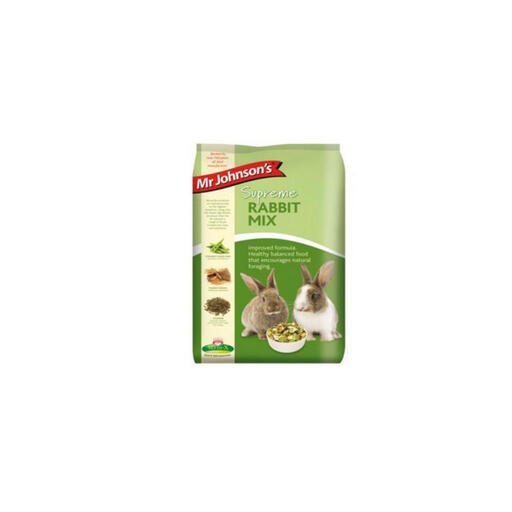
Why It Stands Out: This muesli-style mix is designed to encourage a rabbit's natural instinct to forage. The blend of different textures and components, including peas, cereals and herbs, provides variety and enrichment during feeding time.
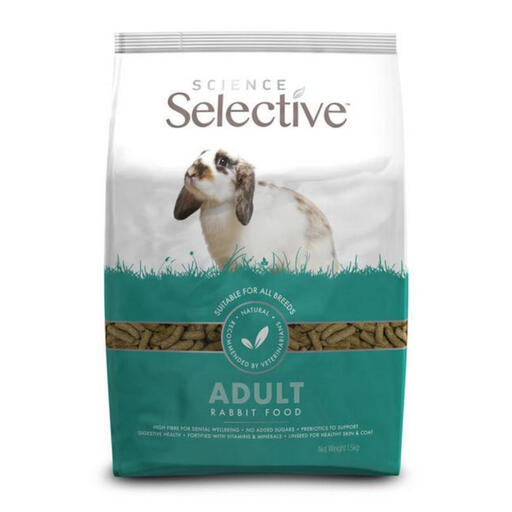
Why It Stands Out: As a leading choice in the rabbit pellets category, Science Selective Rabbit food offers a uniform nugget to eliminate selective feeding. Its formulation boasts a very high fibre content and includes natural ingredients to support overall health.
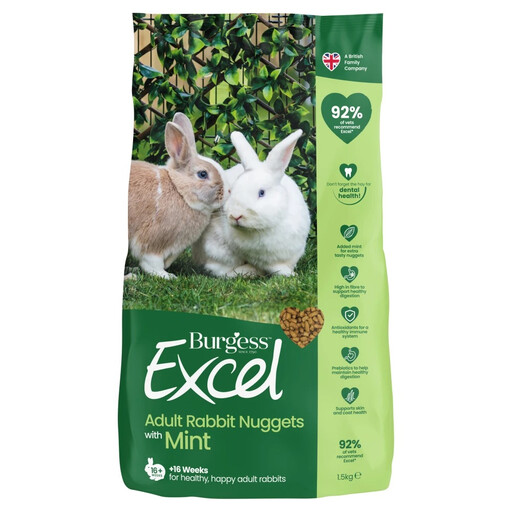
Why It Stands Out: The Burgess Excel Rabbit Nuggets are another highly regarded nugget option, known for their focus on natural, beneficial ingredients. This food is specifically formulated for adult rabbits, providing a balanced diet with no added sugars.
The products highlighted here are excellent starting points, but every rabbit is an individual. If these don't seem like the perfect fit, or if you're interested in exploring foods for different life stages, from junior to mature, we have a wider selection available.
Explore our full range of rabbit food to find the ideal match for your companion.
The golden rule is that concentrated food is a supplement, not the main meal. An adult rabbit of average size (around 2.5kg) typically only needs about one egg cup's worth of pellets or nuggets per day. The vast majority of their diet—at least 80%—should be an unlimited supply of good-quality feeding hay.
No, they cannot. A diet of only rabbit pellets would be detrimental to their health. Hay is the single most important part of a rabbit's diet. It provides the essential long-strand fibre needed for gut motility and dental wear. Pellets provide concentrated nutrients, but hay provides the bulk and fibre that their digestive system is built for.
You should avoid feeding rabbits sugary human treats, chocolate, dairy and high-carbohydrate foods like bread and pasta. Some lettuces, like iceberg, have little nutritional value and can cause digestive upset. Muesli-style mixes can be problematic if they lead to selective feeding. Always introduce any new fresh greens slowly and one at a time.