
24/7 Customer Support

Free returns

Same-day & Next-day Delivery

Quality Guaranteed

Unlock Your Welcome Offers: FREE Delivery | Up to 80% OFF | Free 30-day JoyPlus trial
Download the APP
For many of us across the UK, from busy professionals grabbing work lunches to students needing quick dinners, time is a luxury we can't always afford. Ready meals and other convenience foods have become a pantry staple, offering a hot meal without the hassle of cooking from scratch.
However, the world of quick meals is filled with marketing jargon. Navigating the supermarket aisles or shopping online can lead to purchases that disappoint in flavour, portion size or nutritional value. Before you stock up, it's worth knowing about a few common pitfalls that can lead to buyer's remorse.
Many ready to eat meals come in sophisticated packaging with claims of "restaurant quality" or "gourmet" ingredients. Often, a closer look at the ingredients list reveals a standard base with minimal amounts of the highlighted "premium" component. You may end up paying a premium for marketing, not for a genuinely superior meal.
A common issue is the gap between the advertised serving size and what constitutes a satisfying meal. A packet that claims to "serve two" might be more suitable as a light snack for one, while a single-portion microwave meal can sometimes be surprisingly small. This makes it difficult to judge value for money and can leave you reaching for something else to eat.
To make sure your convenience food choices are both practical and satisfying, focus on a few core parameters. These objective details cut through the marketing and tell you what you are actually getting.
In the UK, most pre-packaged food uses a 'traffic light' labelling system on the front of the pack, giving an at-a-glance summary of the fat, saturates, sugars and salt content. For a more accurate comparison between different products, it's useful to look at the nutritional table on the back and compare the values per 100g. This provides a like-for-like measure, whereas 'per serving' values can be misleading if the serving sizes differ. Paying attention to the salt and sugar content is particularly important for making more balanced choices for your everyday diet.
Not all quick meals are created equal. The convenience level can vary significantly:
Consider where and when you'll be eating. For a desk-based lunch, a microwave pouch is often more practical than something requiring a hob.
Ready meals come in frozen, chilled and ambient (shelf-stable) formats. This guide focuses on ambient options, which are stored at room temperature. Their main advantage is that they don't take up precious fridge or freezer space. This makes them perfect for stocking a student pantry, keeping in an office drawer for emergencies or ensuring you always have a backup meal at home.
Here are a few options that align with different needs, helping you sidestep the common pitfalls.
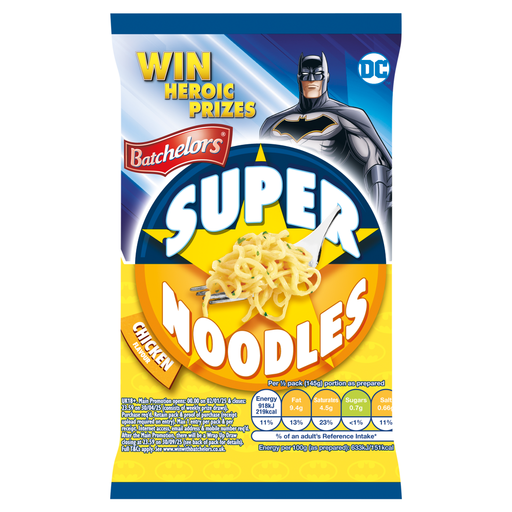
Why This Fits Their Persona: A classic choice for student meals, these noodles are highly affordable, require only a single pot and are ready in four minutes. They are a reliable and comforting option for a quick lunch or a late-night study snack.
This product is straightforward. It doesn't pretend to be gourmet; it delivers exactly what it promises—a simple, quick and flavourful noodle snack. The value is in its simplicity and low cost.
Extremely affordable and has a very fast preparation time on the hob. It can also be used as a base for a larger meal by adding vegetables or protein.
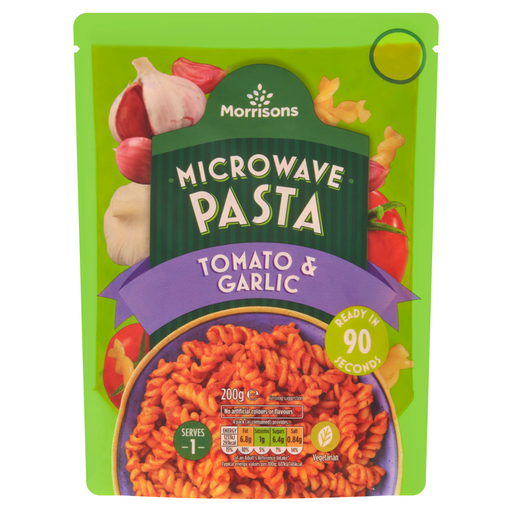
Why This Fits Their Persona: An ideal solution for a quick work lunch. It heats in the microwave in just 90 seconds and the pouch design minimises mess and the need for extra dishes, which is a bonus in a shared office kitchen.
The 200g pouch is clearly a single, satisfying portion, avoiding any ambiguity about serving size. It's a simple, flavourful pasta dish without any over-the-top "gourmet" claims.
The primary advantage is its ultra-fast microwave time and self-contained packaging. It's also suitable for vegetarians and free from artificial colours or flavours.
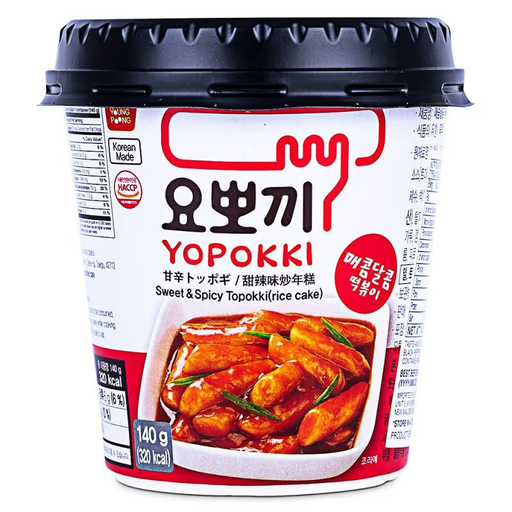
Why This Fits Their Persona: For those tired of the usual pasta or noodle options, this offers an authentic taste of Korean street food. The chewy rice cakes and sweet and spicy sauce provide a completely different texture and flavour experience for an easy dinner.
This product sidesteps the "gourmet" trap by offering a genuinely distinct international flavour profile, rather than just adding a fancy name to a standard dish. The experience matches the expectation.
Its unique chewy texture and authentic sweet and spicy Korean sauce set it apart. It's also very convenient, being ready in just 2-3 minutes in the microwave.
We have compiled a complete, real-time list of products that fully satisfy these strict selection criteria and UK safety regulations.
A simple way to enhance the nutritional value of a ready meal is to add your own fresh ingredients. Stir in some frozen peas, fresh spinach or chopped peppers towards the end of cooking. You can also add a source of protein, such as a hard-boiled egg, some leftover cooked chicken or a sprinkle of seeds.
While both are forms of convenience food, they differ in preparation. Instant noodles are typically dehydrated noodle blocks with a flavour sachet that you cook on a hob or by adding boiling water. Microwave meals are usually pre-cooked and sealed in a tray or pouch, requiring only reheating in a microwave.
Ambient or shelf-stable ready meals are designed for a long shelf life, often lasting for many months or even over a year. They are ideal for stocking your pantry. Always check the "Best Before" date printed on the packaging for specific guidance. Once opened, they should be consumed promptly as per the instructions.