
24/7 Customer Support

Free returns

Same-day & Next-day Delivery

Quality Guaranteed

Unlock Your Welcome Offers: FREE Delivery | Up to 80% OFF | Free 30-day JoyPlus trial
Download the APP
A dedicated rice cooker promises one thing: consistently perfect, fluffy rice with minimal effort. Yet, many UK households end up with an appliance that gathers dust after a few uses. The market is saturated with models that overpromise, and it's easy to choose one that doesn't fit your kitchen or lifestyle.
As a Joybuy Product Recommendation Officer, my role is to help you see past the marketing clutter. Before you make a decision, let's look at the three most common pitfalls that lead to buyer's remorse.
family rice cooker is inefficient for a single person or couple. It uses more energy and can struggle to cook small portions evenly, often resulting in a dry or burnt bottom layer. Conversely, a mini rice cooker can be frustratingly small for a family that enjoys leftovers or batch cooking.multicooker can be a fantastic space-saver, many models are packed with redundant or poorly executed functions. You might pay a premium for a "cake" or "yoghurt" setting that you never use, or find the "sauté" function lacks the power of a proper pan.To find a reliable appliance, focus on these three non-negotiable parameters instead of flashy, advertised features.
A cooker's capacity is the most critical factor. Manufacturers often use "cups," but this can be confusing. A more reliable measure is litres, which corresponds more directly to household size.
small rice cooker or mini rice cooker, perfect for 1-3 people.slow cooker or electric pressure cooker.The inner pot is the heart of your rice cooker. Its material determines cooking performance and durability.
multicooker models where searing and sautéing are primary functions.What do you need your appliance to do besides cook rice?
slow cooker, food steamer and more. A smart rice cooker may even offer app integration for remote control and access to recipes, while an electric pressure cooker can dramatically reduce cooking times for stews and joints of meat. Many come with a rice cooker with steamer basket for preparing vegetables or fish simultaneously.Based on these practical criteria, here are a few models suited to different UK households.
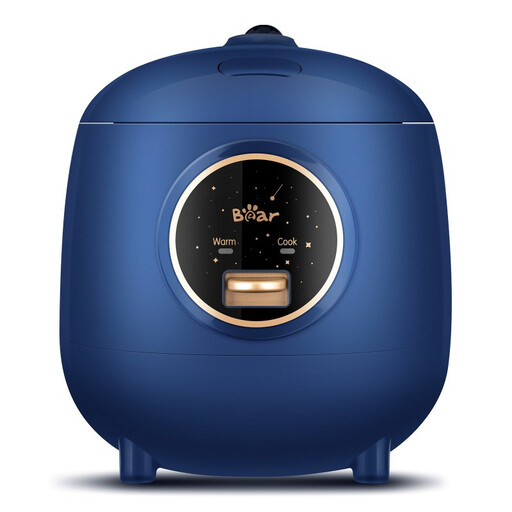
Why This Fits Their Persona: Its compact 1.2L capacity is perfectly proportioned for one or two people, making it an ideal fit for a small flat, dorm room or even a caravan. It focuses on doing one job well without taking up precious counter space.
This model directly avoids the "oversized capacity" pitfall. It ensures small portions of rice are cooked efficiently and evenly, preventing waste and poor results.
Simple one-touch operation removes any guesswork. The removable non-stick pot and detachable inner lid make for exceptionally easy cleaning.

Why This Fits Their Persona: For a busy family that values convenience and technology, this 3L smart cooker is ideal. It's large enough for 2-6 people, and its app integration allows for remote control, which is genuinely useful for getting dinner started on the commute home.
It avoids the "gimmicky multicooker" trap by offering a curated set of 8 practical functions (Rice, Soup, Steam, etc.) that work well, rather than dozens of useless ones. The smart features add real value.
The 24-hour delay timer and app control offer unparalleled scheduling flexibility. Dual temperature sensors help prevent messy boil-overs, a common frustration with cheaper models.

Why This Fits Their Persona: For the home cook looking to consolidate appliances, this 5.7L model is a true workhorse. It replaces a pressure cooker, slow cooker, steamer and rice cooker, making it a powerful tool for batch cooking, meal prep and complex recipes.
It sidesteps the "peeling pot" flaw by using a ceramic hard non-stick inner pot, which is designed for greater durability and longevity compared to standard coatings, especially under the high heat of sautéing.
Its 9-in-1 functionality includes pressure cooking, which can cook meals up to 70% faster than traditional methods. The large capacity is excellent for preparing large batches of stews, soups or rice.
We have compiled a complete, real-time list of products that fully satisfy these strict selection criteria and UK safety regulations.
A well-maintained rice cooker from a reputable brand should last for many years. The lifespan is most often determined by the durability of the inner pot's non-stick coating. With careful use (avoiding metal utensils and harsh scouring pads), the main appliance can easily last 5-10 years, though the inner pot may need replacing sooner if it becomes heavily scratched.
Generally, no. Rice cookers are quite energy-efficient. A typical 400W model running for a 30-minute cooking cycle uses approximately 0.2 kWh of electricity. Given current energy prices, this works out to only a few pence per use, making it a very economical way to cook rice compared to using a hob.
Yes, to an extent. While a multicooker is designed for versatility, even a basic rice cooker can be used to steam vegetables (if it comes with a steamer basket), cook other grains like quinoa and oats, or even make simple "one-pot" pasta dishes or soups. The "keep warm" function is essentially a very gentle slow cook setting.