
24/7 Customer Support

Free returns

Same-day & Next-day Delivery

Quality Guaranteed

Unlock Your Welcome Offers: FREE Delivery | Up to 80% OFF | Free 30-day JoyPlus trial
Download the APP
A proper Sunday roast is a cornerstone of British home cooking, but the success of that perfectly browned chicken or crisp-skinned joint of beef often comes down to the equipment. A quality roasting tin with rack is a kitchen essential, yet finding one that performs well and lasts can be surprisingly difficult. Many home cooks find themselves disappointed by tins that promise much but deliver little.
Before you invest in new cookware, it's worth knowing the common pitfalls. Many shoppers are swayed by flashy marketing, only to end up with a product that fails within months. The most frequent issues we see are:
To avoid these issues and choose a reliable roasting tin, focus on a few core specifications. Getting these right will ensure your purchase is a lasting and useful addition to your kitchen.
The material of your roasting tin dictates its heating properties and durability. The two most common options are carbon steel and stainless steel.
If you opt for an easy clean roasting tin, the quality of the coating is paramount. A good non-stick surface allows food to release effortlessly and makes washing up far simpler. To maintain it, always check the manufacturer's advice. As a general rule, avoid using metal utensils which can cause scratches and steer clear of abrasive scouring pads. Gentle cleaning with a soft sponge and warm, soapy water will significantly extend the life of the coating.
A rectangular roasting tin is the most versatile shape, suitable for everything from a roasting tin for chicken to a large batch of roasted vegetables. A medium roasting dish (around 34cm x 24cm) is often a practical size for most families and fits comfortably in standard UK ovens.
Pay close attention to the rack. It should sit high enough to allow hot air to circulate fully around the meat, ensuring a crispier skin and even cooking. It should also fit snugly within the tin without scratching the sides.
Based on these practical criteria, we've matched a few products to different types of home cooks.
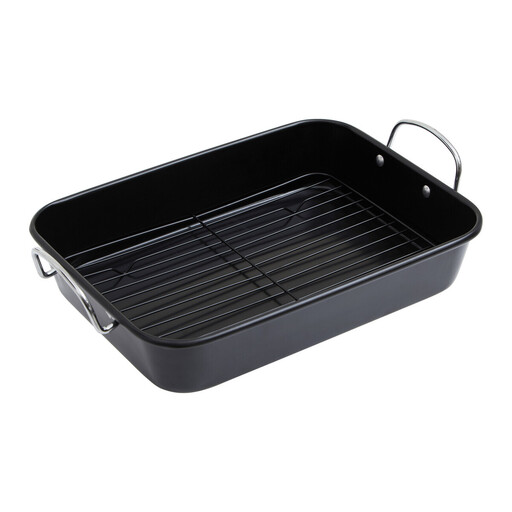
Why This Fits Their Persona: This user needs a reliable, no-fuss tin for frequent use, from Sunday roasts to mid-week traybakes. This product's size and features are geared towards practicality and consistent results for family meals.
Its durable metal construction is designed for everyday use, resisting the warping common in thinner tins. The included wire rack is designed to fit the pan, ensuring proper elevation and airflow.
The combination of a non-stick coating for easy food release and a purpose-built rack makes it a complete, practical solution for achieving a great roast with less cleanup.
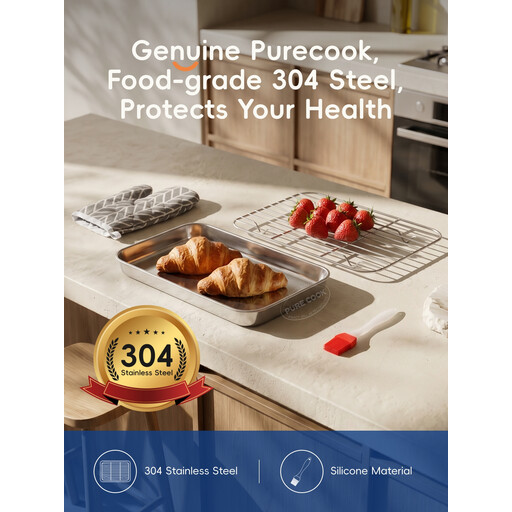
Why This Fits Their Persona: This user prioritises material safety and longevity over non-stick convenience. They prefer cookware that is non-reactive and free from coatings and they don't mind a bit of extra seasoning or cleaning for a durable, long-term investment.
By using food-contact grade 304 stainless steel, it completely bypasses the issue of peeling non-stick coatings. This material is chosen for its stability and resistance to rust and corrosion, ensuring it won't degrade over time.
The primary benefit is its durability and non-reactive surface. The detachable wire rack and tray are easy to separate for thorough cleaning and the set also serves as a cooling or draining rack.
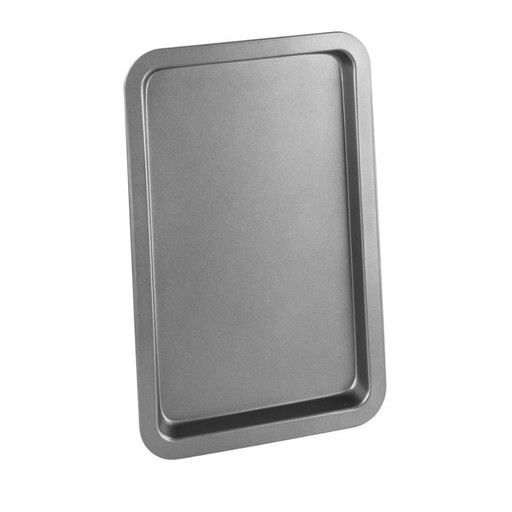
Why This Fits Their Persona: Ideal for those equipping a first kitchen or small households, this tray is a versatile, cost-effective starting point. It's great for roasting vegetables, oven chips or smaller cuts of meat where a deep tin isn't required.
While it's a tray rather than a deep tin, its carbon steel build provides good heat distribution. The non-stick coating is also specified as free from PFAS, PTFE and BPA, addressing common material concerns at an accessible price point.
Its key advantage is versatility and convenience. Being fridge, freezer and dishwasher safe makes it a practical tool for everyday meal prep and easy cleanup. It can be paired with a separate, small oven rack if needed.
We have compiled a complete, real-time list of products that fully satisfy these strict selection criteria and UK safety regulations.
The key is to be gentle. After use, let the tin cool slightly before washing. Use a soft sponge or cloth with warm, soapy water. For the rack, where food can get stuck in the corners, a non-abrasive washing-up brush is effective. Avoid metal scourers, steel wool and harsh chemical cleaners, as these will degrade the non-stick coating. Always dry the tin and rack thoroughly before storing to prevent any moisture damage.
For a typical family of four, a medium roasting dish measuring approximately 34cm x 24cm offers great versatility. This size is usually large enough to accommodate a whole medium chicken or a significant joint of meat, with space around the edges for potatoes and vegetables. It's a practical choice that handles most family meals without being too large for smaller dishes or difficult to store.
Absolutely. While the rack is essential for roasting large cuts of meat where air circulation is needed for crisping, the tin itself is a multi-purpose piece of cookware. You can use it on its own for baking a cottage pie, lasagne or a fruit crumble, as well as for roasting vegetables directly in the pan. This flexibility is what makes it such a valuable kitchen staple.