
24/7 Customer Support

Free returns

Same-day & Next-day Delivery

Quality Guaranteed

Unlock Your Welcome Offers: FREE Delivery | Up to 80% OFF | Free 30-day JoyPlus trial
Download the APP
Navigating the world of robot vacuum cleaners can feel like a chore in itself. With a flood of technical terms and bold marketing claims, it’s easy to end up with a device that gets stuck under the sofa or leaves pet hair stubbornly clinging to the carpet. As the Joybuy Product Recommendation Officer, my role is to help you sidestep these common issues and find a model that genuinely simplifies your life.
Before you invest, let’s look at the three most common pitfalls that UK buyers encounter and how to avoid them.
Many brands advertise enormous suction figures, often measured in Pascals (Pa). While a high number looks impressive, it doesn't guarantee a clean floor. True cleaning performance is a combination of suction, the design of the brush roll and the intelligence of the navigation system. A robot with mediocre suction but an excellent anti-tangle brush and smart pathing will often outperform a "powerful" but unintelligent one, especially on carpets and when dealing with pet hair.
The term "smart" is used loosely. Basic models use simple bump-and-run navigation, randomly bouncing off walls until the battery runs low. This is inefficient, misses spots and is the primary reason many robot hoovers end up abandoned in a corner. A truly smart vacuum cleaner uses advanced mapping technology to clean methodically.
A self-emptying robot vacuum sounds like the ultimate convenience, and it often is. However, the ongoing cost of proprietary dust bags can be a significant, unexpected expense. Furthermore, the all-in-one stations themselves require regular maintenance, such as cleaning filters and sensors, which is often omitted from the marketing highlights.
To ensure your new robot is a helpful addition to your home and not a source of frustration, focus on these key technical specifications.
The single most important feature for reliable, efficient cleaning is the navigation technology.
For homes with a mix of hard floors and carpets, especially those with pets, the cleaning head is critical.
Modern devices often combine multiple functions. A robot vacuum and mop can be a game-changer for kitchens and bathrooms. If you choose one, look for models that automatically lift the mop pad when they detect carpet to avoid dampening your rugs. For ultimate hands-free operation, a self-emptying robot vacuum transfers debris from the robot into a larger bag in its dock, meaning you may only need to intervene once every month or two.
We've matched some promising models to the needs of different UK households. Instead of a one-size-fits-all approach, this helps you find a machine that fits your specific lifestyle.
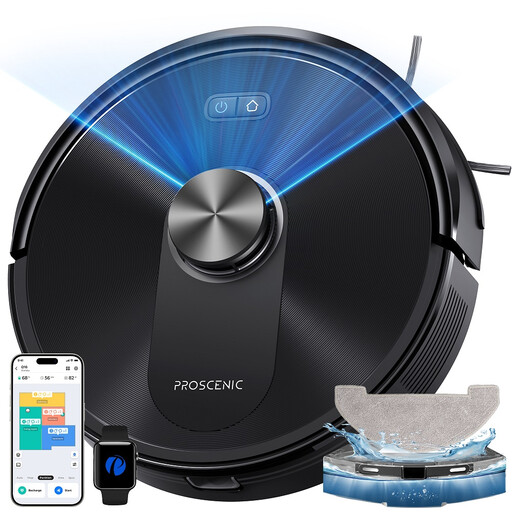
Why This Fits Their Persona: This model is ideal for someone wanting to try a proper smart vacuum without a large initial outlay. It offers high-end features like LiDAR and strong suction, perfect for a small flat or house with mainly hard floors and some low-pile rugs.
It sidesteps the "dumb navigation" trap by including a full LiDAR laser navigation system, providing methodical cleaning and app-based controls typically found on more expensive units.
Features a strong 8000Pa suction power and a long 200-minute runtime, offering excellent performance for its price point. It also includes a mopping function for added versatility.
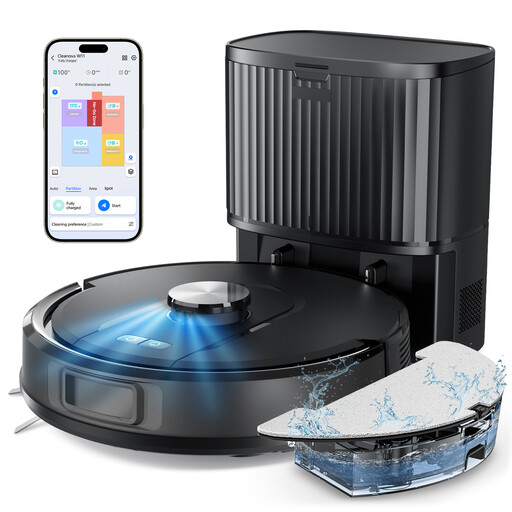
Why This Fits Their Persona: For households constantly battling pet fur and daily mess, the combination of high suction and a self-emptying dock is a lifesaver. This model automates the daily grind of vacuuming, freeing up valuable time.
It balances powerful suction with a practical rubber-bristle roller brush, addressing the "suction myth" by providing a complete system that is effective at collecting pet hair from carpets and hard floors.
The self-emptying station offers up to 60 days of hands-free cleaning, a major convenience factor. Its 8000Pa suction and LiDAR navigation ensure thorough coverage.
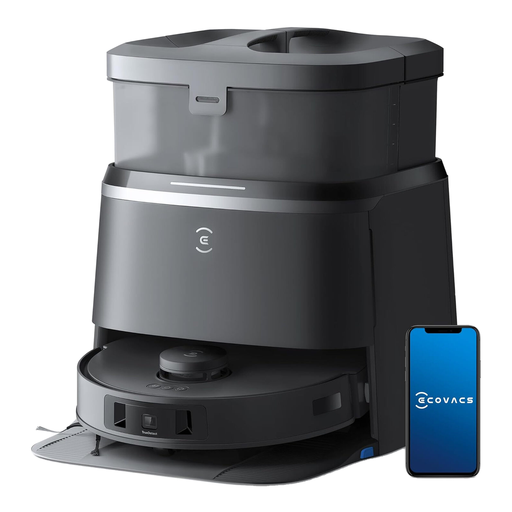
Why This Fits Their Persona: For the tech enthusiast who wants a truly automated, top-tier cleaning system. This model is packed with advanced features for vacuuming and mopping, minimising manual intervention to almost zero.
It addresses the "hidden costs" trap by offering a fully automated station that not only empties dust but also washes the mop pads with 70°C hot water and dries them, ensuring hygienic cleaning and reducing manual upkeep.
Standout features include powerful 11,000Pa suction, TruEdge Adaptive Edge Mopping for cleaning right up to the skirting boards and a ZeroTangle brush design to minimise hair wrap.
We have compiled a complete, real-time list of products that fully satisfy these strict selection criteria and UK safety regulations.
With proper care, a good quality robot vacuum cleaner should last between 3 to 5 years. The most common component to degrade is the battery, which may see a reduction in runtime after 2-3 years of regular use. Consistent maintenance, such as cleaning filters, brushes and sensors, is key to maximising its lifespan.
The day-to-day running cost is minimal. They consume very little electricity to charge—significantly less than a traditional upright vacuum. The main ongoing costs are for consumables. For standard models, this includes filters and brushes (replaced every 6-12 months). For self-emptying models, you will also need to purchase proprietary dust bags, so it is wise to check the price and availability of these before you buy.
Robot vacuums perform admirably on hard floors and low-to-medium pile carpets. However, they can struggle with very thick, high-pile or shag carpets, as the wheels may have difficulty moving and the brush can get bogged down. If you have plush carpeting, look for a model with very high suction power (8,000Pa or more), a carpet boost function and large wheels designed for climbing. Even then, it may not replace a powerful upright vacuum for deep cleaning thick carpets.