
24/7 Customer Support

Free returns

Same-day & Next-day Delivery

Quality Guaranteed

Unlock Your Welcome Offers: FREE Delivery | Up to 80% OFF | Free 30-day JoyPlus trial
Download the APP
As a Joybuy Product Recommendation Officer, my role is to help you navigate the market and find practical solutions for your needs. For owners of motorhomes, caravans and trailers in the UK, ensuring tyre safety is a top priority, especially before embarking on a long journey. A sudden tyre failure can be dangerous and disruptive. An RV tyre pressure monitoring system (TPMS) provides real-time data, offering peace of mind and an essential layer of safety.
This guide will walk you through the key considerations when choosing a system and present some of our top recommendations for 2026, selected to meet the specific demands of large vehicles.
Unlike the systems found in standard cars, a TPMS for a recreational vehicle needs to handle more demanding conditions. Here are a few crucial factors to consider.
Standard car tyres operate at around 30-40 PSI. However, the tyres on a large motorhome, fifth-wheel or heavy-duty trailer can require pressures of 80 PSI, 100 PSI or even higher. It is vital to select a high pressure TPMS with a monitoring range that comfortably exceeds your vehicle's recommended tyre pressures. Always check your vehicle and tyre manufacturer's specifications first.
The distance from the rearmost tyres of a caravan or long trailer to the driver's cab can easily exceed the range of a basic wireless system. Metal bodywork and other electronic interference can further weaken the signal. For this reason, a trailer TPMS with a repeater is often necessary. A repeater is a small signal booster, usually placed towards the rear of the towing vehicle or front of the trailer, that captures the sensor signals and re-transmits them strongly to the monitor in the cab. This is a key feature for any reliable wireless tyre monitoring system for long vehicles.
Most aftermarket systems use external tyre pressure sensors. These simply screw onto the tyre's valve stem in place of the standard dust cap, making them incredibly easy to install without needing to remove the tyres. They are a practical choice for most owners. When installing, it is good practice to check that your valve stems, particularly if they are rubber, are in good condition and free from cracks. Metal valve stems are often recommended for added stability with external sensors.
Here are a few options that address the different needs of UK recreational vehicle owners.
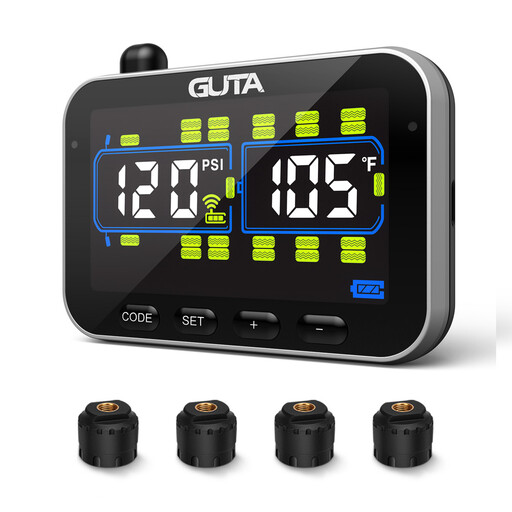
Why It Stands Out: This system is designed specifically for large, heavy vehicles, offering a very high pressure range and the expandability needed for multi-axle setups.
Pros:
Who is it for? This is an ideal choice for owners of large motorhomes, articulated caravans (fifth-wheels) and even small commercial fleet operators who require a robust, expandable and high-pressure monitoring solution.
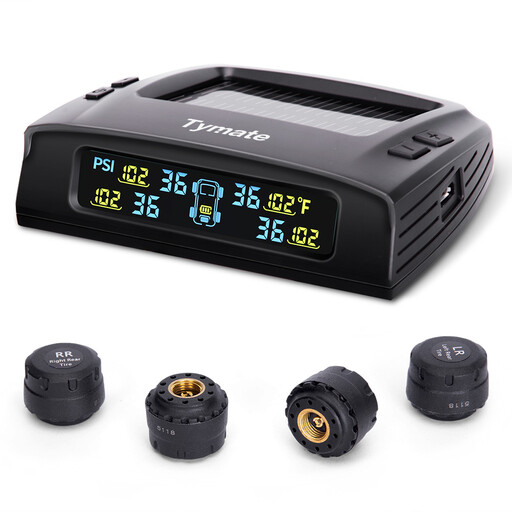
Why It Stands Out: This system offers the convenience of solar power for its display unit, reducing cabin wire clutter, and is well-suited for smaller recreational vehicles.
Pros:
Who is it for? This system is a great fit for drivers of smaller campervans, Class B motorhomes or SUVs that may occasionally tow a small caravan. Its pressure range is not intended for very large, heavy-duty vehicles.
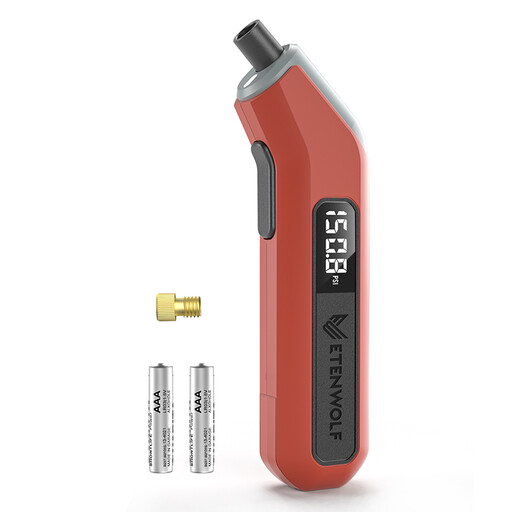
Why It Stands Out: While not a continuous monitoring system, this digital gauge is an essential tool for accurate, manual pre-trip checks.
Pros:
Who is it for? Every vehicle owner. While it doesn't provide the real-time alerts of a full TPMS, this gauge is a fundamental safety tool for performing regular, accurate tyre pressure checks before you set off. It is a perfect companion to a full-time motorhome TPMS.
If the recommendations above don't quite match your vehicle's specific requirements, or if you're looking for a system with a different feature set, there are many other models available.
? Explore our full range of Tyre Pressure Alarm systems to find the perfect fit.
Yes, modern external tyre pressure sensors are generally very reliable. They are designed to be weatherproof and durable. For best results, ensure they are screwed on tightly to prevent leaks and consider using metal valve stems on your wheels, as they provide a more rigid and stable mounting point than rubber stems, especially on heavy-duty vehicles.
A repeater acts as a signal booster. You typically install it on the rear of your towing vehicle or the A-frame of your caravan. It picks up the wireless signals from the sensors on the caravan's tyres and re-transmits them with greater strength to the monitor in your car's cab. This overcomes the signal loss that can occur over long distances and through the metal structures of both vehicles, ensuring you receive consistent and reliable data.
A manual tyre pressure gauge, like the ETENWOLF T300, allows you to check your tyre pressure at a single point in time—typically before you start driving. A caravan tyre pressure monitor (TPMS) provides continuous, real-time monitoring while you are on the road. It will actively alert you to sudden changes, such as a slow leak or a dangerous temperature increase, which a manual gauge cannot do. Both tools are important for comprehensive tyre safety.