
24/7 Customer Support

Free returns

Same-day & Next-day Delivery

Quality Guaranteed

Unlock Your Welcome Offers: FREE Delivery | Up to 80% OFF | Free 30-day JoyPlus trial
Download the APP
If you look in your kitchen drawer, you likely have a collection of knives. Yet, for daily meal preparation, you probably find yourself reaching for just one. For many home cooks across the UK, the goal is to find that single, reliable blade that can handle almost any task. This is where the Santoku knife comes in.
A versatile Japanese kitchen knife, the Santoku is designed for slicing, dicing and mincing with remarkable efficiency. Its name translates to "three virtues," reflecting its prowess in these core kitchen tasks. If you are looking to upgrade from a basic set or find a dependable home cooking knife that simplifies your routine, you are in the right place. This guide will walk you through what to look for in a Santoku and present a few carefully selected options to consider.
Selecting a multi-purpose kitchen knife involves more than just picking one that looks sharp. Consider these key factors to ensure you find a tool that feels like an extension of your hand.
The heart of any knife is its blade. For a Santoku, you will commonly encounter high-quality stainless steel, which offers a great balance of sharpness, durability and corrosion resistance.
A comfortable handle is crucial, especially when you are using the knife for extended periods. The material and shape of the handle affect the knife's overall balance and how it feels to use.
The Santoku has a distinctive shape—a broad blade with a straight edge that curves down at the tip (a 'sheepsfoot' profile). This design is optimised for clean, downward chops rather than the rocking motion used with a curved Western chef's knife. Many Santoku knives also feature dimples, or Granton edges, along the side of the blade. These create small air pockets to reduce friction and help prevent food from sticking, which is particularly useful when slicing vegetables or starchy potatoes.
Based on materials, design and suitability for everyday home cooking, here are our recommendations for your consideration.
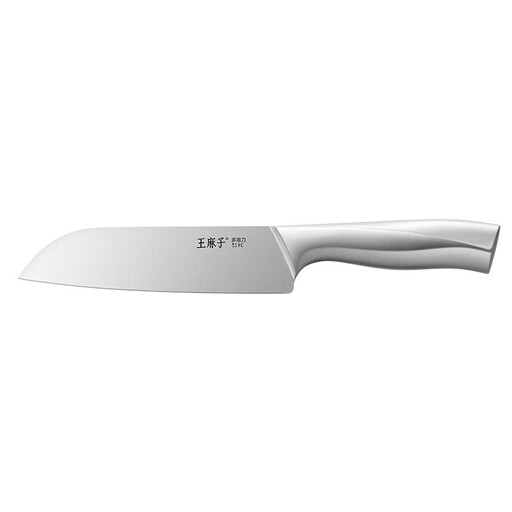
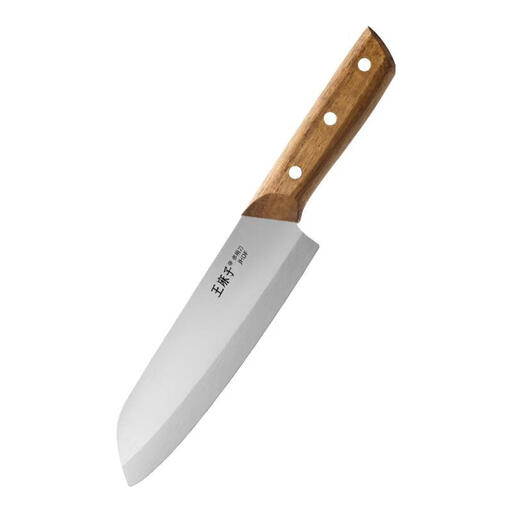
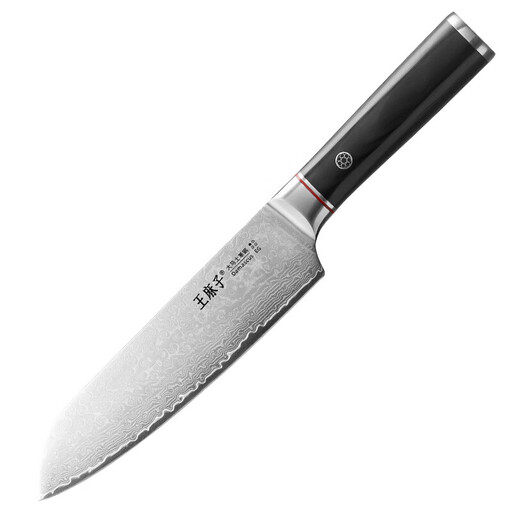
A Santoku knife is a fantastic foundation for any kitchen, but every cook's needs are unique. If you are building out your culinary toolkit and want to see what other specialised or complementary blades are available, you can explore our wider collection of versatile kitchen tools for more inspiration.
What is a Santoku knife best used for? A Santoku knife is a true multi-purpose kitchen knife. Its name, "three virtues," refers to its excellence in slicing, dicing and mincing. It is particularly well-suited for preparing vegetables, boneless meats and fish. The flat edge makes it ideal for quick, clean downward chops.
Can a Santoku knife replace a chef's knife? For many home cooks, yes. The main difference lies in the blade shape and cutting technique. A Western chef's knife has a curved belly, designed for a "rocking" motion. A Santoku has a straighter edge, favouring a direct chopping motion. The choice often comes down to personal preference. If your primary tasks involve more chopping than rocking, a Santoku can easily serve as your main kitchen knife.
How do I care for my Santoku knife? To maintain your knife's performance and longevity, always hand wash it with mild soap and water, then dry it immediately. Avoid dishwashers, as the harsh detergents and high heat can damage both the blade and the handle. For wooden handles, a light application of food-grade mineral oil every few months will keep the wood from drying out. Honing the blade regularly will keep the edge aligned and sharpening it when it feels dull will restore its cutting power.