
24/7 Customer Support

Free returns

Same-day & Next-day Delivery

Quality Guaranteed

Unlock Your Welcome Offers: FREE Delivery | Up to 80% OFF | Free 30-day JoyPlus trial
Download the APP
A digital camera is a powerful tool for capturing memories, but its performance is only as good as the memory card inside it. Choosing the wrong one can lead to slow shooting, corrupted files or missed moments. With a confusing array of terms like SDXC, UHS-I and V30, finding the right SD card for your camera can feel overwhelming.
This guide is designed to cut through the technical jargon. As the Joybuy Product Recommendation Officer, my role is to provide clear, practical advice to help you select a memory card that meets your needs, whether you're shooting family photos on a compact camera or recording professional-grade video.
Before you buy, it's helpful to understand a few key features. Focusing on these three areas will ensure you get a card that works seamlessly with your equipment.
A memory card has two important speeds: read speed and write speed.
Look for cards with a UHS Speed Class 3 (U3) and a Video Speed Class 30 (V30) rating. This indicates a minimum write speed of 30MB/s, which is the recommended baseline for smooth SD card for 4K video recording.
The right capacity depends entirely on how you use your camera. Modern cameras produce large files, especially when shooting in RAW format or 4K.
Also, be aware of the card format. Cards with 64GB of storage or more are typically SDXC memory cards. Always check your camera's manual to ensure it supports the SDXC format before purchasing a high-capacity card.
Finally, always confirm that the card is compatible with your device. Most modern DSLR and mirrorless cameras support the latest standards, but it's always wise to double-check the manufacturer's specifications.
For those who shoot outdoors or travel often, look for cards with durability features. Many are designed to be water-resistant, shockproof and temperature-proof, offering extra peace of mind that your memories are protected.
Based on performance, capacity and user needs, here are our recommendations for reliable memory cards available today.
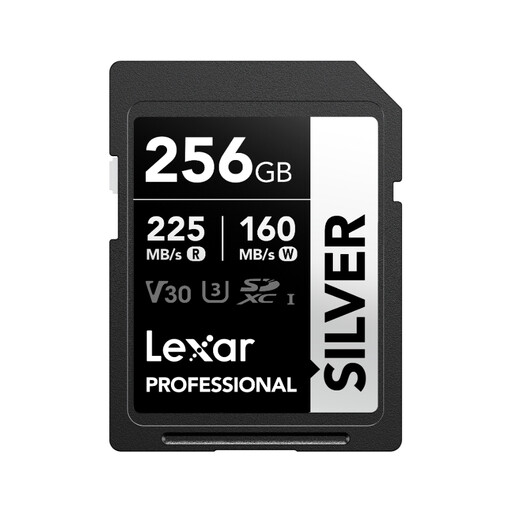
Why It Stands Out: This Lexar memory card strikes an excellent balance between speed, capacity and value. With a maximum write speed of 140MB/s and a V30 rating, it is well-equipped to handle demanding tasks like 4K 60fps video recording and continuous burst photography without slowing you down. The 256GB capacity offers substantial space for most projects.
Pros:
Who is it for?: This card is an excellent choice for enthusiast photographers and videographers using DSLR or mirrorless cameras who require dependable performance for high-quality content creation.
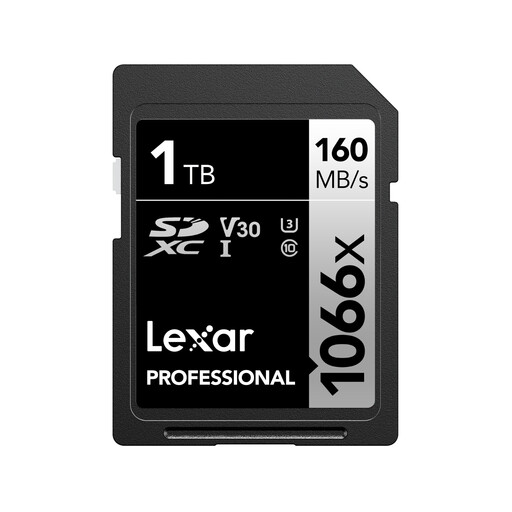
Why It Stands Out: For those who can never have enough storage, this 1TB SD card is a powerhouse. It's a professional-grade memory card for DSLR and mirrorless systems, designed for capturing vast amounts of data without needing to swap cards. Its U3 and V30 ratings ensure it can keep up with 4K UHD recording and high-speed shooting.
Pros:
Who is it for?: Professional videographers, event photographers and content creators who prioritise maximum storage capacity to avoid missing a critical shot.
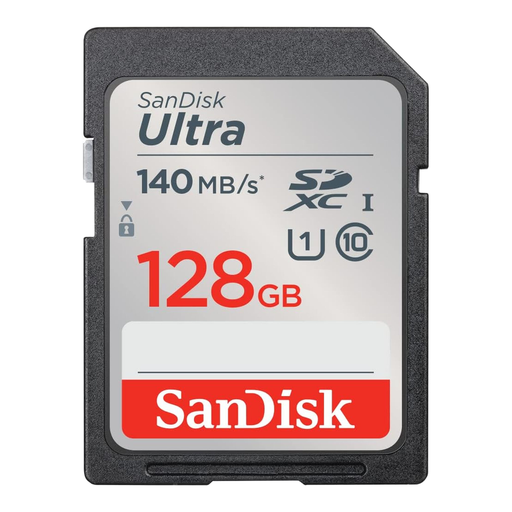
Why It Stands Out: The SanDisk Ultra 128GB card is a dependable and affordable option for everyday photography and Full HD video. While not aimed at high-end 4K production, its performance is more than sufficient for compact and mid-range point-and-shoot cameras. The 128GB capacity provides ample space for holidays and family events.
Pros:
Who is it for?: This SanDisk SD card is perfect for users of compact or entry-level cameras who need a reliable, no-fuss card for capturing daily life and travel memories.
If our top recommendations don't quite match what you're looking for, or if you'd like to compare more models with different speeds and capacities, we have a wider selection available.
Explore our full range of UHS SD memory cards to find the perfect match for your camera and budget.
The main difference is storage capacity. SD cards hold up to 2GB, SDHC (High Capacity) cards range from 4GB to 32GB and SDXC (Extended Capacity) cards offer 64GB up to 2TB. Most modern cameras support SDXC, but it's crucial to check your device's specifications to ensure compatibility, especially with older models.
Not necessarily. While a high speed memory card is beneficial, your camera has a maximum write speed it can handle. Using a card that is significantly faster than your camera's limit won't improve its in-camera performance (like burst shooting speed). However, it will still allow for much faster file transfers to your computer. The goal is to find a card that meets or slightly exceeds your camera's requirements.
Yes, absolutely. As long as the card's technical specifications (e.g., SDXC, UHS-I and V30) are supported by your camera, the brand does not affect compatibility. All major brands design their cards to a universal standard, so you can use a SanDisk SD card and a Lexar memory card interchangeably in the same compatible device.