
24/7 Customer Support

Free returns

Same-day & Next-day Delivery

Quality Guaranteed

Unlock Your Welcome Offers: FREE Delivery | Up to 80% OFF | Free 30-day JoyPlus trial
Download the APP
Seaweed snacks have firmly established themselves in the UK as a go-to alternative for anyone seeking a savoury crunch without reaching for a bag of crisps. Whether for a lunchbox, a desk-side nibble or a flavourful meal topping, the options are vast. But this popularity has also created a confusing market. It's easy to pick a pack that promises a healthy, tasty experience, only to be let down by the reality.
As a Joybuy Product Recommendation Officer, my role is to help you navigate this landscape. We'll look past the clever marketing and focus on the practical details that separate a satisfying purchase from a disappointing one. Here are a few common pitfalls to be aware of.
To make a smart choice, it helps to understand three core factors. Focusing on these will ensure you get exactly what you're looking for.
The format of the seaweed dictates its primary use. Getting this right is the first step to a good purchase.
The flavour profile of a Korean seaweed snack can be very different from a Japanese-style one. Always check the ingredients to match your preference.
The crispiness of a seaweed snack is its defining feature. The right packaging is crucial for protecting it.
Based on these practical considerations, here are a few seaweed snacks suited to different needs and preferences.

Why This Fits Their Persona: This is an ideal choice for those seeking a simple, low calorie snack. With just three ingredients and around 26 calories per pack, it delivers a clean taste and satisfying crunch without any hidden additives, making it a straightforward choice for a healthy savoury snack.
It directly counters the "healthy snack" illusion with a transparent, minimal ingredient list (seaweed, olive oil, sea salt) and no added sugar. The multi-pack of individual servings also solves the freshness problem.
Very low calorie count per serving. Simple, recognisable ingredients without complex seasonings or flavour enhancers.
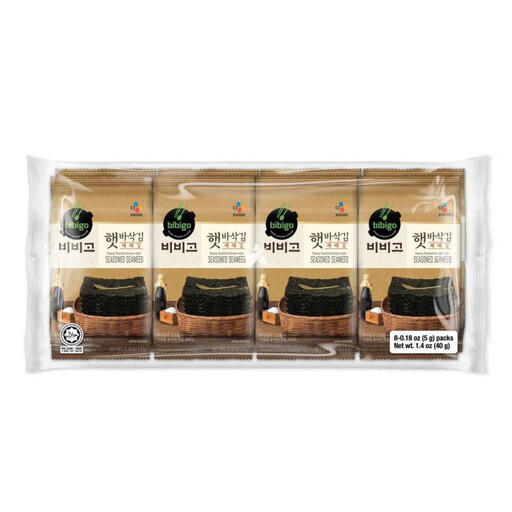
Why This Fits Their Persona: For those who love the distinct taste of a traditional Korean seaweed snack, this is an excellent fit. It delivers the classic savoury and nutty flavour profile from soy sauce and sesame oil that is characteristic of Korean 'gim'.
This product avoids the format mismatch by being a clear, ready-to-eat snacking thin. The 8-pack format ensures each portion is fresh, preventing the staleness that plagues larger, single-bag options.
Authentic Korean seasoning profile. The convenient 8-pack is great for maintaining freshness and for portioned snacking.

Why This Fits Their Persona: This is for the person who sees seaweed as an ingredient, not just a snack. The flaked 'Jaban' format is incredibly versatile, perfect for adding a spicy, savoury and crunchy texture to rice bowls, soups, salads and noodles. The chilli flavour adds a welcome kick.
It completely sidesteps the format mismatch pitfall. This is clearly labelled and designed as a topping or mix-in, setting the right expectation for its use as a versatile pantry staple rather than a standalone snack.
Highly versatile flaked format for culinary use. The bold chilli flavour provides a unique taste profile for enhancing meals.
We have compiled a complete, real-time list of products that fully satisfy these strict selection criteria and UK safety regulations.
The key to maintaining crispness is to minimise exposure to air and moisture. For multi-packs, only open one individual serving at a time. If you buy a larger bag, immediately transfer the contents to a completely airtight container after opening. Store it in a cool, dry cupboard away from sunlight. Do not refrigerate, as condensation can make them go soft.
They certainly can be. Seaweed is naturally a source of vitamins and minerals, including iodine and is very low in calories. The overall healthiness depends on the preparation and seasoning. Opt for roasted seaweed over fried versions and always check the nutritional label. Pay close attention to the salt and sugar content per serving to ensure it aligns with your dietary goals.
While there is much variety within each cuisine, a general distinction can be made. Korean seaweed snacks (often called 'gim') are typically brushed with sesame oil and salt before roasting, which gives them a characteristic nutty and savoury flavour. Japanese nori snacks or yaki nori sheets are often more simply roasted with just salt or are left unseasoned to preserve the pure, umami flavour of the seaweed, especially when intended for making sushi.