
24/7 Customer Support

Free returns

Same-day & Next-day Delivery

Quality Guaranteed

Unlock Your Welcome Offers: FREE Delivery | Up to 80% OFF | Free 30-day JoyPlus trial
Download the APP
As a nation of devoted pet lovers, we want to provide the best for our feline companions. Yet, the daily chore of scooping the litter tray is a task few of us relish. An automatic self-cleaning cat litter box promises a future free from scooping, with better hygiene and odour control. However, the market is filled with models that over-promise and under-deliver.
Many cat owners invest in a high-tech solution only to find themselves disappointed. Before you make a purchase, it is crucial to understand the common pitfalls that can turn a promising convenience into a costly headache.
To ensure your investment enhances your home and your cat's well-being, focus on the core specifications rather than the marketing hype. Analysing these three areas will help you select a reliable and effective model.
A truly safe smart cat litter box integrates multiple layers of protection. Do not settle for a basic motion detector. Look for a multi-point system that includes:
For households with more than one feline, a cat litter box for multiple cats needs more than just a large waste bin. Consider two key metrics:
app controlled litter tray that provides real-time waste level alerts is also highly practical.An effective odour control cat litter box uses a combination of methods. A tightly sealed waste compartment is the first line of defence. Beyond that, look for additional technologies such as:
We have identified several models that address the common pitfalls by focusing on robust engineering and practical features. Here is how they match different household needs.
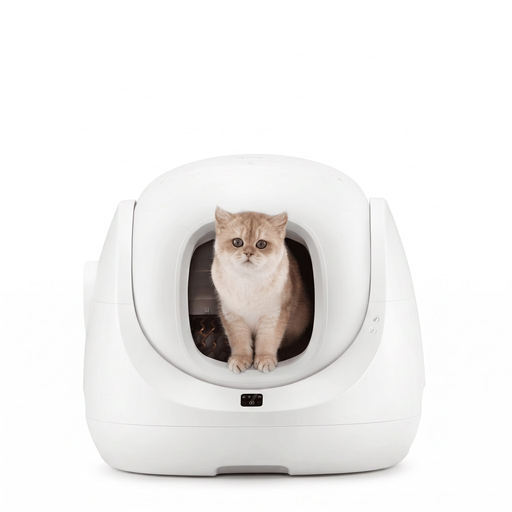
Why This Fits Their Persona: This model is ideal for busy owners of multiple cats who value data and control. The app's ability to identify individual cats by weight provides genuine health insights, while the extra-large 70L capacity accommodates several users comfortably.
It counters unrealistic capacity claims with a genuinely large cat litter box design and provides real usage data per cat, rather than a simple cycle count. Its 6-point safety system is far more reliable than basic sensors.
Features AI-powered multi-cat identification for health monitoring and a comprehensive OdorLock system combining a sealed lid, gravity-sealed door and deodorant gel.
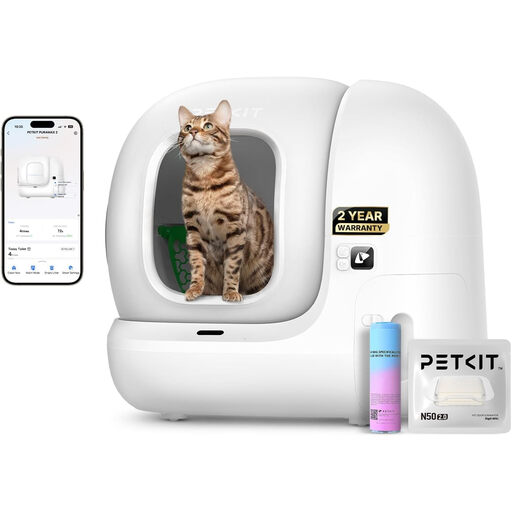
Why This Fits Their Persona: Accessibility and safety are paramount for this owner. The PuraMax 2 features a low entry cat litter box design, with an entrance height of just 20 cm, making it easy for cats with limited mobility to use. The comprehensive safety system provides peace of mind.
It directly addresses the pitfall of poor safety with its xSecure system, which includes infrared sensors, weight sensors and accident prevention alerts. The low entry is a tangible design feature, not just a marketing term.
Features a very low 20 cm entrance height suitable for senior cats and smaller breeds. The app provides health monitoring by tracking weight and usage patterns.
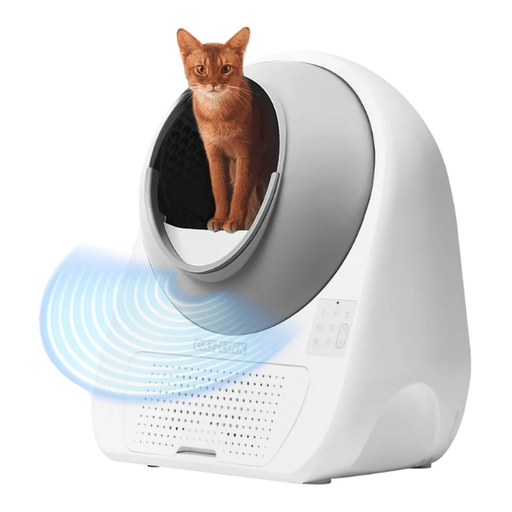
Why This Fits Their Persona: For the owner who wants a top-tier solution with minimal interaction. The huge 13L waste bin genuinely extends the time between emptying and the advanced 3-layer deodorisation system is built for maximum odour elimination in any home.
It tackles the odour pitfall head-on with a multi-technology system (UV, Carbon Filter and Active Oxygen) that goes far beyond a simple seal. The 13L waste bin provides a realistic, long-lasting capacity for heavy use, avoiding exaggerated claims.
Features an exceptionally large 13L waste bin for extended hands-free operation. Its intelligent deodorisation system offers one of the most comprehensive approaches to odour control on the market.
While the focus is often on the box itself, accessories like litter mats and ramps can significantly improve the experience. For example, the Catlink Cat Stairs not only aids access but also traps litter, while dedicated deodoriser blocks can boost freshness. For those seeking a more traditional but still tidy solution, enclosed options like cat litter box furniture can hide a standard tray and blend with your decor.
Once you have your new litter box, choosing the right clumping litter is essential for performance. We have compiled a complete list of compatible litters that meet our strict selection criteria.
High-quality models are designed with safety as a priority. Look for units that feature a multi-component safety system, including gravity sensors (to detect weight), infrared sensors (to detect presence) and motor-jam protection. It is always advisable to supervise your cat during their first few interactions with a new device to ensure they are comfortable.
The running costs are generally modest. Electricity consumption is low, similar to a small home appliance that only runs intermittently. The main ongoing costs are for proprietary waste bin liners (though some can use standard bags) and a good quality, hard-clumping cat litter, which is essential for the sifting mechanism to work effectively.
This depends entirely on the size of the waste compartment and the number of cats using it. A 7L waste bin might last a single cat up to two weeks. However, for a household with two or three cats, you should realistically expect to empty it every 4-7 days. Models with larger 10L or 13L bins will extend this period accordingly. App notifications that alert you when the bin is full are a very useful feature.