
24/7 Customer Support

Free returns

Same-day & Next-day Delivery

Quality Guaranteed

Unlock Your Welcome Offers: FREE Delivery | Up to 80% OFF | Free 30-day JoyPlus trial
Download the APP
For many UK cat owners, the daily ritual of scooping the litter tray is a necessary but unwelcome chore. It’s a task that consumes time, creates mess and often struggles to contain persistent odours, especially in households with more than one feline resident. If you're looking for a more hygienic and convenient solution, the modern self-cleaning cat litter box offers a compelling upgrade.
These automated devices, also known as a robotic litter tray or smart cat litter tray, handle the scooping for you, depositing waste into a sealed compartment to be dealt with at your convenience. This guide is designed to help you navigate the key features and identify a model that suits your home, your cat and your lifestyle.
Investing in an automatic cat litter box is a significant purchase. To ensure you make a choice you and your cat will be happy with, consider these practical points.
The physical dimensions of the unit are a primary consideration. If you share your home with a large breed like a Maine Coon or Ragdoll, or have several cats, you'll need a large self-cleaning litter box. Look for models with a generous internal globe or chamber volume (measured in litres) to ensure your cat has enough room to turn around comfortably. Equally important is the waste drawer capacity. A larger drawer means you'll be emptying it less frequently, a key benefit for a busy cat litter box for multiple cats.
A principal reason for upgrading is to achieve superior odour control cat litter box performance. Modern units employ various technologies, from sealed waste compartments and carbon filters to more advanced systems using ozone or UV light to neutralise bacteria and smells. Alongside hygiene, safety is paramount. Reputable models are equipped with multiple sensors—such as weight sensors, infrared beams and radar—that detect a cat's presence and immediately pause any cleaning cycle to prevent harm. Always ensure any model you consider has robust, multi-layered safety features.
For the tech-savvy owner, an app-controlled cat litter box provides an additional layer of convenience and insight. Through a connected smartphone app, you can trigger cleaning cycles remotely, set automated schedules and receive notifications when the waste bin is full. More advanced models offer a cat health monitoring litter box function, using integrated scales and sensors to track your cat's weight, toilet frequency and duration of visits. This data can help you spot potential health issues early by identifying changes in your cat's habits.
Here are a few models that showcase the different features available on the market, each catering to specific needs.
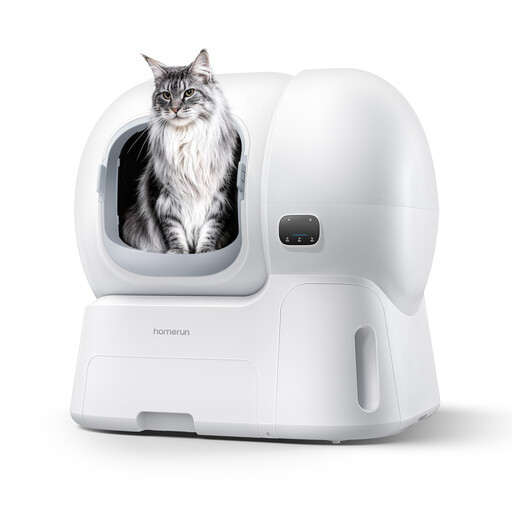
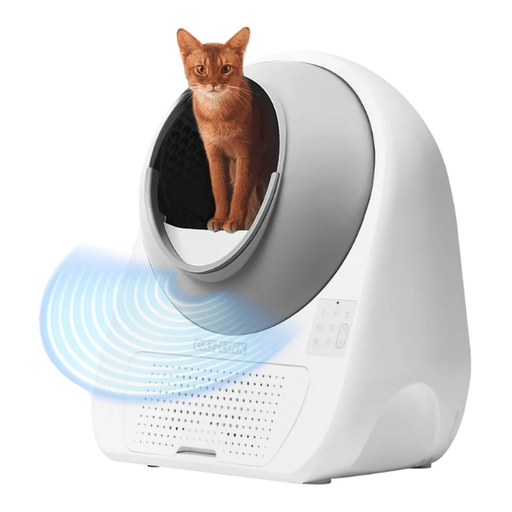
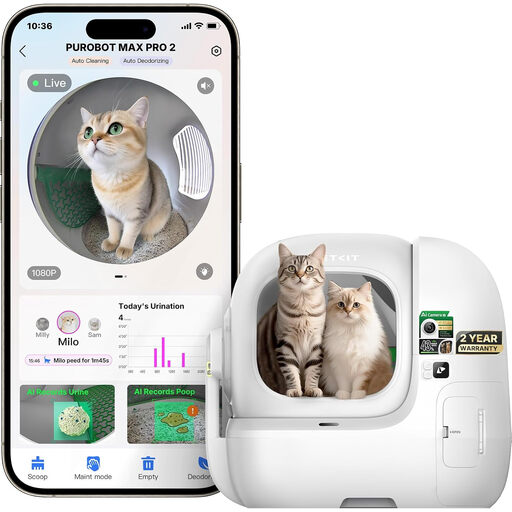
The models highlighted here represent just a fraction of the innovative solutions available. If your needs are different, or you'd simply like to browse a wider selection, there are many other designs and feature sets to consider.
Explore our full collection of self cleaning cat litter boxes to find the perfect fit for your home and feline friend.
Yes, reputable models are designed with safety as a top priority. They typically feature a combination of weight sensors, infrared beams and motion detectors that will immediately stop a cleaning cycle if a cat approaches or enters the unit. It is always advisable to supervise your cat during the initial adjustment period.
This depends on the capacity of the waste compartment and the number of cats using it. For a single cat, most units with a reasonably sized waste drawer (around 10-13 litres) will need emptying approximately every 10 to 14 days. For multiple cats, you should expect to empty it more frequently.
Most self-cleaning cat litter box models require a high-quality, hard-clumping cat litter to function effectively. The sifting mechanism is designed to separate solid clumps from clean litter. Using non-clumping, slow-clumping or dusty litters can lead to messy cycles and clog the mechanism. Always check the manufacturer's recommendations for the specific type of litter to use.