
24/7 Customer Support

Free returns

Same-day & Next-day Delivery

Quality Guaranteed

Unlock Your Welcome Offers: FREE Delivery | Up to 80% OFF | Free 30-day JoyPlus trial
Download the APP
For many cat owners in the UK, the daily ritual of scooping the litter tray is a necessary but unwelcome chore. It's a task that can be messy, time-consuming and a constant battle against odours. If you're a busy professional or manage a multi-cat household, maintaining a consistently clean and hygienic environment can feel like a never-ending job.
This is where the self-cleaning cat litter box comes in. These automated devices, also known as robotic litter boxes, handle the scooping for you, depositing waste into a sealed compartment to keep your home fresh. This guide is designed to help you navigate the options available, focusing on the key features that matter most: safety, capacity and smart functionality. We'll highlight a few standout models to help you find a solution that fits your home and your cat's needs.
Before investing in a smart litter box, it's important to understand what sets different models apart. Here are a few practical points to consider.
The most critical feature of any automatic cat litter tray is its safety system. Reputable models are equipped with multiple sensors to protect your pet. Look for devices with gravity sensors that detect your cat's weight, infrared sensors that spot movement near the entrance and anti-pinch mechanisms. These systems work together to ensure the cleaning cycle only runs when the unit is empty and will pause immediately if a cat approaches or enters.
Consider both the internal space for your cat and the capacity of the waste compartment. If you have a large breed, like a Maine Coon, or a cat litter box for multiple cats, you'll need a model with a generous interior and a large waste drawer. A larger waste bin means you'll be emptying it less frequently—some models can go for over two weeks for a single cat before needing attention.
Many modern units are app-controlled cat toilets, connecting to your home Wi-Fi. This allows you to trigger cleaning cycles remotely, receive notifications when the waste bin is full and customise cleaning schedules. More advanced models offer a cat health monitoring litter box function, using sensors to track your cat's weight, frequency of use and duration of visits. This data can provide valuable early insights into your pet's well-being.
Here are a few models that offer a compelling combination of features for UK cat owners.
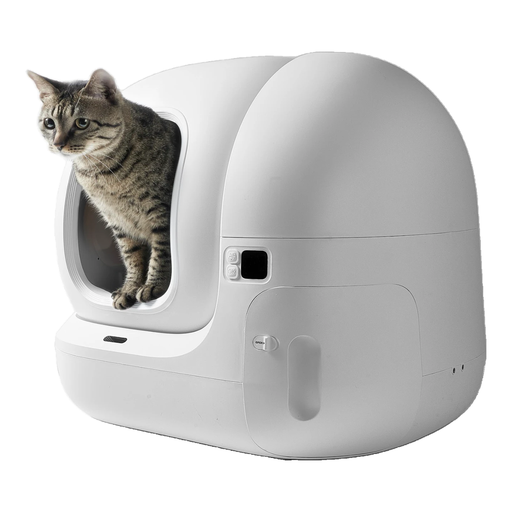
Why It Stands Out: The PETKIT Pura Max 2 is a well-rounded option that balances advanced technology with user-friendly design. Its xSecure system, which includes infrared sensors and weight sensors, provides a safe environment for your cat. The companion PETKIT app allows for remote control and health monitoring, tracking your cat's weight and toilet habits. For superior odour control, it features an integrated Pura Air Smart Spray that automatically deodorises after each use.
Pros:
Who is it for? This model is an excellent choice for tech-savvy cat owners who want a reliable, app-controlled device with solid safety features and effective odour management.

Why It Stands Out: The CATLINK BayMax Lite is built with multi-cat and larger-cat households in mind. It boasts an extra-large 70L interior capacity, ensuring even bigger cats have plenty of room. Its standout feature is a comprehensive 8-layer safety system, including four gravity sensors and anti-pinch mechanisms. The low-entry design, at just under 8 inches, makes it accessible for older cats or those with mobility issues. The CATLINK app can also distinguish between multiple cats based on weight for individual health tracking.
Pros:
Who is it for? This is a strong contender for owners of multiple cats, larger breeds or senior cats, where safety, space and accessibility are top priorities.
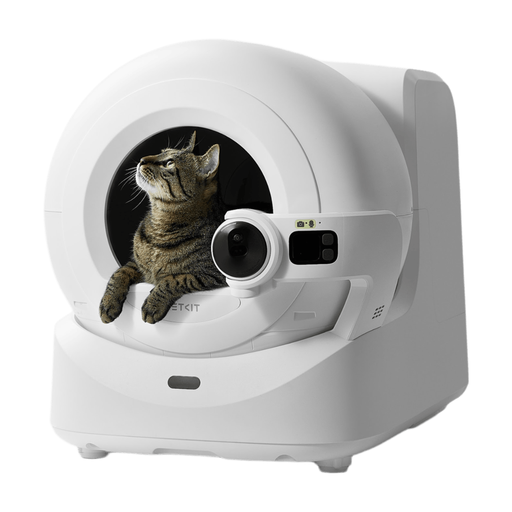
Why It Stands Out: For the owner who wants the most detailed health insights, the PETKIT Purobot Ultra integrates a 180-degree rotating camera. This system goes beyond simple weight tracking by capturing images of your cat's waste, which can be viewed in the app. This allows you to visually monitor for any changes. The device also uses facial features and size to distinguish between cats, creating individual health records for each pet in a multi-cat household. Its 10-litre sealed waste bin and advanced sealing technology provide excellent odour containment.
Pros:
Who is it for? This is geared towards the highly proactive pet owner who values detailed, data-driven health monitoring and wants the most advanced technology available for pet care.
If these models aren't quite what you're looking for, or if you'd like to compare a wider variety of features and price points, there are many other solutions available.
Explore Our Full Range of Automatic Cat Litter Cleaning Solutions
For many, the answer is yes. The primary benefits are convenience, improved hygiene and superior odour control. By automatically removing waste, these devices keep the litter bed cleaner for your cat, which can help prevent out-of-box issues. For busy individuals or those sensitive to litter dust and odours, the time saved and the cleaner home environment can justify the initial cost.
A gradual introduction is key. Place the new robotic litter box near the old one but leave it turned off for a few days. Let your cat explore it at their own pace. You can encourage them by adding a scoop of their used litter to the new unit to transfer their scent. Once they start using it, you can turn on the automatic cleaning cycle. It's often recommended to set the cycle to run 15-30 minutes after the cat leaves to avoid startling them initially.
Most self-cleaning litter boxes are designed to work with high-quality, hard-clumping clay or bentonite litters. These litters form solid, firm clumps that the sifting mechanism can easily separate and remove. Some models are also compatible with certain mixed or tofu litters, but it's crucial to check the manufacturer's recommendations. Using non-clumping, lightweight or paper-based litters will typically not work and may damage the device.