
24/7 Customer Support

Free returns

Same-day & Next-day Delivery

Quality Guaranteed
Download the APP
Categories
Keeping a home consistently clean can feel like a never-ending task, especially when juggling work, family and life's other demands. The daily build-up of dust, crumbs and pet hair means the vacuum and mop are never put away for long. This is where the latest generation of automated cleaning technology offers a genuine solution.
A self-emptying robot vacuum and mop is more than just a gadget; it's a sophisticated hands-free cleaning solution designed to give you back your time. These devices can autonomously vacuum, mop and then return to a base station to empty their own dustbins and, in some cases, even clean their own mopping pads.
As a Joybuy Product Recommendation Officer, my role is to help you understand the features that truly matter. This guide will cut through the marketing jargon, offering practical advice to help you choose a model that fits your home and lifestyle, based on objective product specifications.
Navigating the options can be confusing. To simplify your decision, focus on these key areas that determine performance and convenience.
Suction power, measured in Pascals (Pa), is a critical indicator of how well a robot vacuum can lift dirt, especially from deep within carpet fibres. For homes with carpets or pets, a high suction robot vacuum is essential. Look for models with at least 4,000Pa. Equally important is the brush design. Many modern units now feature anti-tangle systems with rubber or combination brushes specifically designed to handle long hair and fur, making them an excellent robot vacuum for pet hair without constant manual intervention.
How a robot navigates determines its cleaning efficiency. Basic models may use random patterns, but premium units employ advanced systems like LiDAR navigation. A LiDAR navigation vacuum uses lasers to create a precise, detailed map of your home. This allows for methodical, room-by-room cleaning, intelligent obstacle avoidance and the ability to set no-go zones via a smartphone app. This technology is particularly beneficial for complex layouts or the best robot vacuum for large homes, ensuring no spot is missed.
The docking station is what makes these devices a truly automatic self-cleaning robot vacuum. At a minimum, it should automatically empty the robot's internal dustbin into a larger, sealed bag that only needs changing every 30-75 days. More advanced stations take automation further by also washing the mopping pads with clean water (sometimes heated), drying them with hot air to prevent odours and refilling the robot's water tank. Consider how much hands-on maintenance you are willing to do when choosing a station.
Here are a few standout models that offer a compelling combination of performance, intelligence and automation.
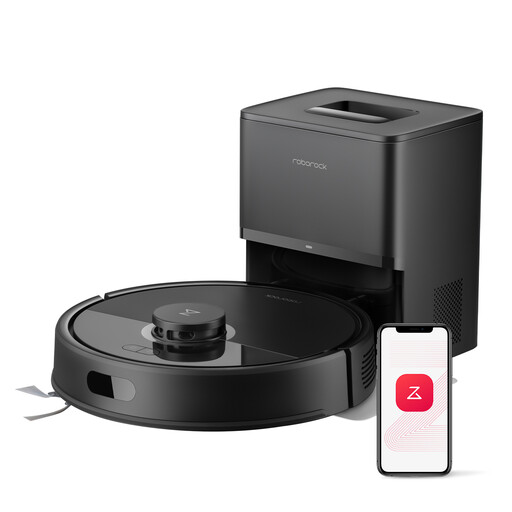
Why It Stands Out: The Roborock Q7 L5+ is built for homes that need serious cleaning power. Its impressive suction and specialised brush system make it a formidable opponent against dirt and pet hair on any surface.
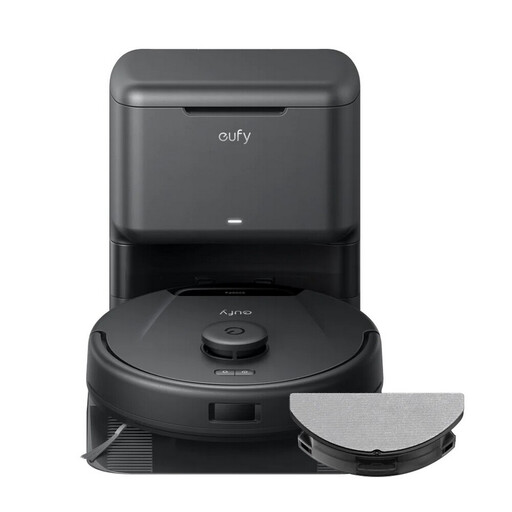
Why It Stands Out: The Eufy L60 Hybrid offers a fantastic balance of smart features and long-term convenience. The self-empty station holds up to 60 days of debris, making it a true 'set and forget' appliance for busy individuals.
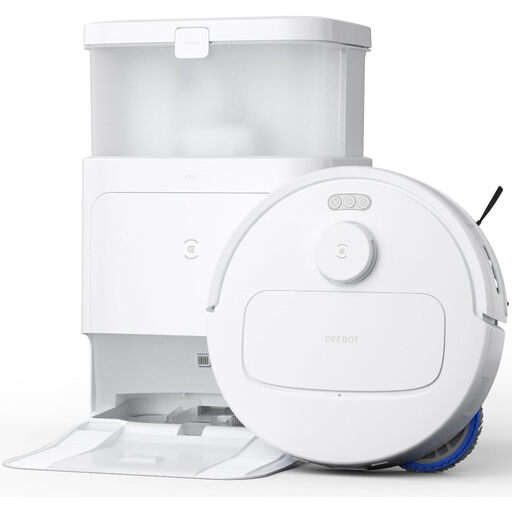
Why It Stands Out: This model represents the peak of cleaning automation. Its OMNI station not only empties dust but also washes the mop pads with 60°C hot water and dries them, providing a complete, hygienic and hands-off experience.
View the ECOVACS DEEBOT N30 PRO OMNI
The models highlighted here are excellent starting points, but every home has unique needs. If you're looking for different features or price points, there are many other great choices available.
Explore our full, curated collection to find the perfect match for your home. Browse our complete range of robot vacuum self cleaning models here.
This depends on the size of the docking station's dust bag and your home's environment (e.g., pets, carpeted areas). Most self-empty stations hold between 30 and 75 days' worth of debris, meaning you only need to interact with the bin once every month or two.
Yes, but with a key feature to look for. High-end models have an "auto-lift" or "carpet detection" function. When the robot senses it is moving onto a carpet or rug, it will automatically lift its mopping pads to avoid getting the carpet wet. This allows it to vacuum carpets and mop hard floors in a single cleaning run without any intervention.
For most homes, especially those with multiple rooms or complex layouts, LiDAR is absolutely worth it. It allows the robot to clean in straight, efficient lines, remember where it has been and avoid missing spots. It also enables advanced app features like creating virtual walls, setting specific rooms for cleaning and tracking the robot's progress in real-time, offering a much smarter and more reliable cleaning experience.