
24/7 Customer Support

Free returns

Same-day & Next-day Delivery

Quality Guaranteed

Unlock Your Welcome Offers: FREE Delivery | Up to 80% OFF | Free 30-day JoyPlus trial
Download the APP
Keeping your floors consistently clean can feel like a never-ending task, especially when juggling a busy career, family life or the delightful chaos that comes with pets. The daily build-up of dust, crumbs and pet hair requires constant attention. A self emptying robot vacuum and mop offers a practical solution, automating your floor care routine to give you back valuable time and ensure your home remains spotless with minimal effort.
This guide is designed to help you navigate the key features of these advanced cleaning devices. We will break down what to look for and present a selection of models that stand out for their performance and convenience, helping you make an informed choice for your home.
Choosing the right model depends on your specific needs, from your floor types to your household's daily life. Here are a few key factors to consider.
Suction power, measured in Pascals (Pa), determines how effectively a robot can lift dirt, dust and larger debris from your floors. For homes with hard floors and light traffic, a model with around 4,000Pa is often sufficient. However, for households with deep-pile carpets or pets that shed, a higher suction power is crucial. A 10,000Pa suction robot vacuum provides the force needed for a deep clean, making it an excellent choice as a robot vacuum for pet hair. Also, look for features like tangle-free brushes, which significantly reduce maintenance by preventing hair from wrapping around the roller.
Modern robot mops have evolved far beyond simply dragging a wet cloth. Advanced models now offer features that deliver a much more effective clean. For instance, a robot vacuum with hot water mopping uses heated water to dissolve stubborn, greasy stains more effectively than cold water. Another key innovation is auto-lift mopping. This technology allows the robot to automatically raise its mopping pads when it detects carpet, ensuring your rugs stay dry and preventing cross-contamination between different floor types. This makes it one of the best robot vacuum for hardwood and carpet homes.
The intelligence of a robot vacuum lies in its navigation system. A smart mapping robot vacuum typically uses LiDAR (LDS) to create a precise map of your home, allowing it to clean in efficient, methodical lines and avoid obstacles. This technology is essential for an all-in-one robot cleaner to operate effectively. Furthermore, a robot vacuum with app control is standard on most quality models, giving you the power to schedule cleanings, set no-go zones and customise cleaning modes directly from your smartphone, offering true hands-free cleaning convenience.
Here are our recommendations for self-emptying robot vacuums and mops that deliver on performance, automation and user-friendly design.
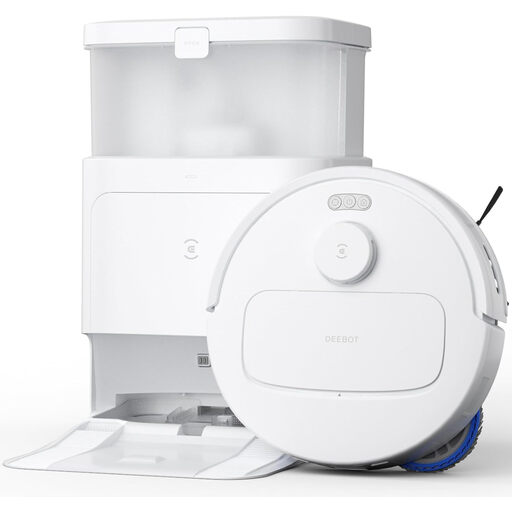
Why It Stands Out The DEEBOT N30 PRO OMNI is a comprehensive cleaning system designed for those who want maximum automation. Its all-in-one OMNI station not only self-empties the dustbin but also washes the mop pads with 60°C hot water and dries them with hot air, ensuring the unit is always clean and ready for its next run. With class-leading 10,000Pa suction and innovative TruEdge Adaptive Edge Mopping, it provides exceptional wall-to-wall cleaning.
Pros
Who is it for? Tech-savvy homeowners and pet owners who want a top-tier, fully automated cleaning solution that requires the absolute minimum of manual intervention.
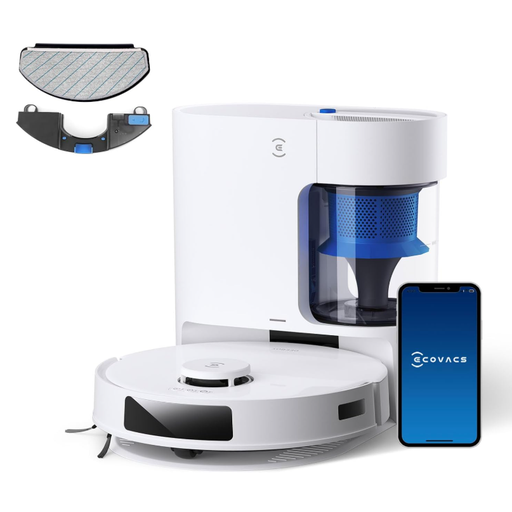
Why It Stands Out The DEEBOT N20 PLUS strikes an excellent balance between power and practicality. It boasts a very strong 8,000Pa suction power, making it highly effective on both hard floors and carpets. Its bagless PureCyclone self-empty station offers a convenient and cost-effective alternative to models requiring disposable bags. Combined with its long runtime and precise LDS navigation, it is a reliable workhorse for daily cleaning.
Pros
Who is it for? Families and pet owners looking for a powerful and efficient automatic vacuum and mop with the convenience of self-emptying, but without the need for premium features like hot water mopping.
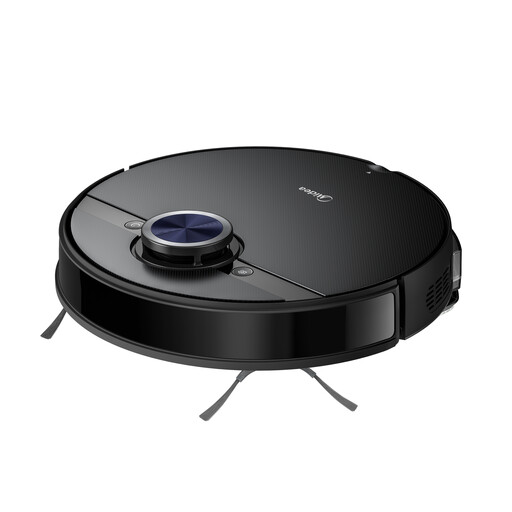
Why It Stands Out The Midea S8+ is a capable and intelligent cleaner that combines strong performance with user-friendly features. Its 4,000Pa suction is more than adequate for daily maintenance on hard floors and low-pile carpets. The high-frequency vibration mopping system actively scrubs floors to remove dried-on spots, while the self-emptying station holds weeks of debris. With smart carpet detection that automatically boosts suction, it adapts well to mixed-floor environments.
Pros
Who is it for? Individuals or families in flats or homes with primarily hard flooring who want the convenience of a self-emptying robot with an effective mopping function.
If you haven't found the perfect match for your home yet, don't worry. The world of robotic cleaners is vast, with models suited to every budget and household need. To see more advanced cleaning solutions, we invite you to explore our complete range.
Explore our full collection of vacuum-mopping robots to find your ideal cleaning partner.
1. How effective are robot vacuums for pet hair? They can be extremely effective, provided you choose the right model. Look for units with high suction power (5,000Pa or more) and a brush designed to resist tangles, often marketed as "tangle-free" or with specific anti-hair wrap technology. These features ensure that pet hair is lifted from carpets and floors and successfully deposited into the dustbin without causing maintenance headaches.
2. Can a self-emptying robot vacuum and mop completely replace my regular vacuum? For daily and weekly floor maintenance, a high-quality robot vacuum can absolutely replace your manual efforts. They excel at keeping dust, crumbs and hair under control. However, you may still want to keep a traditional or stick vacuum for specific tasks like cleaning stairs, upholstery, car interiors or for occasional deep-cleaning sessions in hard-to-reach corners.
3. How does auto-lift mopping work on different floor types? Auto-lift mopping systems use sensors, often ultrasonic, to detect changes in the floor surface. When the robot moves from a hard floor (like wood, tile or vinyl) onto a carpet or rug, it automatically lifts the mopping pads by several millimetres. This action prevents the wet pads from dragging across the carpet, avoiding dampness and ensuring the robot can continue vacuuming without interruption.