
24/7 Customer Support

Free returns

Same-day & Next-day Delivery

Quality Guaranteed

Unlock Your Welcome Offers: FREE Delivery | Up to 80% OFF | Free 30-day JoyPlus trial
Download the APP
Welcoming a new baby brings immense joy, but it can also come with challenges like feeding fussiness, colic and what feels like a never-ending cycle of washing and sterilising. If you're looking for a way to make feeding time calmer for your baby and more convenient for you, you've likely come across self-sterilising anti-colic bottles.
These innovative bottles are designed not only to help reduce the discomfort of colic and gas but also to simplify your daily routine by eliminating the need for a separate, bulky steriliser. As the Joybuy Product Recommendation Officer, my role is to help you navigate the options and find practical solutions that fit your family's needs. This guide will walk you through key features to consider and highlight some standout choices for 2026.
Choosing the right newborn feeding bottles can feel overwhelming. Focusing on a few key areas can help simplify the decision.
For parents who are combination feeding or transitioning from breast to bottle, the teat is crucial. Look for breast-like baby bottles with a soft, flexible silicone teat shaped to encourage a natural, wide latch. This can help reduce nipple confusion and make switching between breast and bottle feel more seamless for your baby. Many brands now offer teats with a skin-like texture to further promote acceptance.
The term "anti-colic" refers to features designed to minimise the amount of air your baby swallows during a feed, which is a common cause of gas and discomfort. The most effective baby bottles for colic and gas use one of two systems:
The standout feature of microwave steriliser bottles is their convenience. The ability to sterilise a bottle in minutes using just a microwave is a significant time-saver for busy parents. Beyond convenience, there is a growing demand for eco friendly baby bottles. Some brands are now using bio-circular or biodegradable materials, offering a more sustainable choice without compromising on safety or performance.
Here are a few self-sterilising, anti-colic bottles that offer practical features for modern parents.

Why It Stands Out: The MAM anti-colic bottles are well-regarded for their unique vented base, which promotes an even drinking flow to help prevent colic. The self-sterilising function is incredibly straightforward, making it a practical choice for use at home or while travelling.
Pros:
Who is it for: Parents of newborns looking for a reliable bottle to help manage colic and gas, who also prioritise convenience and eco-conscious design.
View MAM Easy Start Bottle on Joybuy.co.uk
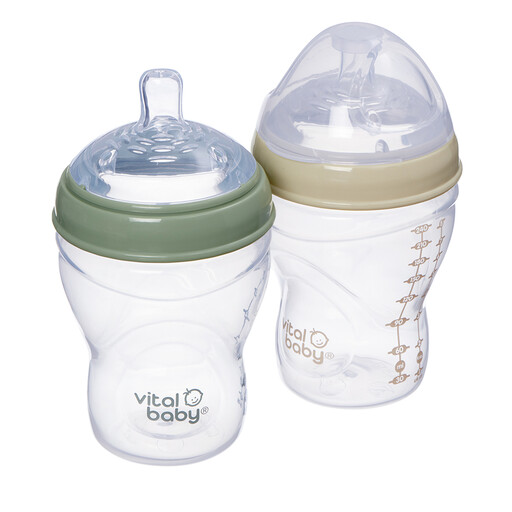
Why It Stands Out: The Vital Baby Nurture bottles are a strong contender for parents focused on both combination feeding and environmental impact. The teat's FlexZone technology is designed to mimic the natural stretch of the breast, while the bottle itself is made with innovative EarthSmart technology.
Pros:
eco friendly baby bottle choice.Who is it for: Eco-conscious families who are bottles for combination feeding and want a design that closely mimics the natural breastfeeding experience.
View Vital Baby Nurture Bottle on Joybuy.co.uk
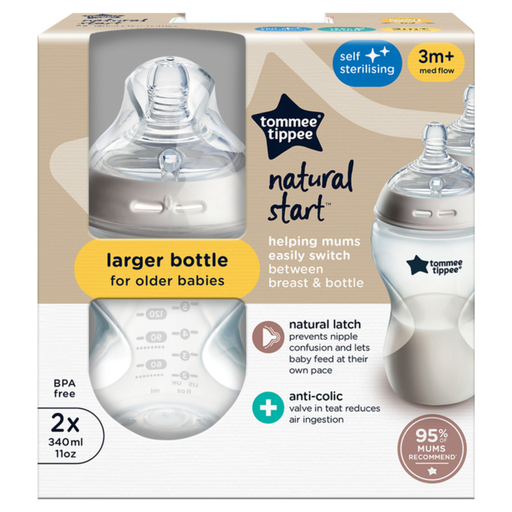
Why It Stands Out: The Tommee Tippee Natural Start bottle is a household name for a reason. This larger 340ml version combines the brand's popular breast-like teat with the convenience of self-sterilisation, making it an excellent option as your baby's appetite grows.
Pros:
Who is it for: Parents with babies who are moving onto larger feeds and want a trusted, widely accepted bottle that still offers the convenience of self-sterilisation.
View Tommee Tippee Natural Start Bottle on Joybuy.co.uk
While these three bottles offer excellent features, every baby is different. If you're still exploring or have other specific needs, we have a wider selection of feeding bottles to suit every family.
Explore our full range of plastic bottle options to find the perfect match for your little one.
Self-sterilising bottles are designed for use in a microwave. The process is simple: you disassemble the bottle, add a specific amount of water (usually around 20-50ml) to the base, place the components inside and microwave for approximately 3 minutes. This creates steam that effectively sterilises the bottle without needing a separate electric steriliser.
For hygiene and safety, it is generally recommended to replace bottle teats every 1-2 months. You should also inspect the teat before every feed for any signs of damage, weakness or tackiness, and replace it immediately if you notice any issues.
Yes, many of these bottles are designed specifically as newborn feeding bottles and are suitable from 0+ months. It is important to ensure you are using the correct teat flow rate for your baby's age—typically a slow-flow teat for newborns—to ensure a comfortable and safe feeding pace. Always check the product's packaging for age recommendations.