
24/7 Customer Support

Free returns

Same-day & Next-day Delivery

Quality Guaranteed

Unlock Your Welcome Offers: FREE Delivery | Up to 80% OFF | Free 30-day JoyPlus trial
Download the APP
A loose button, a split seam or a fallen hem can happen at the most inconvenient times. Having a well-organised sewing kit on hand means you can tackle these minor wardrobe malfunctions with confidence, saving you time and the cost of a replacement. But with so many options available, finding the right one can feel overwhelming.
This guide is designed to help you navigate the choices. Whether you're a complete novice, a student heading off to university, a frequent traveller or someone looking for a practical sewing gift, we'll walk you through what to consider. We will highlight a few dependable options to help you find a mending kit that suits your specific needs.
Before you decide, consider these key points. A little thought now will ensure you get a kit that serves you well for years to come.
The ideal sewing kit for you depends entirely on how you plan to use it.
A well-stocked sewing essentials kit should provide the tools for the most common tasks. Look for a set that includes:
A key feature of a great sewing kit is its case. A durable case with elasticated loops or designated compartments keeps your tools tidy, secure and easy to find. This prevents needles from getting lost and threads from tangling, ensuring your kit is ready to use the moment you need it.
Here are our recommendations for organised, practical sewing kits that cater to different needs, from everyday mending to travel emergencies.
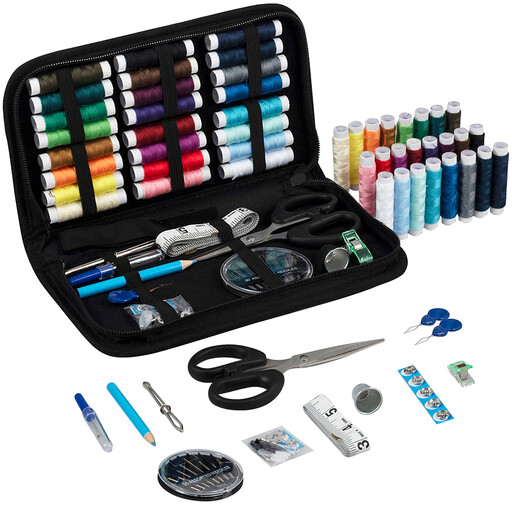
Why It Stands Out: This kit strikes an excellent balance between being comprehensive and portable. It contains a wide array of tools, including a 150cm tape measure, embroidery scissors and a bodkin, all neatly arranged in a fabric case that opens flat for easy access.
Pros:
Who is it for? This is a versatile option for home use, crafting and for those who want a complete mending kit that remains easy to store. It’s also a great sewing kit for beginners who want to start with a full set of tools.
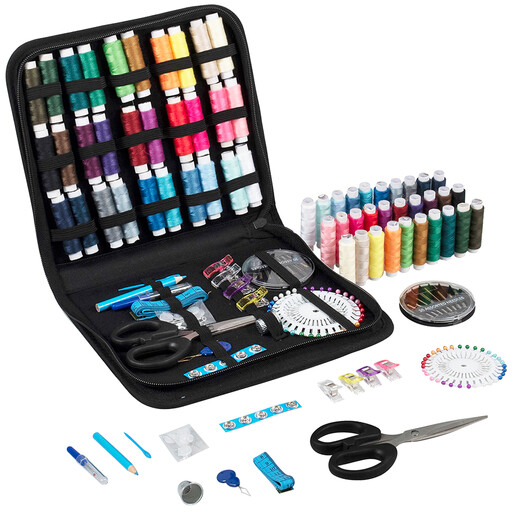
Why It Stands Out: With 30 polyester threads, 32 pins and 30 hand needles, this premium kit is one of the more extensive sets available in a compact format. The case opens wide to reveal a highly organised layout, making it ideal for more involved projects.
Pros:
Who is it for? This kit is well-suited for keen sewers who appreciate having a wider selection of supplies on hand. It’s also an excellent choice for a primary household sewing kit or as a thoughtful sewing gift for a dedicated crafter.
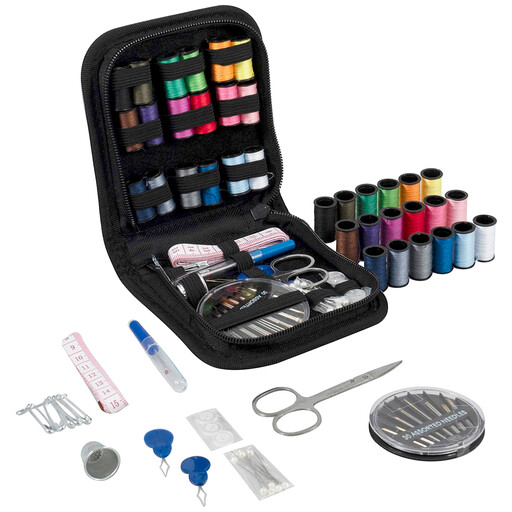
Why It Stands Out: This is the definition of a small sewing kit designed for life on the move. Its highly compact size (12.5 x 12 x 3cm when closed) means it can be slipped into a handbag, backpack or suitcase without taking up valuable space, ensuring you're always prepared for a quick fix.
Pros:
Who is it for? This is the perfect travel sewing kit. It’s also an ideal choice for a sewing kit for students living in dorms or for anyone who wants a minimal kit to keep in their car or office drawer for emergencies.
Sometimes a needle and thread isn't the quickest solution. For instant repairs on tents, jackets or other materials where sewing isn't practical, a strong adhesive can be a lifesaver.
If you're interested in fast, durable, no-sew solutions, explore our range of Repair Tape for a variety of quick fixes.
A good basic sewing kit should include a variety of needles, a selection of threads in common colours (black, white, navy, grey), a small pair of sharp scissors, a tape measure, a seam ripper, a thimble and a needle threader. Extras like safety pins, spare buttons and pins are also very useful.
For most people, especially beginners, buying a pre-assembled sewing kit is more cost-effective and convenient. Sourcing each high-quality item individually can quickly add up and a kit ensures you have a coordinated and organised set from the start.
Start with a simple task, like sewing a button back on. Use the needle threader to get the thread through the eye of the needle, tie a knot at the end of the thread and pass the needle through the fabric and buttonholes several times. Finish by looping the thread around the base of the button and tying it off securely. The seam ripper is your friend if you make a mistake.