What matters when choosing a machine?
Mechanical domestic machine
Consider it when: You are starting with modest batches of mainly woven scrunchies and want straightforward control of ordinary seams.
Trade-off: Check the exact stitch selection and controls if you expect to add stretch fabrics or other sewing projects.
Computerised domestic machine
Consider it when: Repeat batches make adjustable speed and convenient setup features valuable to you.
Trade-off: Extra controls and stitches may go unused if your work remains limited to simple scrunchie seams.
Coverstitch machine
Consider it when: Stretch-knit finishing is a frequent, defined step in your product range.
Trade-off: It is a specialist addition, not a presumed replacement for general-purpose seam construction.
For consumers choosing a machine for craft-fair scrunchies, the deciding need may be confidence on small seams, a repeatable batch workflow, flexibility across fabrics or specialist knit finishing.
| Concern | What to check | Who this matters to |
|---|
| Control on small seams |
Try the pedal control and threading process; confirm the stitches needed for your fabric. |
When I am learning to sew short seams, I want to slow down without struggling with the controls. Around 40% of consumers put controlled beginner use first. |
| Repeat-batch workflow |
Check bobbin access, needle threading and how the machine secures a seam. |
Making fair stock means I need to repeat each seam consistently without an awkward reset between items. Roughly 30% of consumers prioritise the batch workflow. |
| Fabric flexibility |
Confirm straight stitching for woven fabric and suitable stitches if you plan to sew stretch fabric. |
I may move from woven scrunchies to stretch fabrics or other sewn goods, so I need stitches that match those plans. About 20% of consumers put fabric flexibility first. |
| Stretch-knit finishing |
Decide whether coverstitch details are a regular task and whether you also need a general sewing machine. |
If knit items are a steady part of my range, I want a dedicated way to produce the finish I have planned. Around 10% of consumers make specialist knit finishing their primary concern. |
Joybuy machines for scrunchie making
These compact sewing machines are options to examine for small sewing projects. Before using either for craft-fair stock, confirm that its stitches suit your scrunchie fabric and that you can secure the seams as intended.
 No image available
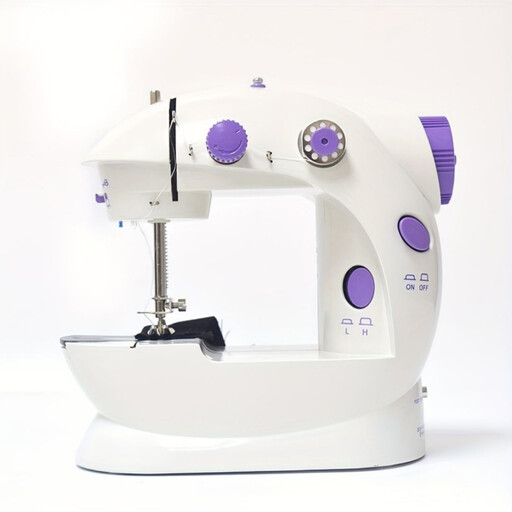
IAGREEA Mini Portable Electric Sewing Machine, 12 Stitches, Purple
Consider this compact option if you want to practise short seams before making repeated items. Its title lists 12 stitches, dual power and an LED light; confirm the stitch patterns and included feet against the fabrics you plan to sew.
View on Joybuy
 No image available
IAGREEA Portable Mechanical Sewing Machine with Pedal, 6V 1A
Consider this portable option if pedal operation and storage between sewing sessions matter to you. Its title specifies battery or plug-in power using four AA batteries, plus a spare needle and threading device; confirm the stitch type and how you will secure short seams before making sale stock.
View on Joybuy
Common questions
Do I need an overlocker or coverstitch machine for scrunchies?
Usually not for standard woven-fabric scrunchies: a general domestic sewing machine is the starting point. John Lewis & Partners describes overlockers as useful for knitted fabrics, while Janome describes coverstitch equipment as particularly helpful with stretchy fabrics; consider either specialist route against the finishes you plan to make regularly.
Which stitches should I check before buying?
Check that the exact machine can make the straight seams you need for woven scrunchies, with settings you can control on your fabric. If you intend to sew stretch fabric, confirm suitable stretch stitches rather than assuming every domestic machine includes them.
Do product-safety responsibilities apply to handmade scrunchies sold at a UK craft fair?
Yes. GOV.UK guidance says businesses that make or sell consumer products in the UK are responsible for product safety and applicable labelling requirements. Check those obligations for your finished scrunchies and the location where you sell them; choosing a sewing machine does not settle the requirements for the product you make.
Do scrunchies sold in Great Britain need fibre-content labels?
London Borough of Bromley Trading Standards guidance says textile products in England, Scotland and Wales require a fibre-content label that is in English, durable, legible, visible and accessible. Record the composition of your fabric and other components, and check how the rules apply to your finished scrunchie before preparing its label.


