Occasional laundry-bag maker
You plan to sew simple bags from ordinary woven fabric, then clear the kitchen table. Direct controls, lifting weight and storage space may matter more to you than a long list of stitches.


For laundry bags made from ordinary woven fabric, a straightforward machine with a suitable straight stitch and adjustable stitch length can be enough; check that it also fits the table and can be put away between sessions. Beginner controls become more useful if threading and turning corners are unfamiliar, while canvas and bulky folded seams call for closer attention to the machine’s fabric guidance and a test of the intended layers.
You plan to sew simple bags from ordinary woven fabric, then clear the kitchen table. Direct controls, lifting weight and storage space may matter more to you than a long list of stitches.
If threading, setting up a bobbin and turning corners are new to you, a speed slider and needle-position control are worth considering. Brother lists both controls on the Innov-is A16.
Canvas, denim-like fabric and folded hems change the question from making a straight seam to handling its thickest point. Compare the machine’s fabric and needle guidance, then test the layers you intend to sew.
Choose the machine route to match the fabric and the controls you will use; then check whether its full working setup fits your temporary sewing space.
Consider it when: You sew occasional bags from ordinary woven fabric and prefer direct stitch controls. Janome describes the 2200XT as a two-dial machine with variable stitch settings.
Trade-off: This route does not provide the speed-slider and needle-position controls offered by some computerised beginner models.
Consider it when: You would use setup aids and a separate speed control while learning seam starts and corners. Brother lists these features on the Innov-is A16.
Trade-off: Those controls may add little to an occasional project if you are already comfortable sewing straight seams.
Consider it when: Your bags use canvas or repeatedly cross thick folded hems. Singer positions the Heavy Duty 4423 for projects including canvas and denim.
Trade-off: A heavy-duty description does not guarantee smooth stitching through every seam stack; the intended layers still need testing.
| Concern | What to check | Who this matters to |
|---|---|---|
| Table setup and storage | Measure clear working and storage space; compare model dimensions and lifting weight. | I need to clear the kitchen table after sewing, so a machine I can set up and put away matters most. Around 27% of consumers put space and storage first. |
| Threading and speed control | Check the threading and bobbin arrangements, plus how sewing speed is controlled. | When I am learning to start seams and turn corners, I want controls that let me work at a manageable pace. Around 33% of consumers prioritise beginner control. |
| Heavy fabric and folded seams | Consult the model’s needle and fabric guidance; test the thickest planned seam on offcuts. | My bag will have canvas or several layers where hems meet, so handling those intersections is my main concern. Around 20% of consumers focus first on heavier seams. |
| Seller and product support | Confirm the exact supplied version, instructions and the seller’s warranty route. | I want to know where to turn if the machine needs attention after the project. For around 20% of consumers, a clear purchase and support route takes priority. |
A long decorative-stitch list does not tell you whether straight seams, seam starts and corners will be easy to manage on a laundry bag.
Check the straight-stitch settings, stitch-length adjustment and controls you would actually use before comparing stitch totals.
Singer positions the Heavy Duty 4423 for denim and canvas, but an abrupt stack of folded layers still calls for a suitable needle and careful handling.
Test your thickest planned seam on scraps, follow the model manual’s needle guidance and slow down at intersections.
Testing may use spare needles and fabric offcuts; a compatible bulky-seam aid is an optional accessory if the presser foot struggles to stay level.
Even a small bag needs room for the machine, fabric, foot controller and cable on a stable surface.
Measure the usable tabletop and storage area, and plan a cable route clear of water, heat and walkways.
Janome UK & Ireland advises purchasing from an official UK retailer for its after-sales care and warranty arrangements. That advice does not establish the support arrangements for a different seller or brand.
Confirm the seller’s identity, the exact model and supplied instructions, and how warranty queries would be handled before ordering.
These models illustrate different approaches to this project; a brand name alone does not establish which machine will suit your fabric or workspace.
A mechanical-machine reference for occasional bag sewing, illustrated by the 2200XT and J3-18.
A beginner-focused computerised reference, illustrated by the Innov-is A16.
A heavier-fabric route illustrated by the Heavy Duty 4423.
These compact IAGREEA machines are options to examine for straightforward laundry-bag seams on a shared table. Check their stitch settings against your planned seams, particularly if you need adjustable stitch length or expect bulky fabric layers.
 No image available
Consider this compact option if you need to put the machine away after sewing simple bag seams.
The product name specifies 12 stitches, dual power and an LED light. Before choosing it for your bag, confirm the straight-stitch settings and whether stitch length can be adjusted; test the intended fabric layers rather than relying on claims about thicker material.
 No image available
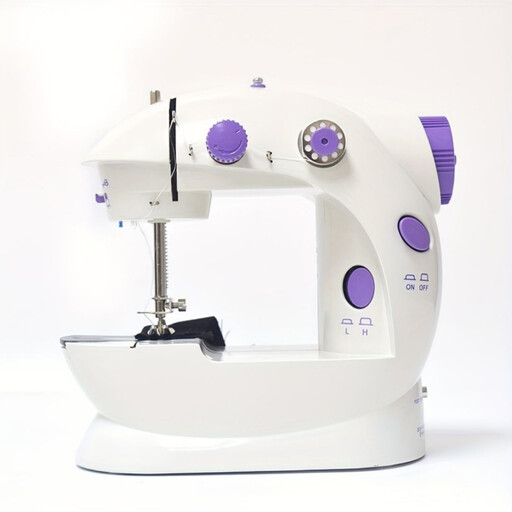
Consider this machine for simple household sewing if its seam controls suit the laundry bag you plan to make.
The product name specifies pedal operation, battery or plug-in power using 4AA batteries, and an included spare needle and threading device. Its stitch width and length are fixed, and it has no backstitch function, so check how you will secure your planned seams. Confirm its dimensions before allocating table or storage space.
Not necessarily: for ordinary woven fabric, start by checking for a suitable straight stitch and adjustable stitch length. A heavier-fabric route becomes more relevant if your bags use canvas or repeatedly cross thick folded seams; Singer positions the Heavy Duty 4423 for projects including canvas, but the actual layers still need testing.
A threading aid, manageable speed control and a way to position the needle can help with setup and turning corners. Brother lists a one-step needle threader, speed slider and needle up/down button on the Innov-is A16; decide whether you would use those controls often enough to choose them over simpler dials.
Confirm that the supplied version is intended for Great Britain, comes with clear instructions and has an identifiable seller and support route. GOV.UK guidance explains that electrical equipment must meet applicable requirements before being placed on the Great Britain market; Northern Ireland has separate arrangements. Do not treat a model name alone as confirmation about the particular machine supplied.
Follow the safety instructions for your exact model. The SINGER 4423 manual reproduced by ManualsLib says to switch the machine off when making adjustments in the needle area and to unplug it before removing covers or carrying out user-servicing adjustments; use the manual supplied with your own machine for its procedures.