
24/7 Customer Support

Free returns

Same-day & Next-day Delivery

Quality Guaranteed

Unlock Your Welcome Offers: FREE Delivery | Up to 80% OFF | Free 30-day JoyPlus trial
Download the APP
Navigating the world of children's toys can feel overwhelming. With so many options available, it is often difficult to distinguish between fleeting trends and toys that offer lasting value. For generations, shape sorter toys have remained a staple in playrooms across the UK, and for good reason. They are more than just a simple puzzle; they are powerful tools for a child's early development.
This guide is designed to help you understand what makes a great shape sorter and to highlight a few excellent options available today. As the Joybuy Product Recommendation Officer, my role is to provide clear, practical advice to help you find a toy that is not only fun but also beneficial for your little one's growth.
Before diving into specific products, it helps to know what to look for. Keeping a few key points in mind will ensure you select a toy that is safe, engaging and perfectly suited to your child's needs.
A toy's primary job is to be safe. Always check for the UKCA mark, which indicates that the product meets the UK's safety, health and environmental protection requirements. For babies and toddlers who explore with their mouths, look for toys made from durable, non-toxic and BPA-free materials. The size of the shapes is also critical; they must be large enough not to pose a choking hazard. Most developmental toys for babies will clearly state the recommended age range, which serves as a reliable guide for both safety and developmental appropriateness.
Shape sorters are fantastic fine motor skills toys. The act of grasping a block, rotating it, and fitting it into the correct slot builds hand-eye coordination and dexterity. However, different toys offer different benefits. Some focus purely on geometric shapes, while others introduce colours, numbers or even sounds. Consider what you want to encourage. Sensory toys for toddlers might include varied textures, rattling sounds or lights, providing a richer, multi-sensory experience that can be highly engaging for a developing mind.
The best learning toys for 1 year olds are often those that can adapt as the child grows. A simple shape sorter might hold a child's attention for a few months, but a toy that incorporates other play patterns, such as stacking toys or baby puzzles, offers more long-term value. Toys with multiple functions or increasing levels of difficulty provide more opportunities for play and can remain a favourite for years, not just months.
Based on their design, play value and developmental features, here are a few standout options that parents and gift-givers are choosing this year.
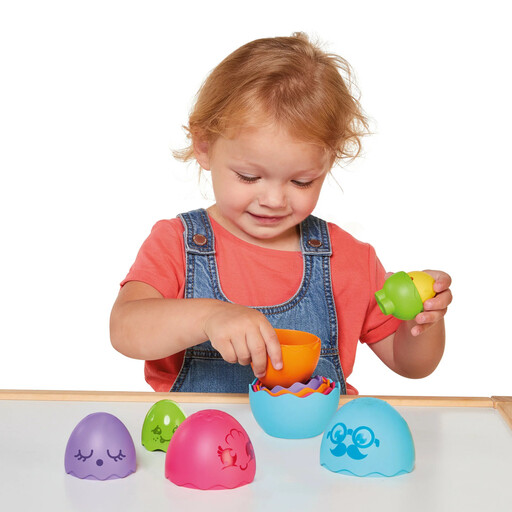
Why It Stands Out: This toy cleverly combines three classic play patterns into one. It functions as a set of nesting and stacking toys, a simple shape sorter and even a bath toy. This versatility gives it excellent play value, adapting to different environments and developmental stages.
Pros:
Who is it for: Ideal for babies from 6 to 36 months. Its multi-use nature makes it a great choice for parents looking for a toy that offers variety and can be used in and out of the bath.
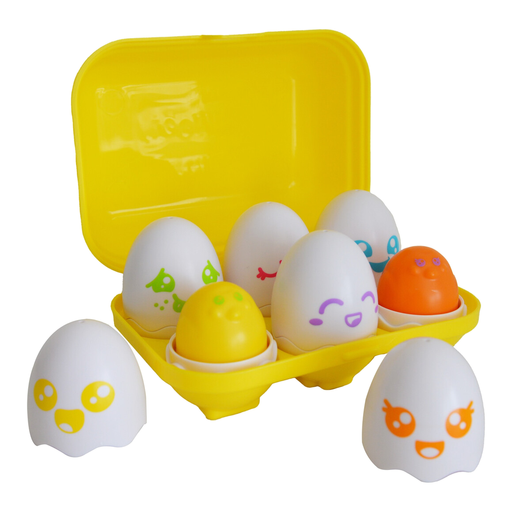
Why It Stands Out: A beloved classic, this toy focuses on matching and sensory discovery. The egg carton itself serves as the shape sorter, with each egg having a unique base that fits into a corresponding slot. The addition of both squeaking and rattling chicks provides a rich sensory experience.
Pros:
Who is it for: Suitable for babies from 6 months old, this is one of the most popular educational gifts for babies. It is particularly good for developing logic and memory skills through matching games.
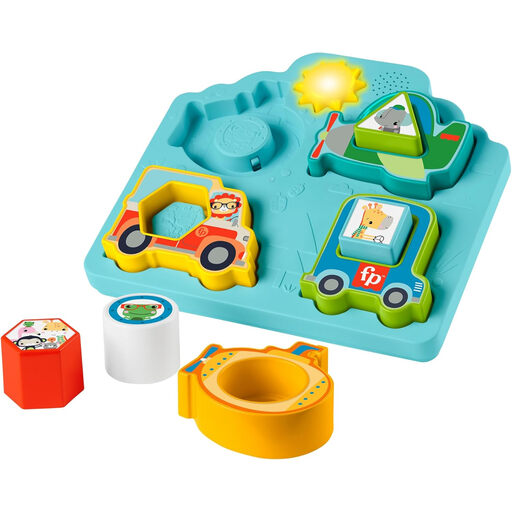
Why It Stands Out: This is a highly interactive toddler toy that combines a traditional baby puzzle with shape sorting. It rewards successful matches with lights, vehicle sounds and music, which helps teach cause and effect. The two-layer design adds complexity, with animal shapes fitting inside the vehicle pieces.
Pros:
Who is it for: Designed for babies and toddlers from 9 months and up. It is an excellent choice for little ones who are motivated by lights and sounds and are ready for a more complex problem-solving challenge.
The toys highlighted here are just a starting point. Every child is unique, and finding the perfect toy sometimes means exploring a wider range of options. If you are still searching for the ideal fit or want to browse other types of engaging playthings, our full collection has much more to offer.
Explore our complete range of developmental baby toys to find more choices that support your child's learning journey.
1. At what age are shape sorters good for? Most children can begin to engage with simple shape sorters around 6 to 12 months of age. At this stage, they enjoy taking the pieces out and exploring them. Between 12 and 18 months, they start developing the fine motor skills and problem-solving abilities needed to place the shapes into the correct holes. More complex sorters with multiple shapes can keep toddlers engaged up to 36 months and beyond.
2. What do babies learn from shape sorters? Shape sorters are powerful learning toys for 1 year olds and up. They help develop a wide range of skills, including:
3. Are plastic or wooden shape sorters better? Both materials have their advantages. High-quality, BPA-free plastic toys are often lightweight, durable and easy to clean. They can also incorporate features like lights and sounds, making them very interactive toddler toys. Wooden toys are valued for their traditional feel, sturdiness and eco-friendly properties. The most important factor is not the material itself, but ensuring the toy is well-made and carries the UKCA safety certification. The choice often comes down to personal preference and the specific features you are looking for.