People reheating one lunch at a time
If the main job is warming a portion of chilli or other leftovers, straightforward controls and room for the usual container matter more than extra cooking modes.


Choose a solo microwave if the shared kitchen mainly reheats vegetable chilli and other lunches: Which? recommends a simple microwave for people who primarily heat food and defrost. Check that the bowls people actually use fit the cavity and worktop space. A larger flatbed is worth considering for broad dishes, while grill or combination functions matter only if people will use those additional cooking modes.
If the main job is warming a portion of chilli or other leftovers, straightforward controls and room for the usual container matter more than extra cooking modes.
A wide covered bowl or large plate makes usable cavity space, turntable size and door clearance important checks. The capacity in litres alone will not establish whether a particular container fits.
If the kitchen will also use the microwave to grill or cook, those additional functions may be relevant. They are not needed solely to reheat chilli.
Start with the kitchen’s main use, then measure its usual containers and available worktop space. Compare extra cooking modes only if people expect to use them.
| Concern | What to check | Who this matters to |
|---|---|---|
| Container fit | Compare the widest covered bowl with the turntable or flatbed area, cavity and door opening; check the worktop footprint too. | If I bring a broad bowl or a batch portion, I need to know it will fit through the door and sit inside. Around 40% of consumers put container fit first. |
| Simple reheating | Look for controls that shared users can follow and power settings suited to the food instructions; check the chilli is steaming hot throughout before eating. | When several people use the microwave for lunch, I want a routine that is easy to repeat without relying on a preset to judge the food. For around 40% of consumers, straightforward reheating is the primary need. |
| Additional cooking modes | Decide whether people will actually use a grill or, in a combination model, convection cooking. | If the same appliance must also grill or cook, I need those modes rather than reheating alone. Additional cooking functions come first for around 20% of consumers. |
A litre figure does not tell you whether a particular covered chilli bowl clears the turntable, cavity walls and door opening.
Measure the largest container regularly used, then compare its dimensions with the appliance’s stated usable space and the worktop space available.
Grill and combination models add ways to cook beyond microwave reheating. Which? points people who mainly heat food and defrost towards a simple microwave.
List what the kitchen will use the appliance for each week. Consider additional modes if grilling or oven-style cooking is genuinely part of that routine.
A selected programme does not establish that the food is steaming hot throughout.
Stir where practical, follow any standing-time instructions and check the chilli throughout before eating.
Electrical Safety First advises using items clearly marked as microwave-safe.
Check bowls, covers and food packaging before they go into the microwave; use them only as their labelling permits.
Panasonic’s UK solo-microwave models illustrate both a compact turntable layout and a larger flatbed layout.
The RHM2027B is an example of a conventional 20L solo microwave for straightforward countertop use.
LG’s grill-microwave range is relevant if the shared appliance will do more than reheat lunches.
These 20–25L solo microwaves are choices for reheating-focused shared kitchens. Compare each model’s stated features with the usual bowl, the available worktop space and the controls people prefer.
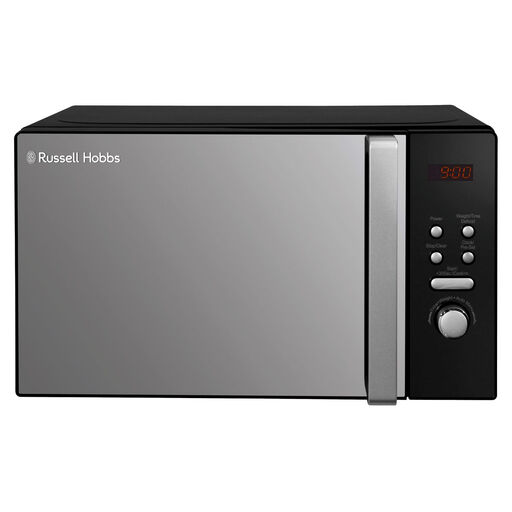 No image available
Consider this for individual lunches if the usual bowl fits. The title specifies 800W power and five power levels; check container and door clearance before choosing it.
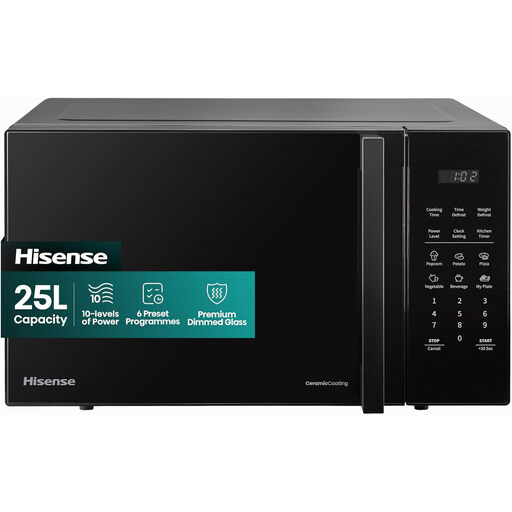 No image available
Consider this 25L model when comparing space for a larger bowl. Its title specifies 900W power and auto defrost; check the bowl, cover and door opening against the appliance before buying.
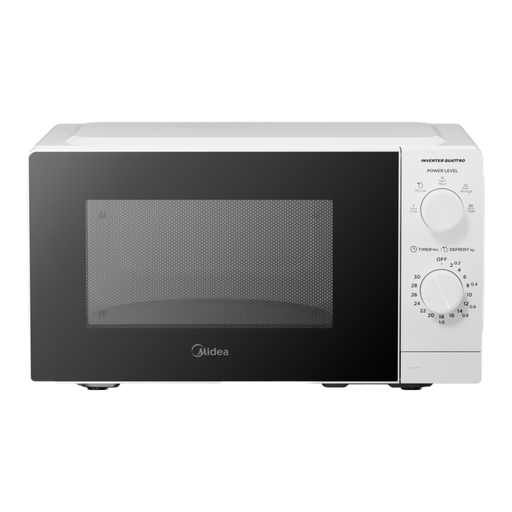 No image available
Consider this manual model for a compact, reheating-focused setup. Its title specifies 700W power; check that the intended covered bowl fits before choosing it.
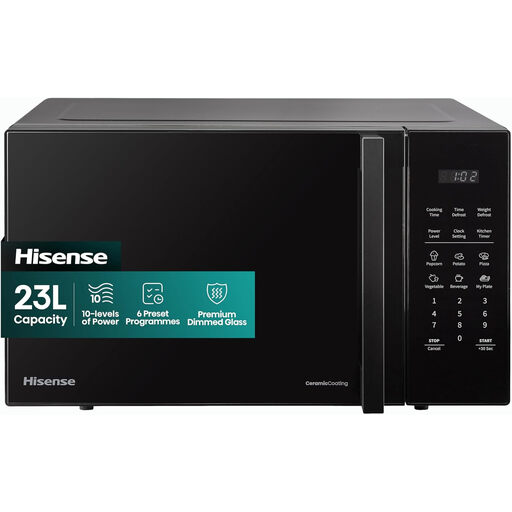 No image available
Consider this 23L solo model for shared-kitchen reheating if its cavity accommodates the usual container. The title specifies 800W power, but the control descriptions differ; confirm the control type and door clearance before buying.
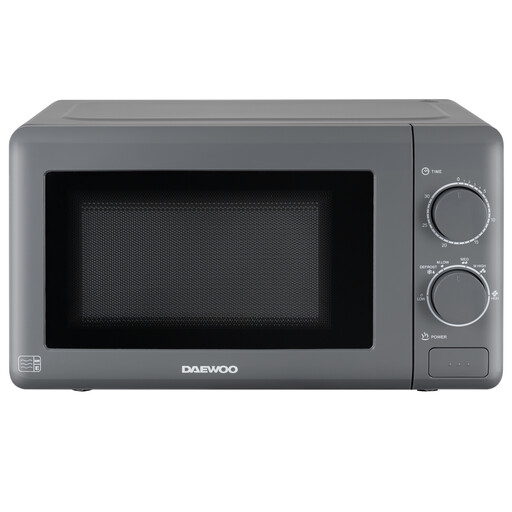 No image available
Consider this manual model for individual portions in a compact solo format. Its title specifies 800W power; confirm the number of power settings if that matters to users, and check bowl and door clearance.
Yes, if reheating and defrosting are the shared kitchen’s main uses. Which? advises choosing a simple microwave for people who rarely need more than heating food and defrosting; consider grill or combination functions if the kitchen will also use those cooking modes.
Heat it until steaming hot throughout, stirring partway through where practical. Follow any standing-time instructions for the food or appliance, and use a container marked microwave-safe, as Electrical Safety First advises.
Choose against the largest container used regularly, not the litre capacity alone. Compare the covered bowl with the turntable or flatbed area, internal clearance and door opening, then check that the appliance fits the worktop.