
24/7 Customer Support

Free returns

Same-day & Next-day Delivery

Quality Guaranteed

Unlock Your Welcome Offers: FREE Delivery | Up to 80% OFF | Free 30-day JoyPlus trial
Download the APP
A good kitchen turner is an unsung hero of the home kitchen. It flips your morning pancakes, serves a delicate piece of fish and helps you get the perfect sear on a burger. Yet, finding a reliable one can be surprisingly difficult. Many of us have experienced the frustration of a new utensil failing after just a few uses.
As the Joybuy Product Recommendation Officer, my role is to help you navigate the market and identify the features that truly matter. Before you make your next purchase, be aware of these common pitfalls that lead to disappointment:
To avoid these issues, it pays to look past the marketing claims and focus on a few core construction details. These are the non-negotiable factors that separate a durable tool from a disposable one.
The head of the turner is its most critical component. When looking for kitchen tools for non-stick pans, silicone is an excellent choice, but the quality can vary significantly.
The handle determines the tool's comfort, balance and longevity.
The design of the turner's head should match your cooking style.
Based on these practical criteria, here are a few options from our catalogue that are well-suited to different types of home cooks in the UK.

Why This Fits Their Persona: For those who love a coordinated kitchen, this turner combines modern style with natural materials. The on-trend sage green kitchen utensils look is popular in contemporary UK homes and the wooden handle adds a warm, tactile element. It's functional enough for daily use but chosen for its looks.
The sturdy wooden handle is securely joined to the silicone head, addressing the common 'wobbly handle' issue and providing a solid feel when lifting food.
The flexible silicone head is designed to be gentle on non-stick surfaces, while the slotted design is versatile for draining oils. Includes a hanging loop for easy storage.
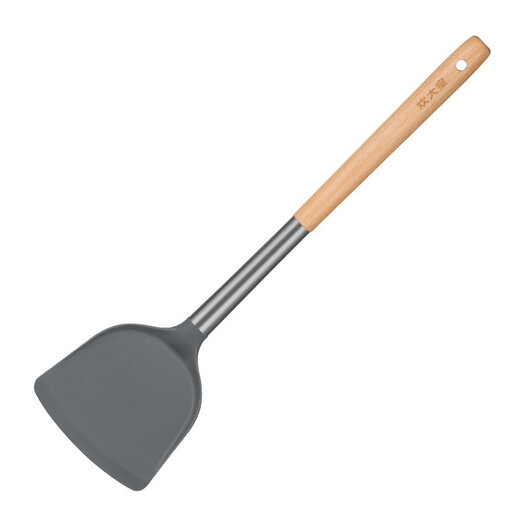
Why This Fits Their Persona: This user prioritises function over form. They cook frequently and need a tool that can withstand daily use, high heat and vigorous flipping without failing. They want a workhorse for the kitchen that is built to last.
This turner is made from BPA-free, high-heat resistant food-grade silicone. This directly counters the 'melting edge' problem by using materials specified for high-temperature cooking.
The combination of a soft silicone head and an ergonomic, waterproof wooden handle provides both non-stick protection and a comfortable, non-slip grip for heavy-duty tasks.
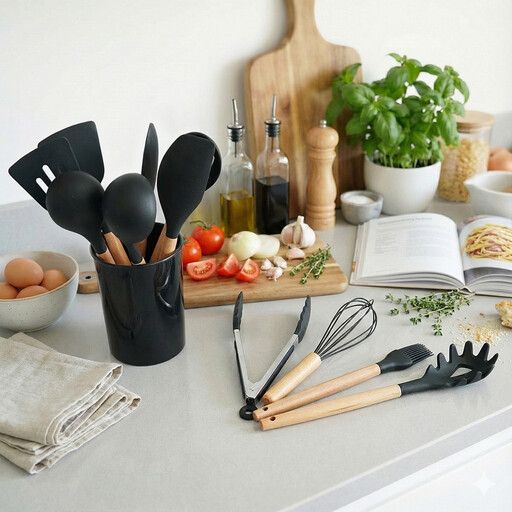
Why This Fits Their Persona: Ideal for someone setting up a new home or looking to replace a mismatched collection of old utensils. This user values convenience, coordination and getting a comprehensive solution in one go. A full cooking utensil set is the most practical choice.
The silicone heads are described as 100% non-scratch, directly addressing the fear of damaging expensive non-stick pans. The consistent build quality across the set ensures reliability.
This is a complete 12-piece set that includes both a solid and a slotted turner, alongside other essentials. The natural wood handles provide a comfortable, cool-touch grip.
We have compiled a complete, real-time list of products that fully satisfy these strict selection criteria and UK safety regulations.
To ensure longevity, it is generally recommended to hand wash utensils with wooden components. Soaking the handle in water can cause the wood to swell, crack or weaken the adhesive at the join. Wash the silicone head with warm, soapy water and wipe the wooden handle with a damp cloth, drying it thoroughly before storing.
In the UK, the terms are often used interchangeably, but they can refer to different tools. A 'turner' or 'fish slice' typically has a wider, thinner and often angled head designed for lifting and flipping food in a pan. A 'kitchen spatula' often refers to a tool with a more flexible, rectangular head used for scraping bowls, folding ingredients or spreading icing. This article focuses on the turner style.
High-quality, food-grade silicone is an excellent material for high-heat cooking as it has low thermal conductivity (it doesn't get hot quickly) and is chemically stable. However, it's important to avoid direct, prolonged contact with open flames or leaving any utensil resting on a very hot pan surface, as this can exceed the material's heat limit and cause damage over time.