
24/7 Customer Support

Free returns

Same-day & Next-day Delivery

Quality Guaranteed

Unlock Your Welcome Offers: FREE Delivery | Up to 80% OFF | Free 30-day JoyPlus trial
Download the APP
Upgrading your home's lighting is no longer just about changing a bulb. With a smart ceiling light, you can transform the atmosphere of any room with a simple voice command or a tap on your phone. But navigating the options can be challenging. You want seamless integration with your smart home, the right brightness and colour for each space and a design that complements your decor.
This guide is designed to help you understand the key features to look for. We will explore some practical considerations and highlight a few standout options that balance functionality, design and ease of use for UK homes.
Choosing the right light involves more than just picking a style. Here are a few key factors to keep in mind to ensure you get the perfect fit for your home.
The "smart" in a smart light comes from its connectivity. Most modern units connect directly to your home's Wi-Fi, eliminating the need for a separate hub. Before purchasing, confirm that the light is compatible with your preferred ecosystem. Look for models that are an Alexa ceiling light or a Google Home compatible light for effortless voice control. This allows you to dim the lights, change colours or turn them on and off without reaching for your phone.
Not all ceiling lights are suitable for every room. For areas with moisture, such as bathrooms or kitchens, it is crucial to choose a smart bathroom light or kitchen ceiling light with an appropriate Ingress Protection (IP) rating. An IP54 rating, for example, indicates the fixture is protected against dust ingress and water splashes from any direction, making it a durable choice for these environments. For living rooms or bedrooms, you might prioritise a dimmable ceiling light with a wide range of brightness levels or even an RGB ceiling light for creating different moods.
Beyond basic illumination, consider the quality and type of light. A dimmable ceiling light is standard, but many also offer tunable white, allowing you to shift from a cool, energising white for daytime tasks to a warm, relaxing white for the evening. For ultimate customisation, an RGB ceiling light provides millions of colour options, perfect for movie nights or setting a specific ambience. Features like a high Colour Rendering Index (CRI) ensure that colours in your room appear natural, while eye-safety certifications (like RG0) indicate reduced blue light and no flicker, which is more comfortable for daily use.
Based on features, design and user-centric functionality, here are our recommendations for smart ceiling lights.
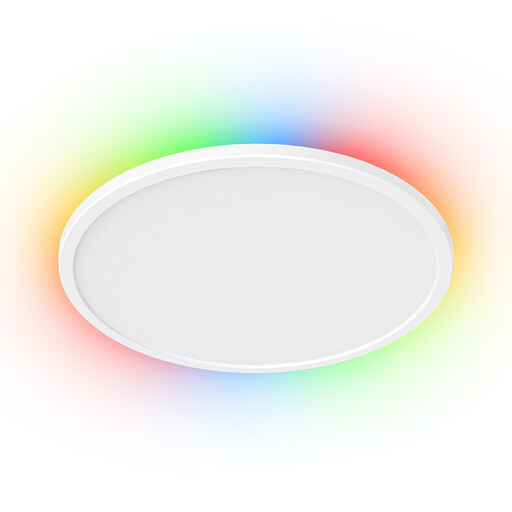
Why It Stands Out: This model combines a sleek, minimalist aesthetic with robust functionality. Its ultra-slim 0.98-inch profile allows it to blend into the ceiling for a clean, modern look, while the IP54 waterproof and dustproof rating makes it exceptionally versatile.
The main light provides clear, adjustable illumination, but the addition of an RGB backlight is what truly sets it apart. This feature casts a colourful glow onto the ceiling, creating a sophisticated ambient effect without being overpowering.
Pros:
Who is it for? This is an excellent choice for anyone seeking a slim ceiling light that delivers both primary lighting and ambient effects. It is particularly well-suited for modern homes and for use in rooms where moisture or dust is a concern.

Why It Stands Out: This light is built for creating an immersive atmosphere. It features advanced RGBICWW technology with a unique SideGlow effect, which allows for flowing, multi-zone colours that wash across your ceiling and walls. This creates a dynamic and vibrant ambience that a standard RGB light cannot replicate.
With a high Ra90 Colour Rendering Index, it also ensures that the colours of your decor look true and accurate under its main light.
Pros:
Who is it for? Ideal for tech-savvy users, gamers or home cinema fans who want to take their room's ambience to the next level. If you want lighting that is a centrepiece of your entertainment setup, this is a compelling option. Note: This product must be installed by a qualified electrician.
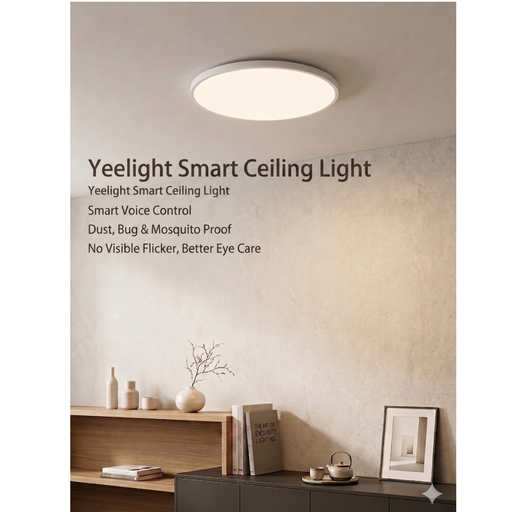
Why It Stands Out: This Yeelight ceiling light focuses on comfort, health and practicality. Its standout feature is the RG0 eye-safe certification, which signifies no flicker and reduced blue light hazard, making it comfortable for prolonged use. The ultra-low brightness Moonlight Mode provides a soft, gentle glow that is perfect for navigating a room at night without disturbing sleep.
Furthermore, its fully enclosed design is anti-insect, anti-dust and anti-steam, ensuring it stays clean internally and requires minimal maintenance.
Pros:
Who is it for? This is a top contender for bedrooms, nurseries and studies where eye comfort is a priority. It is also a great low-maintenance choice for any room in the house, thanks to its sealed construction.
If a single flush-mount fixture isn't quite what you had in mind and you prefer more directional or focused lighting, you might want to explore other options. Adjustable spotlights can offer greater flexibility for highlighting specific areas of a room.
For more ideas, feel free to browse our curated selection of the Best LED Ceiling Spotlights.
1. Do smart ceiling lights use a lot of electricity? No, modern smart ceiling lights use LED technology, which is significantly more energy-efficient than traditional incandescent or halogen bulbs. They consume very little power, especially when dimmed, helping to reduce your overall energy usage.
2. Can I install a smart ceiling light myself? Some models are designed with quick-mount systems for easy DIY installation. However, UK regulations require that certain electrical work, especially in locations like bathrooms, be carried out by a qualified electrician. Always check the product's installation instructions and consult a professional if you are unsure.
3. Do I need a special wall switch for a smart ceiling light? Generally, no. Smart ceiling lights are designed to work with standard on/off wall switches. However, to access their full range of features (dimming, colour changing, scheduling), you will need to use the companion app or a compatible voice assistant. It is often recommended to leave the physical switch on and control the light via smart commands.