
24/7 Customer Support

Free returns

Same-day & Next-day Delivery

Quality Guaranteed

Unlock Your Welcome Offers: FREE Delivery | Up to 80% OFF | Free 30-day JoyPlus trial
Download the APP
A quality smoothie maker can be a fantastic addition to any kitchen, offering a quick and simple way to boost your daily intake of fruits and vegetables. However, the market is flooded with options, and it is easy to fall for marketing hype and end up with a machine that gathers dust. As a Joybuy Product Recommendation Officer, my role is to help you navigate the choices and identify the features that truly matter for your lifestyle, ensuring you find a blender that you will use for years to come.
Before you buy, let's look at some common pitfalls that lead to disappointment.
By understanding these issues, you can make a more informed decision.
To avoid the pitfalls, focus on these core parameters. They are the true indicators of a blender's performance and longevity.
Power, measured in watts (W), dictates what a blender can handle. For a simple personal blender used for soft fruits and protein powders, 300W to 600W is often sufficient. However, if you plan on making green smoothies with fibrous kale or need an ice crushing blender for frozen fruit and nuts, you should look for models with 900W or more. Power works in tandem with blade design. Look for durable stainless steel blades, often in a multi-pronged arrangement, which create a vortex to pull ingredients down for a consistently smooth texture.
The right type of blender depends entirely on your needs.
An easy clean blender will save you time and effort. Key features to look for are dishwasher-safe parts (jugs, lids and blades) and a blade assembly that can be fully detached from the jug. For materials, consider these options:
Here are a few options that align with different user needs, keeping our key criteria in mind.

Why This Fits Their Persona: This is the definition of convenience for someone with a busy schedule. It is designed for a single purpose: making a quick, fresh smoothie and taking it with you. The 600ml cup doubles as a travel bottle, minimising washing up before a morning commute or gym session.
It avoids the wattage trap by being clear about its purpose; the 300W motor is ample for shakes and soft fruits. It also solves the cleaning issue with fully detachable blades and a simple cup design.
Its primary advantage is the blend-and-go system. The one-touch operation and compact size make it incredibly practical for daily use without cluttering the kitchen.
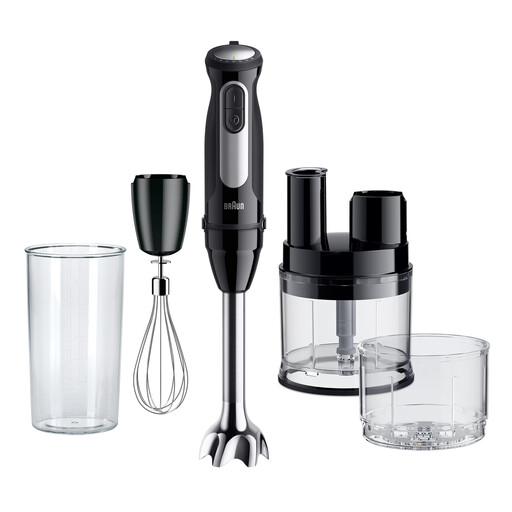
Why This Fits Their Persona: This is for the person who wants more than just a smoothie maker. It is a complete food preparation system. The powerful 1000W motor and attachments allow you to blend soups directly in the pot, whisk eggs, chop vegetables and even crush ice, replacing several other kitchen gadgets.
Its value is in its versatility, not just blending. The EasyClick Plus system and dishwasher-safe parts directly address the cleaning problem, making it simple to switch between tasks and tidy up afterwards.
The combination of a powerful 1000W motor with a comprehensive set of useful attachments (mini food processor, whisk, ice crush knife) makes it an exceptionally practical and space-saving tool for any home cook.

Why This Fits Their Persona: This user needs power to pulverise tough ingredients like nuts, seeds, ginger and frozen fruits for nutrient-extracted smoothies and protein shakes. The 1200W motor provides the necessary force for exceptionally smooth results without any graininess.
This model justifies its high wattage with performance. It also addresses the material pitfall by using durable, shatter-resistant Tritan Renew cups that are BPA-free and do not retain odours from strong ingredients.
The combination of a 1200W motor and the titanium-coated rapid extractor blade delivers superior blending performance. The automated cycle and manual pulse options offer both convenience and control.
We have compiled a complete, real-time list of products that fully satisfy these strict selection criteria and UK safety regulations.
It depends on your ingredients. For soft fruits, yoghurt and protein powder, 300-600 watts is generally adequate. If you regularly blend hard items like ice, frozen fruit, nuts or fibrous vegetables like kale, aim for 900 watts or higher for a smooth, consistent result.
No, not all blenders are designed to handle ice. Attempting to crush ice in a blender that is not built for it can damage the blades or burn out the motor. Always check the product description to see if it is listed as an ice crushing blender. Models with higher power (900W+) and robust blade systems are typically required.
They do not have to be. The key is to look for an easy clean blender with features like a removable blade assembly and dishwasher-safe components. A simple tip for any blender is to rinse it immediately after use: just add a drop of washing-up liquid and some warm water, then pulse for a few seconds before rinsing thoroughly. This prevents ingredients from drying and sticking.