
24/7 Customer Support

Free returns

Same-day & Next-day Delivery

Quality Guaranteed

Unlock Your Welcome Offers: FREE Delivery | Up to 80% OFF | Free 30-day JoyPlus trial
Download the APP
Securing your property shouldn't involve the hassle of complex wiring or the unexpected cost of monthly subscriptions. For many UK homeowners, the challenge lies in finding a reliable security solution that is easy to install and cost-effective to run. A traditional CCTV camera system can often mean drilling through walls and paying for professional installation, not to mention ongoing cloud storage fees.
A solar powered security camera offers a modern, practical alternative. These devices provide high-quality surveillance without being tied to a power socket, making them ideal for monitoring gardens, driveways or outbuildings where running cables is impractical. This guide is designed to help you navigate the key features to look for and present some carefully considered options for 2026, helping you make an informed choice for your home.
Choosing the right camera involves more than just picking one with a solar panel. To ensure you get a device that meets your security needs, consider these important factors.
The primary purpose of a security camera is to capture clear, usable footage. While 1080p (Full HD) has been the standard for some time, the market is now moving towards 2K and 4K solar security camera models. Higher resolution provides significantly more detail, which can be crucial for identifying faces, clothing or vehicle number plates from a distance.
Equally important is how the camera performs after dark. Many models now feature a colour night vision security camera function. By using highly sensitive sensors and sometimes built-in spotlights, these cameras can record in full colour in low-light conditions, providing far more context than traditional black-and-white infrared footage.
Constant notifications from a security camera can quickly become a nuisance, especially if they are triggered by passing cars, swaying branches or neighbourhood pets. This is where an AI motion detection camera proves its worth.
These systems use advanced algorithms to differentiate between people, animals and vehicles. This intelligent filtering means you only receive alerts for the events that truly matter, making your home security less intrusive and more effective. You can often customise detection zones to focus only on specific areas, such as a garden gate or front path, further reducing false alarms.
One of the most significant long-term costs associated with security cameras can be cloud storage subscriptions. A home security camera no subscription model offers a more affordable approach by storing footage locally.
Look for devices that support a microSD card, which keeps your recordings physically on the device and under your control. Some systems also offer a central 'home base' unit that stores footage from multiple cameras in one secure location within your home. This not only saves you money but also gives you greater control over your data privacy.
Here are a few recommendations that stand out for their features, flexibility and value.
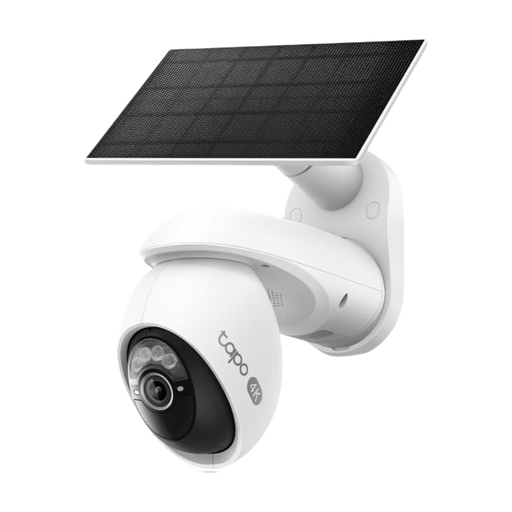
Why It Stands Out: The Tapo C660 KIT is a comprehensive solution that combines 4K Ultra HD resolution with full 360° coverage. Its pan/tilt functionality allows you to survey a wide area from a single point, and its AI tracking can automatically follow a person, pet or vehicle as it moves across the frame. The included solar panel is highly efficient, with the manufacturer stating that just 45 minutes of sunlight can provide a full day's power.
Pros:
Who is it for? This kit is an excellent choice for homeowners who need to monitor a large, open space like a back garden, a long driveway or the entire front of their property from one vantage point.
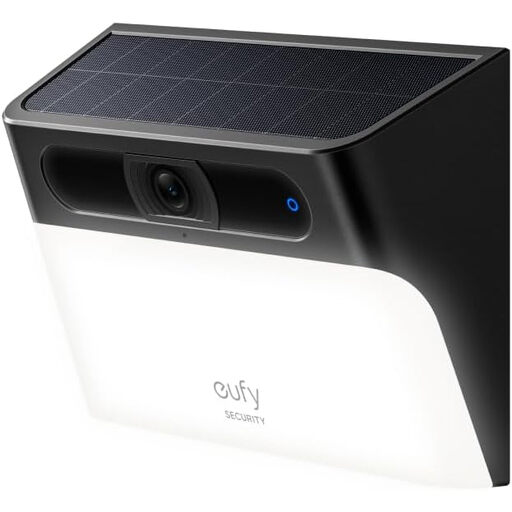
Why It Stands Out: This device cleverly integrates a motion-activated security light and a 2K camera into a single, compact unit. It’s designed for simplicity and quick installation, making it a great entry point into solar-powered security. The 300-lumen light is bright enough to illuminate doorways and deter intruders without causing a disturbance to neighbours. With no monthly fees and built-in local storage, it's a true 'set-and-forget' device.
Pros:
Who is it for? Ideal for those wanting to secure specific entry points like a front door, side gate or garage entrance with a single, unobtrusive device that provides both light and surveillance.
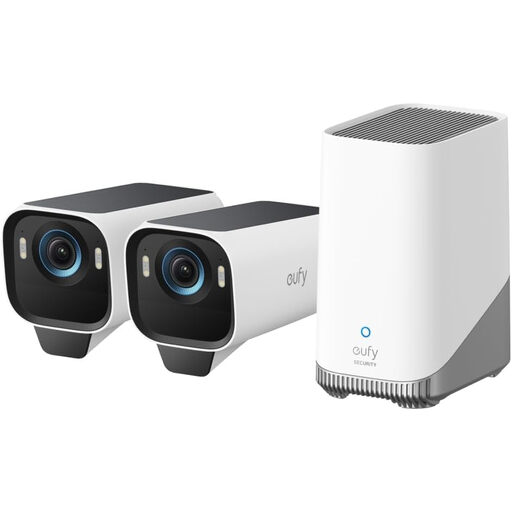
Why It Stands Out: For those needing to cover multiple areas of a larger property, this two-camera kit offers a powerful and expandable system. It delivers crisp 4K resolution and enhanced colour night vision without needing a spotlight. The system's HomeBase S380 unit provides 16GB of built-in local storage, which is expandable up to a massive 16TB. Its dual-motion detection system, combining radar and PIR, is designed to reduce false alerts by up to 99%.
Pros:
Who is it for? This kit is suited for property owners who require a robust, multi-point wireless outdoor security camera system and value having significant local storage capacity without any recurring costs.
While a CCTV camera with a solar panel is a fantastic all-in-one solution, sometimes a dedicated light is a better fit for certain areas. A strong, motion-activated floodlight can be a powerful deterrent on its own or can work alongside your camera setup to ensure your property is always well-lit.
For a wider selection of security solutions, explore our range of LED outdoor security lights.
1. How much sun do solar powered security cameras need in the UK? Modern solar security cameras are designed with the variable UK climate in mind. Their high-efficiency panels and large built-in batteries mean they don't require constant, bright sunshine. Often, just a few hours of daylight are enough to keep the battery topped up for 24-hour operation and the battery reserves will keep the camera running through consecutive overcast days.
2. Can I install a wireless outdoor security camera myself? Absolutely. Most solar-powered cameras are designed for easy DIY installation. Because they are a type of wireless outdoor security camera, there is no need to run power or video cables through your walls. They typically come with a mounting bracket and screws and setup is completed through a smartphone app that guides you through connecting the camera to your home Wi-Fi network.
3. Are home security cameras without a subscription secure? Yes, they can be very secure. Models that use local storage, such as a microSD card or a dedicated home base unit, keep your video footage within your home network. This gives you complete ownership and control over your data, as it is not being uploaded to a third-party cloud server. Many of these systems also offer password protection on the storage itself for an added layer of security.