
24/7 Customer Support

Free returns

Same-day & Next-day Delivery

Quality Guaranteed

Unlock Your Welcome Offers: FREE Delivery | Up to 80% OFF | Free 30-day JoyPlus trial
Download the APP
Modern televisions deliver stunning 4K picture quality, but their ultra-slim designs often leave little room for powerful speakers. The result? Flat, underwhelming audio that doesn't match the action on screen. If you find yourself constantly adjusting the volume to hear dialogue or missing the impact of a film's score, a soundbar is a straightforward and effective upgrade.
Navigating the market can be confusing, with a vast array of features, sizes and technical terms. This guide is designed to cut through the clutter, helping you understand the key considerations and find a soundbar that fits your space, your television and your entertainment needs.
Before diving into specific models, let's cover a few key features to look for. Understanding these will help you make a more informed decision.
The numbers you see, like 2.1 or 3.1.3, describe the soundbar's channel configuration. The first number indicates the main channels (left, right, centre), the second indicates a subwoofer and a third (if present) refers to upward-firing speakers for height effects.
The subwoofer is responsible for producing low-frequency effects—the rumbles and explosions that make action films and games so exciting.
How your soundbar connects to your TV and other devices is crucial.
Here are a few standout models that cater to different needs, from immersive home cinema to compact, convenient audio upgrades.
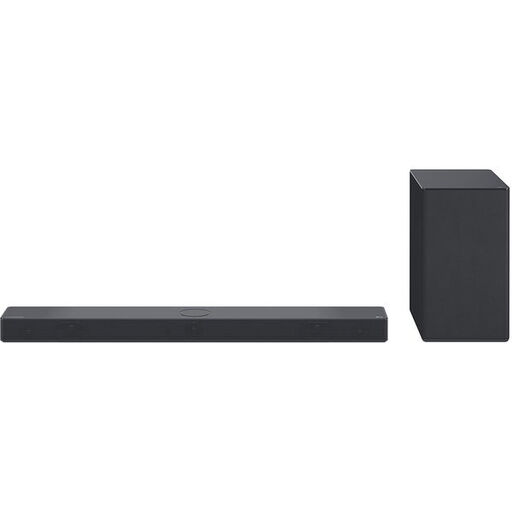
Why It Stands Out: The LG USC9S is engineered for a truly cinematic experience. It is one of the first soundbars to feature Triple Up-Firing Channels, creating an expansive and convincing Dolby Atmos and DTS:X soundstage. With a total power of 400W and a dedicated wireless subwoofer, it delivers room-filling audio with deep, impactful bass. It's also designed to integrate seamlessly with LG OLED C Series TVs, including a special bracket for a clean, unified look. For gamers, its support for 4K 120Hz pass-through with VRR and ALLM makes it a top-tier choice.
Pros:
Who is it for? Home cinema enthusiasts, next-generation gamers and LG TV owners who want a premium, seamlessly integrated audio system.
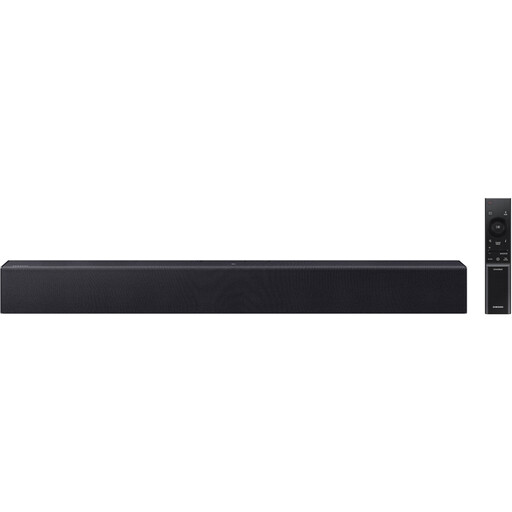
Why It Stands Out: The Samsung HW-B400F/XU proves that you don't need a large system for a big sound upgrade. This all-in-one compact soundbar is just 64cm wide, making it perfect for smaller rooms or for those who prefer a minimalist setup. Despite its size, it features a built-in woofer and four front-firing speakers to deliver a full-bodied sound that far surpasses standard TV audio. Practical features like Voice Enhancement Mode to clarify dialogue and Night Mode to reduce bass for late-night viewing make it incredibly user-friendly.
Pros:
Who is it for? Those living in flats or with limited space or anyone seeking a simple, clutter-free and affordable way to significantly improve their TV's sound.
View Details for SAMSUNG HW-B400F/XU
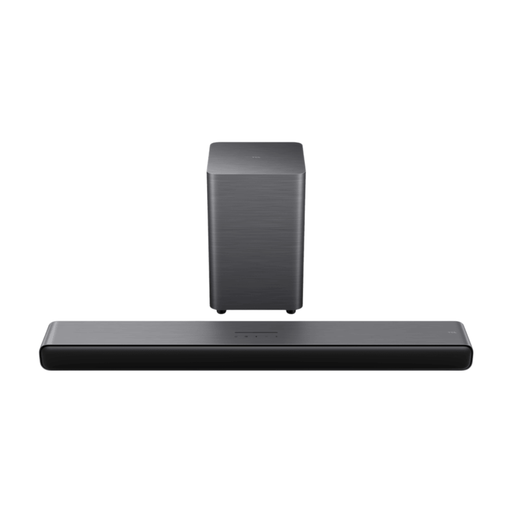
Why It Stands Out: The TCL S55H offers an excellent balance of immersive features and value. As a 2.1 channel system, it comes with a dedicated wireless subwoofer for powerful, ground-shaking bass. It brings premium audio formats to a more accessible point, supporting both Dolby Atmos and DTS Virtual:X to create a wider, more three-dimensional sound field. With 220W of maximum audio power, it has plenty of punch for movies and music. For those with a TCL television, the Tutti Choral function allows the soundbar and TV speakers to work together for an even more expansive sound.
Pros:
Who is it for? Users looking for a feature-rich soundbar with Dolby Atmos and a wireless subwoofer that offers strong all-around performance without a top-tier price tag.
If these recommendations aren't quite the right fit, or you'd like to compare more models, there is a wide world of audio equipment to explore. From different channel configurations to brand-specific features, you can find the perfect match for your home.
[Explore Our Full Range of Hi-Fi Audio Equipment](https://www.joybuy.co.uk/explore/hifi-audio-equipment/eKcbMmJL)
1. Do I really need a soundbar for my TV? While not essential, a soundbar is one of the most significant upgrades you can make to your home entertainment setup. The built-in speakers on modern TVs are often small and lack the power to produce rich, detailed and impactful sound. A soundbar provides clearer dialogue, deeper bass and a more immersive experience for everything from films to sports.
2. What is the difference between a 2.1 and a 5.1 soundbar? A 2.1 soundbar has two main channels (left and right) and a subwoofer. It creates a wide stereo soundstage with good bass. A 5.1 soundbar adds a centre channel for clearer dialogue and two rear or surround speakers for sound that comes from behind you. This creates a more traditional surround sound experience, though many modern soundbars use virtualisation technology like Dolby Atmos to achieve a similar effect without extra speakers.
3. Can I use any soundbar with any TV? Generally, yes. As long as your TV has an HDMI ARC/eARC port or an Optical audio output, you can connect almost any modern soundbar. Using HDMI eARC is recommended for the best performance. While some soundbars offer special features when paired with a TV of the same brand (like the LG and TCL models above), they will still function perfectly well with any other brand of television.