If you want to serve several guests from one batch, start with the maker’s hot-soup capacity and portion guidance: Lakeland describes its 1.5L Digital Soup Maker as serving up to five to six people, while its 1L Compact model is intended for three starters or two main portions. An in-jug sauté setting can save you using a separate pan for aromatics, and a keep-warm function may help if dinner runs late. Check those features on the exact model rather than assuming they come with a particular jug size.
Who is this for?
One-batch dinner-party hosts
You want to serve several guests without starting another cooking cycle during dinner. Compare hot-soup capacity and the maker’s stated portions with your guest list, especially if the soup is a main course rather than a starter.
Cooks who want to sauté in the jug
If your tomato and basil recipe begins by softening onions, garlic or other aromatics, an in-jug sauté function could spare you a separate pan. Morphy Richards’ tomato-and-basil recipe uses a hob pan when the soup maker has no sauté setting.
Occasional hosts with limited storage
A smaller maker may be easier to accommodate between dinner parties. Lakeland describes its 1L Compact Soup Maker as making three starter portions or two main portions, so consider whether that serving plan works for you.
What matters when choosing?
For this dinner-party soup, decide which constraint comes first: serving everyone from one batch, coping with a change in serving time, preparing aromatics in the jug, or storing and cleaning the appliance afterwards.
| Concern |
What to check |
Who this matters to |
| Batch capacity |
Compare the stated hot-recipe fill limit and portion guidance with your guest count and serving size. |
If I want to serve everyone together, I need enough hot soup from one cycle rather than a second batch during dinner. Around 33% of consumers put one-batch capacity first. |
| Serving-time flexibility |
Check the exact model’s keep-warm duration and whether it has a separate reheat function. |
When the meal might run late, I want a way to coordinate the soup with the rest of dinner. Serving-time flexibility is the primary concern for around 27% of consumers. |
| In-jug preparation and texture |
Look for a sauté function if you want to soften aromatics in the jug, and a smooth-soup programme for the finished dish. |
I would rather prepare the aromatic base without another pan and serve a smooth soup. Around 27% of consumers put that cooking workflow first. |
| Storage and cleaning |
Check the appliance’s dimensions, working capacity and model-specific cleaning instructions. |
If I host only occasionally, I need somewhere to keep the maker and a manageable clean-up afterwards. For around 13% of consumers, that practical burden comes first. |
Mistakes to avoid
-
Using the largest stated capacity as the hot-soup fill limit
Cold and hot recipe capacities can differ. Tefal lists its Multisoup BL5628G0 at 1.2L for cold recipes but 1L for hot recipes.
Plan portions using the hot-recipe capacity and the marked maximum fill line; do not overfill the jug to avoid a second batch.
-
Expecting a compact maker to feed a larger party in one go
Lakeland describes its 1L Compact Soup Maker as suitable for three starters or two main portions, not an unrestricted number of dinner-party servings.
Match the manufacturer’s portion guidance to your course and guest count. Choose a larger batch size or plan another cycle if those portions will not suffice.
A second batch also takes time and adds to the washing-up.
-
Assuming an automatic clean cycle finishes the job
A cleaning programme does not replace the care instructions for the particular appliance. Morphy Richards advises unplugging its soup makers, letting them cool completely and keeping electrical components out of water.
Follow your model’s instructions for its clean cycle and subsequent rinsing and drying; keep its electrical parts dry.
-
Treating keep-warm as an unlimited serving window
Stated durations differ: Tefal gives Easy Soup up to 40 minutes of keep-warm, while Lakeland states up to six hours at selectable temperatures for its Digital Soup Maker.
Check the exact model’s duration and instructions against your dinner schedule. Plan separately for any leftovers rather than using keep-warm as storage.
Brands to consider for soup makers
Morphy Richards
Its dedicated 1.6L models offer different ways to prepare and serve a larger batch; the functions depend on the variant.
- Morphy Richards lists smooth and chunky settings, keep-warm and self-clean functions for its Large 1.6L Soup Maker. Its Total Control 1.6L model adds sauté, reheat and a medium-texture setting.
- Do not assume the basic Large model has in-jug sauté. Choose the appropriate variant if your tomato-soup method starts by softening aromatics.
Tefal
Its range includes dedicated soup makers and a multipurpose heated blender, so choose according to the other jobs you want the appliance to do.
- Tefal states that its 1.2L Easy Soup makes up to four servings and offers smooth and chunky programmes. Its Perfectmix Cook has a stated 1.75L jug and ten automatic programmes.
- A larger jug figure is not, by itself, a hot-soup serving figure. Check the applicable fill limit and whether you need the additional heated-blender functions.
Lakeland
Its Compact and Digital Soup Makers address different portion sizes and serving plans.
- Lakeland states that its 1L Compact model makes three starters or two main portions. It describes the 1.5L Digital model as serving up to five to six people, with keep-warm for up to six hours.
- The Compact model’s portion guidance makes it a poor one-batch match when the guest list exceeds those stated servings.
Tower
Tower offers both compact and larger dedicated soup makers; portion guidance varies by model.
- Tower states that its 1.6L T12031 makes four to six portions. Its 1L soup-and-smoothie maker has a smooth setting that Tower identifies as suitable for tomato and basil soup.
- The larger model’s stated portions should not be applied to Tower’s 1L maker when planning a dinner-party batch.
Joybuy soup makers for tomato and basil soup
These two soup makers offer different stated jug sizes for the same dinner-party decision. Compare the usable hot-soup batch and the features important to your recipe before deciding which suits your guest list.
 No image available
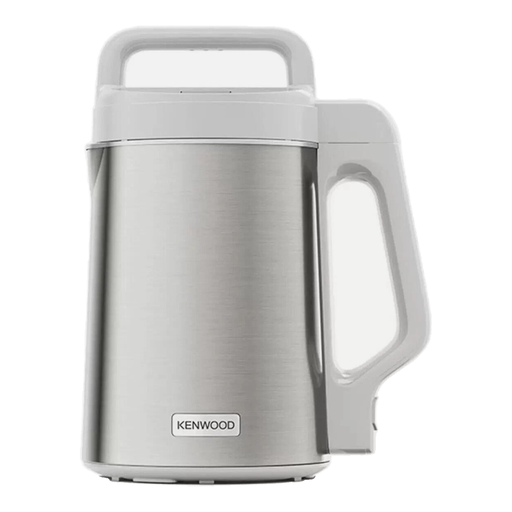
Kenwood Soupeasy CB01.000BS 1.5L Soup Maker, Silver/White
Consider this 1.5L model if you want to assess a larger batch for several guests. Check its hot-soup fill limit and serving guidance against your portions, and confirm whether it offers in-jug sauté if your recipe needs it.
View on Joybuy
 No image available
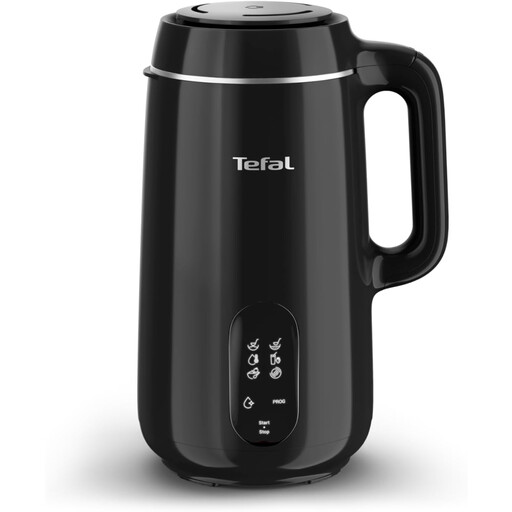
Tefal Multi-soup BL5628G0 Soup Maker, 6 Programmes, Black
Consider this model for a smaller gathering or a starter course, using Tefal’s guidance of up to four servings to plan portions. Tefal states a 1L capacity for hot recipes, compared with 1.2L for cold recipes; check the hot-soup fill line rather than planning around the larger figure.
View on Joybuy
Common questions
What size soup maker do I need for dinner-party tomato and basil soup?
Choose by the stated hot-soup capacity and portions, not the jug size alone. Lakeland describes its 1L Compact model as making three starters or two main portions and its 1.5L Digital model as serving up to five to six people; compare the guidance for your chosen maker with your course and guest count.
Do I need a sauté function for tomato and basil soup?
No: a soup maker without sauté can still be part of the recipe if you are willing to soften the aromatics in a separate pan. Morphy Richards gives that hob-pan step in its tomato-and-basil recipe for cooks whose maker lacks a sauté function.
How should I clean a soup maker after making tomato soup?
Follow the care instructions for your exact model, including any instructions for an automatic cleaning cycle. Morphy Richards advises unplugging its soup makers, allowing them to cool completely and never immersing the motor base or electrical components in water.
What should I check when buying a mains-powered soup maker?
Check that the seller can clarify the product’s plug, voltage information and accompanying documentation if the listing is unclear. GOV.UK’s guidance on the Electrical Equipment (Safety) Regulations 2016 addresses Great Britain; Northern Ireland has different arrangements, so ask the seller or manufacturer which requirements apply there.


