Hosts focused on soya-milk texture
If you make milk-based coffee for several people and want help with texturing, look for settings that explicitly name soy or plant-based milk rather than assuming a conventional steam wand offers the same guidance.


If consistent soya-milk texture matters most, start with a machine whose exact model explicitly offers soy or plant-milk settings. For several drinks with less hands-on work, consider an automatic bean-to-cup machine, but check its model-specific milk guidance and cleaning routine. A guided or manual espresso machine gives you more involvement in each drink, including the work of preparing them one at a time.
If you make milk-based coffee for several people and want help with texturing, look for settings that explicitly name soy or plant-based milk rather than assuming a conventional steam wand offers the same guidance.
If coffee follows a family meal, one-touch drink selection may appeal more than preparing each espresso and steaming each portion of milk manually. Check the milk-system cleaning routine as part of that choice.
If you enjoy adjusting espresso preparation and learning to texture milk with a steam wand, a more manual machine may suit you. Allow for active preparation when several people want cappuccinos.
Choose when: You want to take part in making each espresso but prefer stated soy or plant-milk texturing controls.
Trade-off: Guidance does not remove the work of preparing drinks individually and cleaning up afterwards.
Choose when: You would rather select a milk drink than manage each dosing and steaming step while serving the family.
Trade-off: An automatic milk system still needs the cleaning specified for that model; confirm its suitability for your soya drink.
Choose when: You want help with dosing or tamping while retaining a manual steam wand and control over milk texturing.
Trade-off: Steaming soya milk calls for practice, particularly when you are making several drinks.
| Concern | What to check | Who this matters to |
|---|---|---|
| Soya-milk texture | Check whether the exact model names soy or plant-based milk settings and whether milk temperature or texture can be adjusted. | If I want similar foam across several cappuccinos, I would rather have stated soya-milk controls than rely entirely on steam-wand technique. Around 42% of consumers put reliable soya-milk texture first. |
| Effort across several drinks | Check the cappuccino preparation steps and the milk-system cleaning sequence; consult the model manual for capacities. | When coffee follows a family meal, I want to spend less time preparing each drink while others wait. Roughly 33% of consumers make low-effort repeat preparation their main concern. |
| Hands-on control | Check whether dosing and tamping are assisted and whether the milk wand is manual or automatic. | I would accept more work per cappuccino to control espresso preparation and practise steaming the milk myself. About 25% of consumers place hands-on control first. |
A conventional wand leaves milk texturing to the person using it, whereas Sage lists calibrated soy settings for the Barista Touch Impress and De'Longhi describes plant-milk adjustments on the La Specialista Touch. Those manufacturer features are not independent comparisons of foam quality.
If texture consistency is your priority, check the exact model's stated milk settings. With a manual wand, be prepared to practise using your chosen soya drink.
Automatic preparation does not eliminate milk-system maintenance. Melitta advises running its Easy Cleaning programme after dispensing milk or froth to help stop residue sticking in the system.
Before choosing a machine, read its instructions for the post-drink rinse, removable parts and routine cleaning, then consider whether that fits how you serve coffee.
An espresso machine uses mains electricity, so the model and its supplied equipment need to suit the home where it will be used.
Before ordering, confirm the plug, voltage, documentation and warranty coverage for your delivery location rather than relying on the listing title alone.
Sage has guided and assisted espresso models for buyers who want to remain involved in preparing each drink.
De'Longhi offers both guided espresso preparation and automatic milk-system routes.
Philips fully automatic machines are relevant if selecting a drink with fewer manual preparation steps is the priority.
Melitta is relevant when comparing the upkeep of bean-to-cup milk systems.
These machines cover a guided, soy-setting espresso route and two automatic bean-to-cup options for lower-effort cappuccino preparation. If soya-milk settings are decisive, check the instructions for the exact automatic model before choosing it.
 No image available
Consider this guided espresso machine if you want to make soya cappuccinos with milk settings that explicitly name soy; Sage also describes assisted dosing and tamping for this model.
Check the exact model's cleaning instructions and how its one-drink-at-a-time workflow will fit the number of people you serve.
 No image available
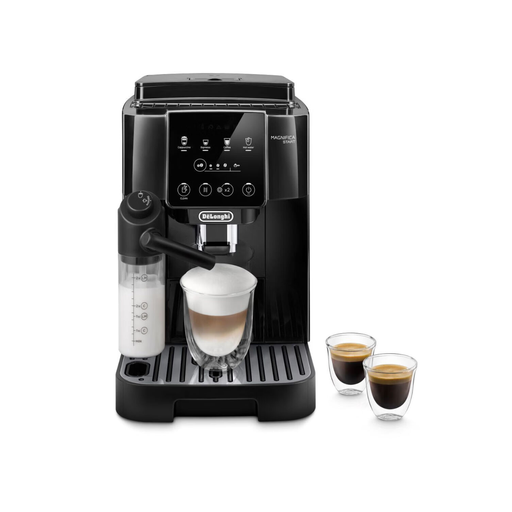
Consider this automatic bean-to-cup machine if fewer hands-on steps matter when serving cappuccinos; its product name specifies automatic milk preparation and four one-touch recipes.
Check the ECAM220.60.B instructions for using your chosen soya drink, cleaning the milk system and preparing several drinks in succession.
 No image available
Consider this bean-to-cup model if automatic milk preparation appeals more than manually steaming each cappuccino.
Before using it for soya cappuccinos at a family meal, check the ECAM290.83.TB milk guidance, cleaning steps and capacity for your serving routine.
No, but an explicitly named soy or plant-milk setting is a useful starting point if you want help with texturing rather than relying wholly on technique. Sage lists soy settings for the Barista Touch Impress, while De'Longhi describes plant-milk controls for the La Specialista Touch; a manual steam wand leaves more of the result to the person using it and the chosen drink.
Check the exact model's preparation steps, water and bean capacities, and milk-system cleaning sequence against the number of drinks you expect to make. One-touch selection can reduce active steps, but it does not by itself establish how quickly a machine will serve everyone.
Follow the cleaning sequence in your machine's manual after milk use. De'Longhi describes an automatic cleaning function for its LatteCrema carafe, while Melitta advises using its Easy Cleaning programme after dispensing milk or froth; neither replaces the instructions for your exact model.
Treat shared milk-system use as an allergy-management decision, not just a choice of coffee recipe. The Food Standards Agency identifies soya as an allergen; do not assume an ordinary rinse removes the risk of cross-contact, and seek appropriate allergy advice for the household's circumstances.
No: also check the machine's plug, voltage, documentation and warranty coverage for your delivery location. The Department for Business and Trade explains that UKCA and CE marking concerns relevant product requirements in Great Britain; arrangements for Northern Ireland differ, so do not assume a listing intended for one market answers every question about another.