
24/7 Customer Support

Free returns

Same-day & Next-day Delivery

Quality Guaranteed

Unlock Your Welcome Offers: FREE Delivery | Up to 80% OFF | Free 30-day JoyPlus trial
Download the APP
Navigating the plant-based milk aisle can feel overwhelming. With so many brands of soya milk on the shelves, it's easy to pick one that doesn't quite meet your needs. As a Joybuy Product Recommendation Officer, my role is to help you see past the marketing and focus on what truly matters for your household. Many shoppers find their purchase ends up being too sweet, the wrong texture for their coffee, or simply not good value for money.
This guide will walk you through the common pitfalls to avoid and the key factors to check, ensuring your next purchase is the right one.
Before you add a carton to your basket, be aware of these frequent missteps that can lead to disappointment:
To make a confident choice, focus on these three non-negotiable parameters. They are the true indicators of a quality vegan milk alternative.
Always check the "Carbohydrates (of which sugars)" line on the nutritional label. A quality unsweetened soya milk will have 0g of sugar. Low-sugar options are also available, but be mindful of what's used for sweetness—it could be cane sugar, fructose, or maltose syrup. For maximum versatility in both sweet and savoury dishes, a no-sugar option is often the most practical choice.
The percentage of soya beans in the ingredients list is a direct indicator of the drink's richness and quality. A higher concentration (typically 7% or more) usually results in a creamier texture and a higher protein content. For those relying on soya milk as a key protein source in a plant-based diet, aiming for a product with at least 3g of protein per 100ml is a good benchmark.
Additives like stabilisers (e.g., Gellan Gum, Carrageenan) are not necessarily bad; they are used to prevent separation and ensure a smooth, consistent texture. However, a shorter ingredients list is often preferable. More importantly, check for fortification. As a lactose-free drink replacing dairy, it's beneficial if it's fortified with essential nutrients like Calcium, Vitamin D and Vitamin B12, which are vital for bone health and energy.
Instead of a one-size-fits-all approach, we've matched some standout options to different needs and lifestyles.
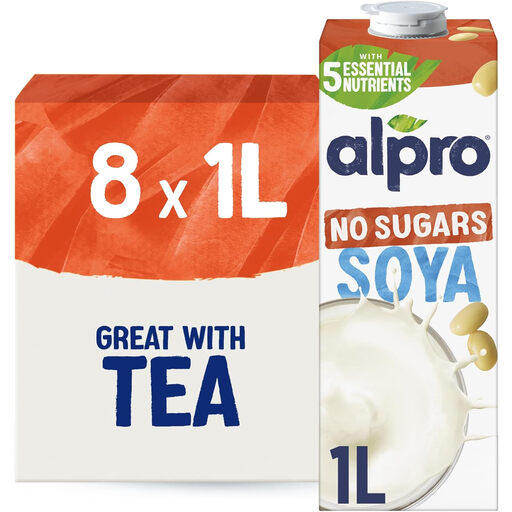
Why This Fits Their Persona: This user scrutinises labels for sugar and additives. They want a high-protein, versatile base for smoothies, cooking and their morning cereal without any added sweetness.
It directly counters the "healthy halo" trap with 0g of sugar and a clean, straightforward ingredients list. The bulk pack also addresses the value pitfall.
High protein content (3.3g/100ml) and fortified with Calcium, B2, B12 and D. Its neutral taste makes it extremely versatile.
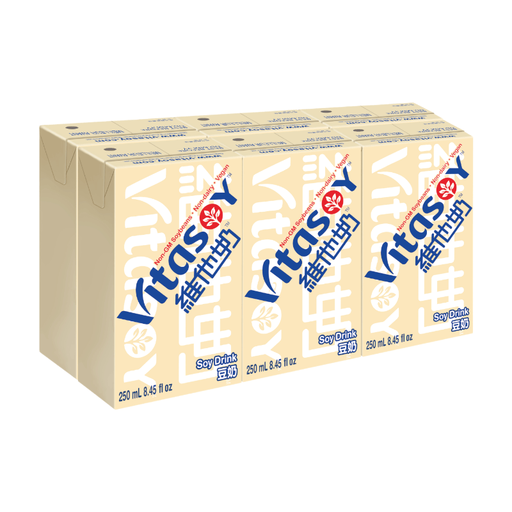
Why This Fits Their Persona: This user values convenience for lunchboxes, office snacks, or a quick breakfast. They prefer a familiar, lightly sweetened taste that is generally well-liked by all family members.
The classic, smooth taste of Vitasoy avoids the "texture mismatch" pitfall for many. The soya drink multipack format provides excellent value and convenience.
Convenient 250ml portion sizes are perfect for on-the-go consumption. The balanced flavour is enjoyable chilled on its own or with light snacks.
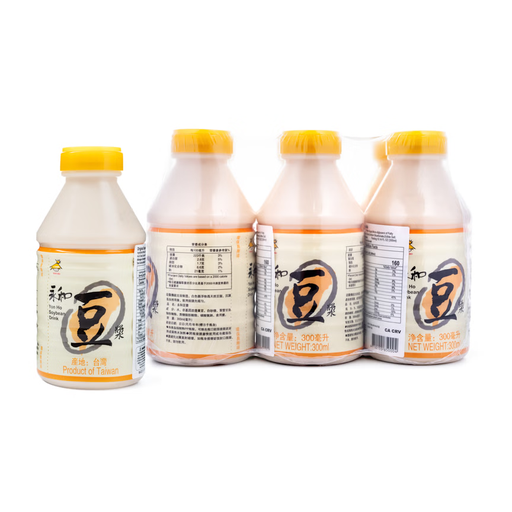
Why This Fits Their Persona: This user is looking for the specific rich, creamy and satisfying taste of traditional Asian-style soy milk. They prioritise authentic flavour and a smooth, non-chalky mouthfeel above all else.
It directly solves the "texture and taste mismatch" pitfall by delivering the smooth, rich profile that many Western brands lack. It's what this user expects from a quality soya drink.
Delivers a signature smooth, creamy texture and naturally satisfying flavour. The large 24-pack offers great value for daily drinkers.
We have compiled a complete, real-time list of products that fully satisfy these strict selection criteria and UK safety regulations.
Yes, you can, but results vary by brand. Soya milks with a higher protein content and those formulated as 'barista' editions tend to perform better, as they are less likely to curdle or split when exposed to the heat and acidity of coffee. For a better experience, try warming the soya milk slightly before adding it to your coffee, or pour the coffee into the milk, not the other way around.
In the UK, the terms are often used interchangeably by consumers. From a labelling perspective, "milk" is a term legally protected for dairy products in the EU and UK. Therefore, plant-based alternatives are typically labelled as "drink" or "beverage". For all practical purposes, when you see "soya drink" on a carton, it is the product commonly known as soya milk.
Absolutely. For anyone who consumes soya milk regularly, buying a soya drink multipack or a case of long life soya milk cartons almost always offers a lower cost per litre compared to buying individual units. It also ensures you have a steady supply in your pantry, saving you frequent trips to the shop.