If you can place two speakers apart and regularly listen from the dining table, choose a separated stereo system for a conventional left-right presentation of orchestral recordings. An active pair avoids a separate amplifier; passive speakers let you choose the components individually but require compatible amplification and cabling. For listening mainly while cooking, a compact wireless speaker may be easier to place and control, provided it stays clear of splashes and heat.
Who each setup suits
Focused orchestral listeners
If you usually listen from the dining table and have room for two speaker positions, a separated left-right layout is worth considering. KEF's placement guidance also asks listeners to consider the position of their seat relative to both speakers.
Cook-and-listen households
A compact speaker can leave more room for kitchen activity and make everyday playback straightforward. Sonos describes its Era 100 as humidity resistant, but Sonos Support warns that direct water exposure can damage speakers that are not waterproof.
Flexible-system upgraders
If a television, computer or external music source is part of the plan, check connections before choosing a speaker format. An active pair can provide several inputs in one system, while passive speakers require separate compatible amplification and a playback source.
What to consider before buying
One compact wireless speaker
Choose it when: Listening while cooking matters more than a separated stereo layout, and you have a protected place for one speaker.
Trade-off: One enclosure cannot provide the physical left-right spacing of two speakers.
Active stereo pair
Choose it when: You can place two speakers apart for dining-table listening but do not want a separate amplifier.
Trade-off: Plan for both speaker positions and check the pair's power, connection and network requirements; KEF says the LSX II LT needs home Wi-Fi for its full feature set.
Passive speakers and amplifier
Choose it when: You own compatible amplification or want to select and change system components separately.
Trade-off: The speakers need an amplifier, cable and a source before they can play music.
Compact speakers that can be paired
Choose it when: You want to begin with one unit and add a compatible second speaker later; Yamaha lists MusicCast Stereo for the MusicCast 20, and Sonos describes stereo pairing for two Era 100 SL speakers.
Trade-off: A separated stereo layout still needs that second speaker and somewhere suitable to place it.
| Concern | What to check | Who this matters to |
|---|
| Stereo separation |
Identify two safe speaker positions and a dining seat that faces them. KEF suggests 1,800–2,400 mm between speakers as a general placement starting point, subject to the room and speakers. |
If I sit down to follow instruments across an orchestral recording, I want room for a left-right pair rather than one enclosure. Around 36% of consumers put that separated presentation first. |
| Kitchen placement |
Check the proposed position for splashes, steam and heat, then confirm the model's stated protection and whether its controls and power connection are accessible. |
While preparing meals, I need music I can start and control without putting a speaker in the way of kitchen work. That convenience is the primary concern for around 29% of consumers. |
| Sources and expansion |
List the devices you will connect and check the exact inputs, adapters and network needs. Sonos says Era 100 line-in requires its Line-In Adapter; KEF lists HDMI ARC and USB-C for LSX II LT. |
If I use a TV or computer as well as streamed music, I want those connections to work with the system I choose. Around 21% of consumers primarily need that source and system flexibility. |
| Complete system |
For passive speakers, check amplifier compatibility and allow for speaker cable and a music source; confirm that the speakers will fit their intended shelves or stands. |
I would rather build a compact two-channel system from separate components, even though the speakers cannot play alone. For around 14% of consumers, that component route is the main priority. |
Common buying mistakes
-
Choosing one speaker for seated stereo listening
A single compact enclosure cannot offer the same physical left-right placement as two separated speakers.
If dining-table listening is your priority, map two safe positions before deciding between an active pair and passive speakers with an amplifier.
-
Treating humidity resistance as waterproofing
Ordinary kitchen humidity and direct splashes pose different placement demands. Sonos Support warns that direct water can damage its speakers that are not waterproof.
Keep a non-waterproof speaker away from sinks, draining boards and likely splash zones, even if the model is described as humidity resistant.
-
Overlooking what passive speakers need
Passive bookshelf speakers cannot play a recording without compatible amplification and a source.
Plan the whole working system and check the exact speaker and amplifier specifications together.
You will also need speaker cable and may need a suitable shelf, stand or mount.
-
Assuming every source connects directly
Connections differ by model: Sonos specifies an adapter for Era 100 line-in, while KEF says home Wi-Fi is needed for the full LSX II LT feature set.
Write down the phone, TV, computer or other source you intend to use, then check the required input, accessory and network setup for the exact model.
Brands to consider
Sonos
Compact networked speakers may suit everyday kitchen-diner listening when app-based playback and a small placement area matter.
- Sonos lists Wi-Fi, Bluetooth, AirPlay 2 and humidity resistance for Era 100.
- Era 100 line-in needs the Sonos Line-In Adapter; humidity resistance does not protect a speaker from direct water exposure.
KEF
The LSX II LT is an active stereo-pair option for listeners who can give two speakers separate positions without adding an amplifier.
- KEF lists HDMI ARC, USB-C, Bluetooth and a subwoofer output for the LSX II LT.
- KEF says a home Wi-Fi network is required for its full feature set; some guest, public or secured networks may restrict functionality.
Yamaha
The MusicCast 20 offers a compact starting point for listeners considering a compatible stereo or multi-room arrangement later.
- Yamaha lists Wi-Fi, Ethernet, Bluetooth, AirPlay and MusicCast Stereo capability for the MusicCast 20.
- Yamaha lists SBC and AAC as its Bluetooth receiving codecs; check compatibility if you rely on a particular source-device codec.
Wharfedale
DIAMOND 12.1 is a passive standmount option for a conventional two-channel system built from separate components.
- Wharfedale specifies a 130 mm mid/bass driver and a 25 mm dome tweeter for DIAMOND 12.1.
- As passive speakers, they require compatible amplification, speaker cable and a playback source.
Joybuy products for these setups
These choices cover a passive speaker pair and compact tabletop speakers. Decide whether you need two separated speakers from the outset, or whether a single tabletop unit better fits how you listen while cooking.
 No image available
HiVi-Swans DIY3.1 passive bookshelf speakers, 6.5-inch pair
Consider this pair if you can position two speakers for dining-table listening and already have, or plan to add, compatible amplification.
The listing identifies one pair of passive 6.5-inch bookshelf speakers. Check amplifier compatibility for the exact model and allow for speaker cable and a source.
View on Joybuy
 No image available
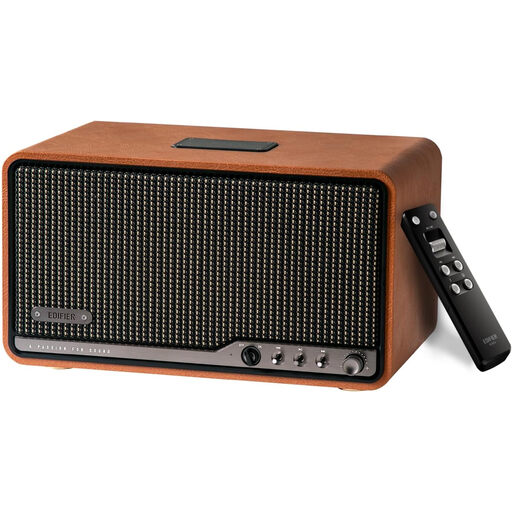
Edifier S300 wireless multi-room tabletop speaker, brown
Consider this single tabletop speaker if you want compact everyday playback with the option to investigate a matching second unit for stereo.
Check the exact pairing and power arrangements before planning its position. Keep it away from water and heat sources.
View on Joybuy
 No image available
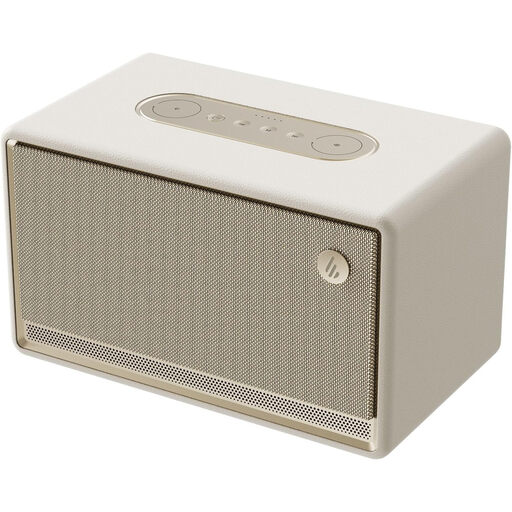
Edifier ES300 tabletop wireless speaker, ivory
This single tabletop speaker is relevant if convenient everyday playback takes priority over planning a separated pair.
Its title lists Bluetooth 5.3. Check the intended placement and power arrangement, and keep it away from water and heat sources.
View on Joybuy
 No image available
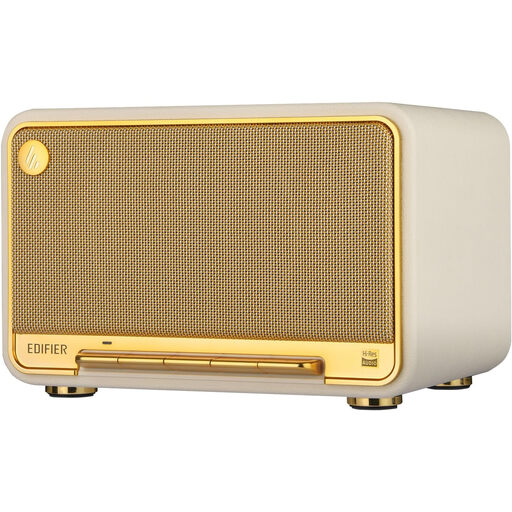
Edifier D32 tabletop wireless speaker
Consider this tabletop model if connecting several types of music source matters more than an established two-speaker layout.
The title lists Bluetooth 5.3, AirPlay 2, USB-C and AUX inputs. If separated stereo is essential, confirm pairing capability before choosing it; keep the speaker away from water and heat sources.
View on Joybuy
Frequently asked questions
Do orchestral recordings require two speakers?
No: one compact speaker can suit casual listening while cooking. If you mainly listen from the dining table and want a conventional left-right stereo layout, choose two speakers you can position apart; KEF's speaker-placement guidance also makes the listening position part of that decision.
Can a humidity-resistant speaker go beside the sink?
Humidity resistance alone does not make a speaker suitable for splashes beside a sink. Sonos Support warns that direct water exposure may damage speakers that are not waterproof, so choose a protected position and follow the exact model's placement guidance.
What network checks matter for an active wireless pair?
Check the exact pair's setup requirements and whether your home network reaches both intended positions. KEF says the LSX II LT requires home Wi-Fi for its full feature set and warns that some guest, public and secured networks may limit functionality.
What should I do with an old electrical speaker?
Use an appropriate electrical recycling route rather than putting it in general waste. Oxfordshire County Council classifies items with electrical parts, a plug or a battery as waste electrical and electronic equipment; check your own council's arrangements for where to take the speaker.


