Who these speakers suit

Close-up desk or piano listeners

If you listen near a desk or digital piano, the speaker inputs and your keyboard, audio interface or computer outputs matter. Yamaha and ADAM Audio describe their HS5 and T5V models as nearfield monitors for close listening.

Living-room piano music streamers

If piano recordings come from streaming services, a laptop or a TV, an active system can combine playback and amplification. KEF lists streaming options, HDMI ARC and USB-C for its LSX II system; check which connection your source needs.

Small-room listeners with limited placement freedom

When shelf or desk space is tight, physical fit and positioning deserve attention. Genelec specifies room-compensation switches for G Two, while ADAM Audio lists a rear-firing port on T5V that makes its placement worth checking.

What matters when choosing

Start with your listening distance and the output on your music source, then check how much room the speakers have in their intended position.

Concern What to check Who this matters to
Close listening and source connection Match the keyboard, interface or computer output to the speaker inputs; confirm what is needed for two-speaker playback. If I listen beside my digital piano, I want the speakers to suit that distance and connect to my equipment. Around 36% of consumers would put close listening and source compatibility first.
Streaming and shared use Match each phone, laptop or TV to a named input or supported streaming method. When piano recordings share a system with TV and everyday music, I want an uncomplicated way to switch sources. For around 36% of consumers, convenient playback would be the primary need.
Placement and room fit Measure the available space and check the maker's placement guidance and any room controls. With little freedom to move speakers away from a shelf or wall, I need a setup that fits the room. Compact placement would come first for around 28% of consumers.

Buying pitfalls

  • Assuming one listing means two speakers

    Yamaha lists HS5 as a single speaker, and Genelec lists one G Two per package. Neither listing alone supplies a two-speaker setup.

    Check the quantity and box contents when comparing a single active speaker with a paired system.

    A second speaker, cables or stands may be needed for the intended setup.

  • Judging piano playback by one specification

    Published frequency ranges are not directly comparable when their measurement limits differ. Yamaha gives HS5 figures at both -3 dB and -10 dB; ADAM Audio gives the T5V range at -6 dB.

    Compare specifications measured on the same basis, and consider listening distance, connections and placement alongside them.

  • Assuming every source connects directly

    Yamaha HS5 uses XLR and TRS analogue inputs, Genelec G Two lists an RCA analogue input, and KEF LSX II offers connections including HDMI ARC and USB-C. These are different connection paths.

    Identify the exact output on your keyboard, computer or TV and check the complete connection path before ordering.

    Some source-and-speaker combinations require an additional interface, converter or cable.

  • Overlooking where mains equipment will be used

    The Office for Product Safety & Standards publishes electrical-equipment guidance for products placed on the Great Britain market and treats Northern Ireland separately.

    For mains-powered speakers, check that the product and its connection information suit your location; if you are in Northern Ireland, check the requirements applicable there rather than relying on Great Britain guidance.

Brands to consider for these speaker approaches

Yamaha

The HS Series includes active nearfield monitors for a wired desk or home-studio setup.

  • Yamaha specifies XLR and TRS inputs and room-control and high-trim controls for HS5.
  • HS5 is packaged as one speaker; confirm the quantity needed for stereo.

ADAM Audio

The T Series includes nearfield monitors; ADAM Audio positions T5V for small control rooms.

  • ADAM Audio specifies a 5-inch active design and a 45 Hz–25 kHz frequency range at -6 dB for T5V.
  • T5V has a rear-firing bass-reflex port, so check placement guidance for the intended position.

KEF

LSX II is a compact active hi-fi system for home streaming and mixed music, laptop and TV use.

  • KEF lists streaming support, HDMI ARC and USB-C, and supplies two separate speakers for stereo playback.
  • Confirm the input needed by a digital piano or other analogue source rather than assuming it connects directly.

Genelec

G Two is a compact active speaker for music, TV or computer listening where room adjustment is relevant.

  • Genelec specifies room-compensation switches and internal amplification for G Two.
  • G Two lists one RCA analogue input and is packaged as one speaker; check both source compatibility and quantity.

Joybuy products for recorded piano music

This compact Bluetooth speaker is a choice for playing piano recordings from a compatible device. Check the connection you need and whether you want a two-speaker stereo setup.
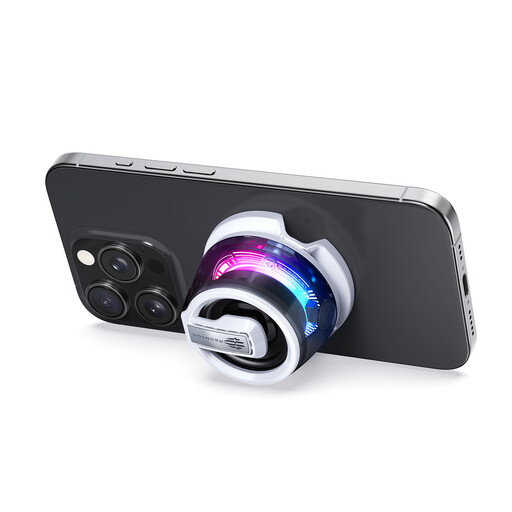
White Red Magic Rock Magnetic Bluetooth Speaker

Red Magic Rock Magnetic Bluetooth Speaker – White

For compact playback of piano recordings over Bluetooth from a compatible device. If you plan to use a digital piano or keyboard directly, check its output and the available connection path; also confirm whether this speaker meets your stereo needs.

View on Joybuy

Frequently asked questions

Do I need two speakers for piano music?

Choose two separated speakers if stereo presentation is important to you; a single speaker is still an option for straightforward playback. Check whether the listing supplies one unit or a pair: Yamaha lists HS5 as one speaker, whereas KEF describes LSX II as a two-speaker system.

Can I connect a laptop, TV or digital piano directly?

Only when the source output has a compatible path to a stated speaker input. KEF lists HDMI ARC and USB-C on LSX II, while Yamaha lists XLR and TRS analogue inputs on HS5; check your device's output and any required cable or converter.

Does a lower frequency figure mean better piano playback?

No: a frequency endpoint alone cannot rank piano playback. Yamaha publishes HS5 ranges at -3 dB and -10 dB, while ADAM Audio publishes the T5V range at -6 dB, so check measurement conditions before comparing the figures.

What electrical checks matter for a mains-powered speaker?

For use in Great Britain, check that the equipment is intended for the GB market and has applicable conformity and mains-connection information. Office for Product Safety & Standards guidance on the Electrical Equipment (Safety) Regulations 2016 addresses products placed on the GB market; Northern Ireland has separate requirements.

How should I approach volume for long listening sessions?

Avoid prolonged loud playback and adjust the volume for the time you spend listening. The World Health Organization identifies unsafe exposure to loud recreational sound as a hearing risk; maximum speaker output need not drive the purchase decision.