
24/7 Customer Support

Free returns

Same-day & Next-day Delivery

Quality Guaranteed

Unlock Your Welcome Offers: FREE Delivery | Up to 80% OFF | Free 30-day JoyPlus trial
Download the APP
For any tradesperson or dedicated DIY enthusiast, precision is non-negotiable. A job is only as good as its alignment, and a slight error can compromise an entire project. Whether you are hanging kitchen cabinets, laying pipework or framing a wall, the right spirit level is a cornerstone of quality work. But with so many types available, choosing the correct one can be a challenge. This guide cuts through the clutter, offering practical advice to help you select a reliable tool that fits your specific needs.
Before looking at specific models, it is useful to understand the key features that differentiate one level from another. Considering these points will help you narrow down the options and find a tool that serves you well on site or in the workshop.
The term 'spirit level' covers a wide range of tools. A long builders level (often 1200mm or more) is ideal for checking long surfaces like walls and floors, but it is impractical for smaller jobs. For plumbing, electrical work or fitting into tight spaces, a compact torpedo level is far more suitable. These are typically under 30cm and often feature a tapered design. For ultimate portability, a mini spirit level or pocket level can be an invaluable addition to any tool bag for quick checks and adjustments.
A magnetic spirit level offers a significant advantage when working with steel or other ferrous metals. A strong magnetic base allows the level to attach securely to surfaces like steel beams, conduit or metal studwork, freeing up both of your hands to make adjustments. Look for models with a 'V-groove' in the magnetic edge, which is specifically designed to sit securely on pipes and other curved surfaces.
For tasks that require precise angles and marking, a standard level may not be enough. A combination square is a versatile tool for carpenters and engineers, allowing you to check for true 90° and 45° angles, measure depth and scribe accurate lines. A high-quality engineers square is built for durability and precision, making it an essential tool for woodworking, metalworking and detailed layout tasks.
Here are our recommendations for levelling tools that offer practical features for a range of professional and DIY applications.
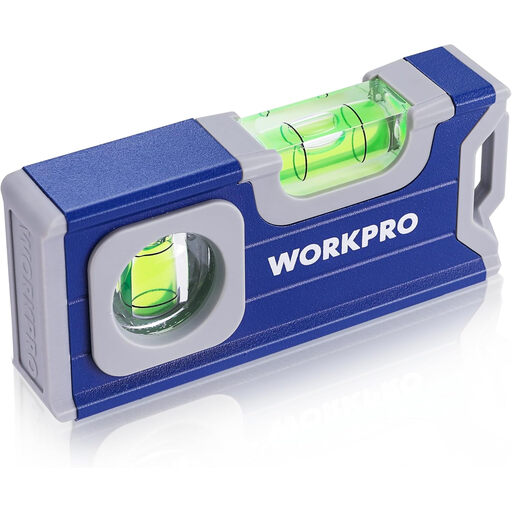
Why It Stands Out: This mini spirit level is engineered for convenience and precision in confined areas. Its compact aluminium alloy body houses a powerful V-shaped magnetic base, making it exceptionally useful for tasks where a larger level is simply too cumbersome. It provides both horizontal (180°) and vertical (90°) measurements with a stated accuracy of 0.5mm/m.
Pros:
Who is it for? This is an excellent choice for plumbers, electricians and installers who frequently work with pipework, conduit and metal frames in tight spaces. It is also a very handy pocket level for any tradesperson or DIYer needing a quick, accurate reference.
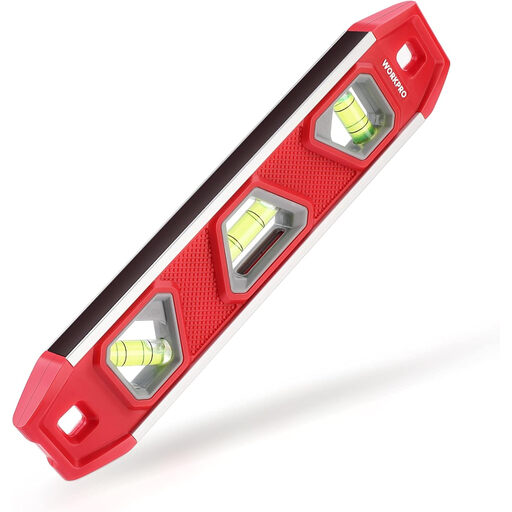
Why It Stands Out: This torpedo level expands on the functionality of a basic level by including three separate vials for checking 45°, 90° and 180° angles. A key feature is its top-read window, which allows you to view the horizontal vial from above—a practical solution when working at awkward heights or in cramped positions.
Pros:
Who is it for? This is a solid all-round tool for builders, carpenters and plumbers. Its combination of multiple angle measurements, a magnetic base, and enhanced visibility makes it a highly practical and versatile torpedo level for a wide variety of construction and installation tasks.
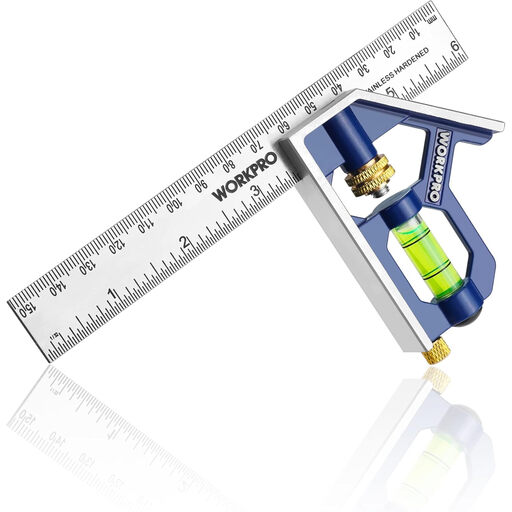
Why It Stands Out: More than just a level, this combination square is a multi-purpose layout and measurement tool. It combines a stainless steel ruler with a durable zinc alloy head, which includes a built-in spirit level and a removable scriber. The ruler features clear, laser-engraved metric and imperial scales for precise marking.
Pros:
Who is it for? This tool is indispensable for carpenters, joiners, engineers and meticulous hobbyists. If your work involves precise layouts, marking and angle checking in addition to levelling, this engineers square offers exceptional utility in a single package.
If these models do not quite match what you need, or if you are searching for a different size like a long builders level or a specialised digital level, there are many other options available.
Explore our full range of Levelling Tools to find the perfect fit for your toolkit. [https://www.joybuy.co.uk/explore/levelling-tool/AMP77t1P]
You can perform a simple test. Place your level on a flat, near-level surface and note the bubble's position. Then, rotate the level 180 degrees end-to-end and place it in the exact same spot. If the bubble is in the same position relative to the lines, your level is accurate. You can repeat this process on a vertical surface for the plumb vial.
A torpedo level gets its name from its tapered shape. It is a compact and versatile tool favoured by plumbers and electricians. Its small size makes it ideal for working in tight spaces, and it almost always includes a magnetic edge for attaching to pipes, conduit and metal framework, allowing for hands-free operation.
A spirit level's primary function is to determine if a surface is perfectly horizontal (level) or vertical (plumb). A combination square is a multi-purpose tool designed for marking and measuring. While it often includes a small spirit level, its main purpose is to verify and lay out precise 90° and 45° angles, measure depths and scribe accurate lines for cutting or assembly.