
24/7 Customer Support

Free returns

Same-day & Next-day Delivery

Quality Guaranteed

Unlock Your Welcome Offers: FREE Delivery | Up to 80% OFF | Free 30-day JoyPlus trial
Download the APP
Choosing the right tool for washing up might seem like a small decision, but the humble sponge scourer plays a central role in keeping a kitchen clean and hygienic. With options ranging from affordable multipacks to advanced cleaning tools and eco-conscious alternatives, finding the right one for your household can make daily chores more efficient. This guide is designed to help you navigate the choices, focusing on practical features to match your cleaning style and values.
As the Joybuy Product Recommendation Officer, my role is to filter through the market's offerings and present clear, objective information. Here, we will look at what makes a good kitchen sponge and highlight a few standout options for different needs.
Before diving into specific products, consider these key factors. A little thought here can save you from scratched pans or sponges that fall apart too quickly.
The abrasive side of a sponge scourer is its main feature, but not all are created equal. Standard green scouring pads are often very effective but can be too harsh for delicate surfaces, potentially scratching non-stick coatings, ceramic hobs or glassware. For these items, a non-scratch scourer is essential. These are typically made from different materials or have a less aggressive texture, providing cleaning power without causing damage. Always check the product information to see which surfaces it is safe for.
The lifespan of kitchen sponges depends heavily on their material and construction. Traditional sponges are often made from plastic-based foams, while others use cellulose (wood pulp), which is more absorbent. The scouring pad itself can be made from nylon, recycled fibres or even natural materials like loofah or coconut husks. A well-made dual-sided sponge should hold its shape and not have the scourer detach from the sponge after only a few uses.
For many households, sustainability is a growing priority. Conventional sponges contribute to plastic waste and can release microplastics into waterways. If this is a concern for you, look for eco-friendly sponges. These are often made from plant-based, renewable materials like wood pulp, cotton and flax. The most sustainable options are fully biodegradable sponges that can be composted at home, leaving no waste behind.
Here are three distinct options that cater to different priorities, from everyday value to high-performance cleaning and sustainability.
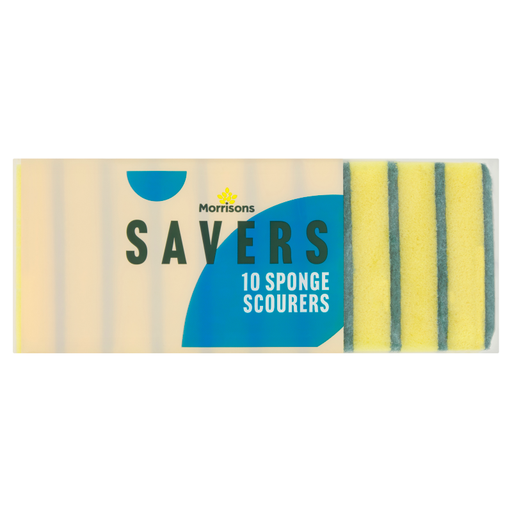
Why It Stands Out: This pack represents straightforward, practical value. For households that go through sponges quickly or simply need a reliable tool for daily messes, this 10-pack is a cost-effective solution. It features the classic dual-purpose design, with an absorbent sponge on one side and a traditional green scourer on the other for tackling tougher grime on suitable surfaces.
Pros:
Who is it for? This is an ideal choice for budget-conscious families, students or anyone who prioritises quantity and practicality for everyday cleaning tasks. It's a no-fuss workhorse for the kitchen sink.
Note: The scourer is not recommended for non-stick cookware or delicate surfaces.
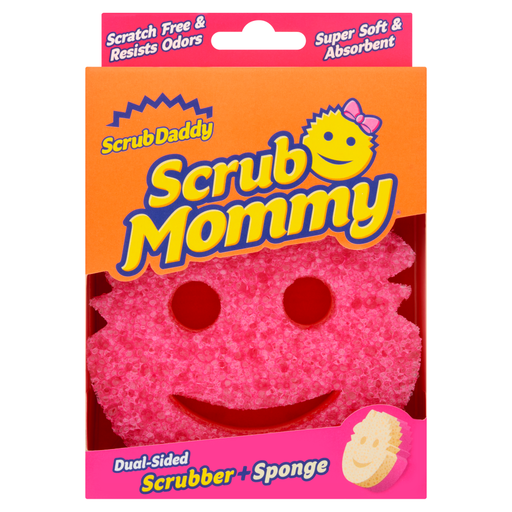
Why It Stands Out: The Scrub Mommy brings a technical edge to cleaning. Its key feature is the temperature-sensitive FlexTexture material, which becomes firm in cold water for tough scrubbing and soft in warm water for gentle cleaning. This is paired with a super-absorbent ResoFoam side for wiping and suds generation. It’s designed to be a multi-surface cleaning tool for the entire home.
Pros:
Who is it for? This is for the user who appreciates innovative cleaning tools and wants a single, versatile sponge that can handle everything from greasy pans to delicate glassware and bathroom surfaces without causing scratches.
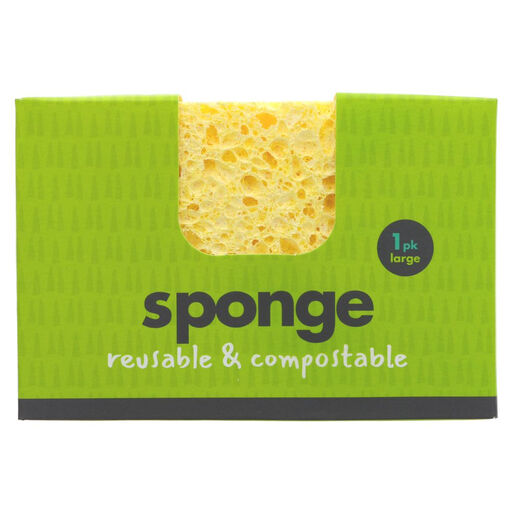
Why It Stands Out: This sponge is designed from the ground up with sustainability in mind. It is 100% plastic-free and made in the UK from plant-based materials: cotton, wood pulp and flax. Unlike plastic sponges, it will not release microplastics. When it reaches the end of its life, it can be added to a home compost bin to decompose completely, leaving zero waste.
Pros:
Who is it for? This is the perfect choice for anyone aiming to reduce their household's environmental footprint. If you are looking for effective eco-friendly sponges that perform well without contributing to plastic pollution, this is an excellent option.
If these selections don't quite fit your needs, or if you'd like to compare them with other heavy-duty cleaning pads or specialised dish sponges, there is a wider range to explore.
Browse our full collection of dish sponges and kitchen cleaning tools here.
For hygiene reasons, it is generally recommended to replace your kitchen sponge every 2 to 4 weeks, depending on usage. To help it last longer and stay cleaner, always rinse it thoroughly after use, squeeze out all excess water and leave it to dry in a well-ventilated area. Some sponges, like the Ecoliving option, can also be sanitised in the dishwasher or washing machine.
This depends on the sponge. Many modern and eco-friendly sponges are designed to be dishwasher-safe (top rack recommended) or machine-washable at low temperatures. This can help to sanitise them and extend their life. However, some basic sponges may not withstand the high heat and could degrade. Always check the manufacturer's instructions.
A regular scourer, often green, is made from abrasive synthetic fibres like nylon, which are very effective on stubborn, burnt-on food but can easily scratch delicate surfaces like non-stick coatings, glass or plastics. A non-scratch scourer uses less abrasive materials (such as specially designed polymers or natural fibres) that are tough enough to clean but gentle enough to avoid causing damage to those sensitive surfaces.