
24/7 Customer Support

Free returns

Same-day & Next-day Delivery

Quality Guaranteed

Unlock Your Welcome Offers: FREE Delivery | Up to 80% OFF | Free 30-day JoyPlus trial
Download the APP
There are few things more satisfying than presenting a flawless, towering cheesecake or a delicate, multi-layered mousse cake. And few things more frustrating than watching that masterpiece crumble because it’s stuck to the sides of the tin. For bakes that are too fragile to be inverted, a springform cake tin isn't just a piece of equipment; it's your key to a perfect finish.
The unique design, featuring a clasp on the side that allows the walls of the tin to expand and lift away, leaves your creation sitting perfectly intact on the base. But with so many options available, choosing the right one can feel overwhelming. This guide is designed to help you navigate the choices, focusing on the features that truly matter for home bakers in the UK, from those just starting out to seasoned enthusiasts.
Before we look at specific products, here are a few practical points to consider that will help you find the right tin for your kitchen.
The material of your tin directly impacts how evenly your cake bakes. Most modern baking tins are made from carbon steel, which offers excellent heat conduction and durability. Pay attention to the thickness of the metal; a thicker gauge (e.g., 0.8mm) provides better heat distribution, reducing the risk of hot spots that can lead to uneven baking. It also makes the tin more resistant to warping at high oven temperatures. A quality non stick cake tin surface is also essential, as it aids in a clean release and makes washing up far simpler.
The defining feature of a springform tin is its latching mechanism. A secure, easy-to-operate latch is crucial. It should close tightly to form a good seal, minimising the risk of batter leaking, which is a common concern with this type of pan. While a springform tin is different from a standard loose bottom cake tin (which has a base you push up from below), a well-made one should feel sturdy and reliable when locked.
The most common shape is a round cake tin, which is the standard for a classic cheesecake tin. Sizes typically range from 20cm (8 inches) to 26cm (10 inches). A 20-24cm tin will suit the majority of recipes. However, if you enjoy baking for different occasions or want more creative freedom, a cake tin set that includes various shapes and sizes can be an excellent value and a versatile addition to your bakeware collection.
Here are our recommendations for springform tins that offer great performance and utility for a range of baking needs.
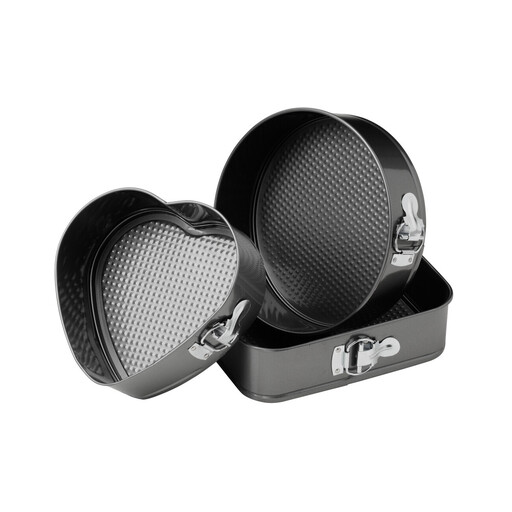
View Product: Essentials by Premier Mari Cake Tins Set of 3
Why It Stands Out: This set delivers exceptional versatility straight out of the box. It includes three different shapes—round, square and heart—making it a fantastic starting point for anyone looking to build their bakeware collection. Made from carbon steel with a non-stick coating, these tins are designed for easy release and straightforward cleaning. The springform sides detach cleanly from the base, simplifying the process of serving your bakes.
Pros:
Who is it for? This set is ideal for beginner bakers, families or anyone who loves having creative options without needing to purchase multiple individual tins. It’s a practical choice for everyday baking and special events alike.
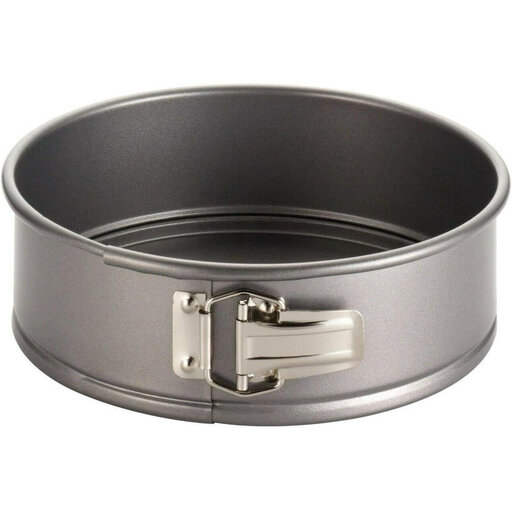
View Product: KitchenAid Metal Bakeware Springform 24cm
Why It Stands Out: For those who prioritise performance and durability, this KitchenAid springform pan is a standout. Its construction features a substantial 0.8mm metal thickness, which promotes even heat distribution and provides impressive resistance to bending or warping. The generous 24cm diameter is perfect for larger celebration cakes and family-sized desserts. Its non-stick coating is designed for reliable food release, which is critical when working with delicate layered tortes or cheesecakes where presentation is paramount.
Pros:
Who is it for? This tin is suited for the enthusiastic home baker who frequently tackles more ambitious projects and values robust, high-performance equipment that delivers consistent results.
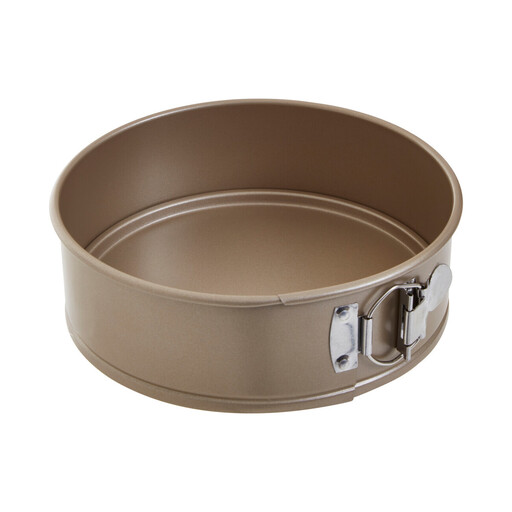
View Product: Maison by Premier From Scratch Cake Tin 20cm
Why It Stands Out: This springform tin proves that practical bakeware can also be beautiful. It features a distinctive satin champagne gold finish that adds a touch of elegance to your kitchen. Beyond its looks, it’s a highly functional 20cm round cake tin made from durable, BPA-free carbon steel. The springform mechanism is smooth and reliable, and the non-stick coating ensures your cakes release cleanly. Its standard size makes it a versatile workhorse for most cake and cheesecake recipes.
Pros:
Who is it for? This is an excellent choice for the style-conscious baker who wants a reliable, everyday tin that performs well and looks great. It’s perfect for those who appreciate thoughtful design in their kitchen tools.
If these recommendations aren't quite what you're looking for, or if you're interested in exploring other sizes, shapes or types of tins, there are many more choices available.
? Explore our full range of baking cake tins to find the perfect match for your next baking adventure.
1. What is the difference between a springform tin and a loose bottom cake tin? A springform tin has a ring-like side that can be expanded and removed via a latch or clasp. A loose bottom tin has a solid side and a separate flat base that you push upwards to release the cake. Springform tins are generally preferred for very delicate bakes like no-bake cheesecakes or mousse cakes, as there is no need to push against the base.
2. How can I stop my springform cake tin from leaking? For thinner batters, a simple trick is to line the base with a piece of parchment paper that is slightly larger than the base, allowing it to press up against the inside wall when you clamp the side on. For water baths (often used for cheesecakes), it's advisable to wrap the outside of the tin in a double layer of heavy-duty aluminium foil to create a waterproof barrier.
3. Can you bake a normal sponge cake in a springform tin? Yes, absolutely. A springform tin is a very versatile piece of bakeware. It works perfectly well for standard sponge cakes, fruit cakes and coffee cakes, offering the added convenience of easy removal without the need for inverting the tin.