
24/7 Customer Support

Free returns

Same-day & Next-day Delivery

Quality Guaranteed
Download the APP
Categories
Finding the right frying pan can feel like a significant kitchen upgrade. For those with modern induction hobs, a stainless steel induction frying pan offers a combination of durability, performance and a clean cooking experience. Yet, the market is filled with options, from traditional uncoated surfaces to advanced non-stick technologies. The challenge is to find a pan that not only heats evenly but is also built to last and aligns with a preference for healthy cooking.
This guide is designed to help you navigate the choices. We will look at the key features to consider when buying and present a few carefully selected recommendations that cater to different cooking styles and preferences.
Before diving into specific products, understanding a few key technical aspects can help you make a more informed decision.
The material and construction of a pan directly impact its heating performance. While a single layer of stainless steel is durable, it can be prone to hot spots. A tri-ply frying pan addresses this by sandwiching a layer of a highly conductive metal, like aluminium, between two layers of stainless steel. This construction distributes heat quickly and evenly across the entire cooking surface, giving you greater control and more consistent results, whether you are searing a steak or gently cooking an omelette.
The surface of your pan dictates your cooking technique and cleaning routine.
A truly versatile pan should be able to go from the hob to the oven. An oven safe frying pan allows you to finish dishes like a frittata or a thick-cut chop in the oven after searing it on the stovetop. Check the maximum temperature rating, as this can vary. Additionally, a wok pan with lid offers expanded functionality, enabling you to steam, braise and simmer, trapping heat and moisture for flavourful results.
Here are our recommendations for stainless steel induction pans, chosen to suit a range of cooking needs.
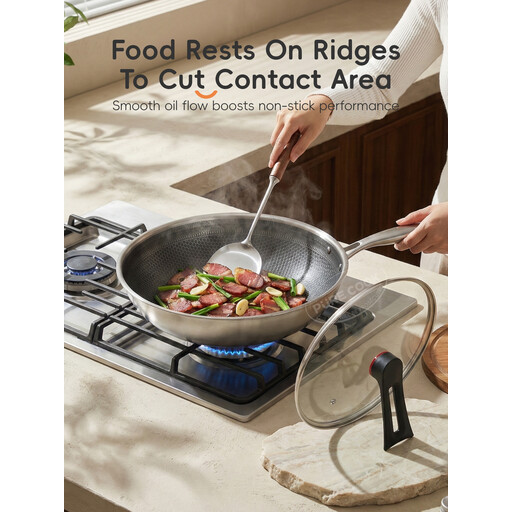
Why It Stands Out: This wok offers a unique approach to non-stick cooking. Instead of a chemical coating, it features a single-screen honeycomb texture etched into the 304 stainless steel. This pattern creates a physical barrier, elevating food on a cushion of air and oil to minimise sticking. Its large 32 cm diameter and included glass lid make it exceptionally versatile.
Pros:
Who is it for? Home cooks who enjoy Asian cuisine or want a large, multi-purpose pan for one-pot meals. It is an excellent choice for those seeking a non-chemical, scratch resistant pan for healthy cooking.
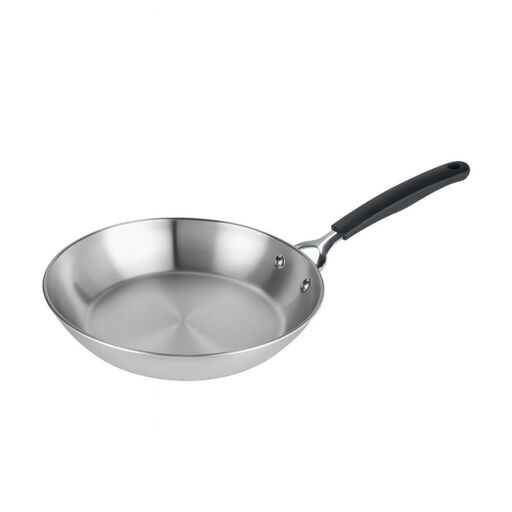
Why It Stands Out: This pan is for the purist. As a fully uncoated stainless steel pan, it is built for high-heat cooking techniques like searing and deglazing. The mirror-polished finish is robust, and its encapsulated steel base provides the even heating necessary for precise control.
Pros:
Who is it for? Culinary enthusiasts who appreciate the performance and control of a traditional stainless steel surface and want a pan that will withstand years of heavy use.
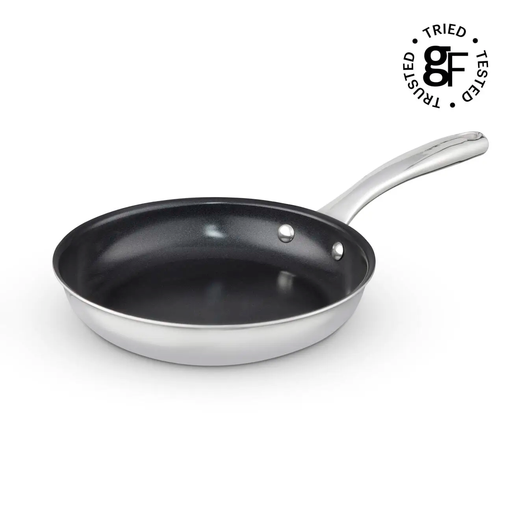
Why It Stands Out: This pan combines two of the most sought-after features: tri-ply construction and a superior ceramic non-stick coating. The result is a pan that heats with the precision of a professional model while offering the convenience of easy-release cooking. It is also oven safe to a high temperature of 220°C.
Pros:
Who is it for? The home cook who wants the best of both worlds: the professional-grade heating of a tri-ply frying pan and the everyday convenience of a high-quality, healthy cooking pan with a non-stick surface.
While these three pans represent excellent choices for different needs, your perfect pan might have a different size, weight or specific feature. If you are still searching, we invite you to explore our broader collection.
Browse our full range of stainless steel induction pans to find your ideal match.
1. How do you cook with an uncoated stainless steel pan without food sticking? The key is proper heat management. First, heat the dry pan over a medium heat for a minute or two. Add a small amount of oil and let it heat until it shimmers. This creates a temporary non-stick layer. When you add your food, it should sizzle immediately, which helps prevent it from sticking. Avoid moving the food too early; it will release naturally once a crust has formed.
2. Is a tri-ply frying pan worth the investment? For those who cook regularly and value precision, a tri-ply frying pan is a worthwhile investment. The superior heat distribution prevents hot spots, leading to more evenly cooked food and reducing the risk of burning. This construction also enhances the pan's durability, meaning it will maintain its performance for many years.
3. Are ceramic non-stick pans safe and durable? Modern ceramic non stick pan coatings are manufactured without PFOA or PTFE, making them a popular choice for health-conscious cooks. In terms of durability, they are generally more robust than traditional non-stick coatings. However, to prolong their lifespan, it is advisable to avoid using metal utensils, high heat for extended periods and sudden temperature changes (like rinsing a hot pan with cold water). Handwashing is also often recommended to preserve the coating.