
24/7 全天候客户支持

免费退货

当日/次日达

品质保障

开启新人专享福利: 全场免邮 | 低至 2 折 | 免费试用 30 天 JoyPlus 会员
下载 Joybuy
A reliable stock pot is the unsung hero of the British kitchen. It’s the vessel for hearty Sunday stews, nourishing winter soups and big batches of pasta sauce. Yet, choosing one can be surprisingly frustrating. Many of us have bought a promising-looking pot, only to find it warps after a few uses, the handle becomes dangerously hot, or it simply refuses to work properly on our induction hob.
As the Joybuy Product Recommendation Officer, my role is to help you navigate the market and avoid these common purchasing mistakes. Before you spend your hard-earned money, let’s look at the three most common pitfalls that catch out UK buyers.
To avoid these traps, focus on a few core features. Understanding these will empower you to select a soup pot or stew pot that will serve you well for years.
The material of your pot dictates its performance, durability and maintenance.
stainless steel cooking pot is non-reactive, meaning it won't impart a metallic taste to acidic foods like tomatoes. It's a reliable choice for everything from boiling potatoes to simmering broth.casserole dish or Dutch oven, this material is prized for its exceptional heat retention and even distribution. It excels at slow-cooking, braising and baking. The enamel coating provides a non-reactive, easy-to-clean surface, combining the benefits of cast iron with modern convenience.non-stick pot, look for modern ceramic coatings. Many are now made without common chemicals like PFAS, PFOA and lead. These surfaces are ideal for cooking delicate items or for those who wish to use less oil, but it's important to follow care instructions (like avoiding metal utensils) to prolong their life.Beyond the main material, the construction details are what separate a great pot from a mediocre one.
large cooking pot with lid is crucial for controlling heat and moisture. Tempered glass lids allow you to monitor your cooking without letting heat escape, while sturdy stainless steel lids are incredibly durable.Instead of a one-size-fits-all approach, the right pot depends on your cooking style. Here are a few options from our catalogue, matched to different UK household needs.
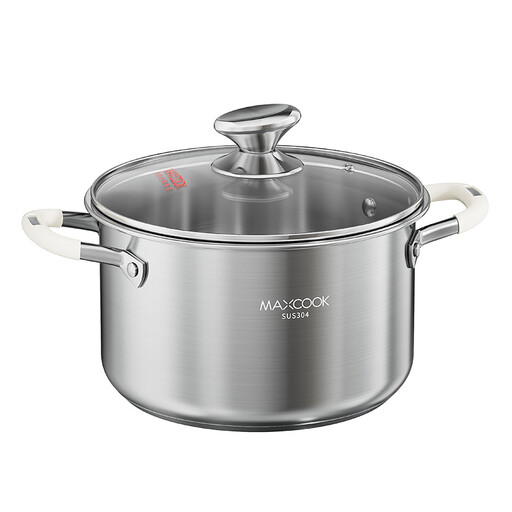
Why This Fits Their Persona: This is an ideal all-rounder for a busy family kitchen. The 4.3-litre capacity is perfect for making a bolognese, a curry or soup for 3-4 people without taking up excessive cupboard space. It's a practical workhorse for daily meals.
It features silicone-wrapped handles, directly addressing the safety issue of dangerously hot metal. Its compatibility with all cooktops, including induction, is backed by a solid construction suitable for modern UK kitchens.
Made from durable 304 stainless steel for longevity and healthy cooking. The included glass lid allows for easy monitoring of food as it simmers.
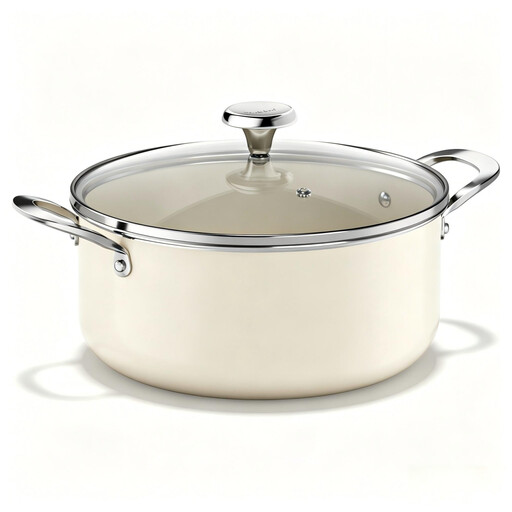
Why This Fits Their Persona: For the cook who prioritises healthy materials and easy clean-up, this pot is an excellent fit. It's ideal for batch-cooking chili, stews or soups with minimal oil, and its lightweight aluminium body makes it easy to handle.
It directly counters the pitfall of poor non-stick coatings. The advanced ceramic surface is explicitly stated to be free from Teflon, PFAS, PTFE and PFOA, offering peace of mind and preventing premature peeling.
The thickened aluminium base ensures rapid, even heating without hot spots. Its generous 5-quart (~4.7L) capacity is great for meal prepping.
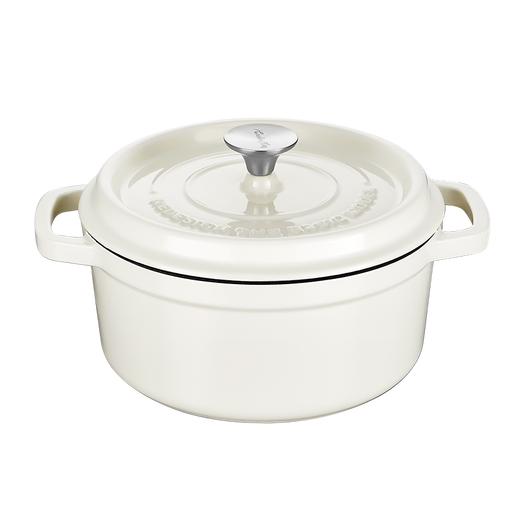
Why This Fits Their Persona: This is a classic Dutch oven, perfect for anyone who loves making rich, slow-cooked dishes. Its heavy-duty cast iron construction is built for low-and-slow cooking, developing deep flavours in stews, casseroles and pot roasts.
Unlike lightweight pots that can create hot spots, this pot's heavy cast iron body guarantees even, consistent heat. The durable enamel coating provides a reliable, easy-to-clean surface that won't peel or degrade like cheap non-stick.
Superior heat retention keeps food warm long after it's off the hob. Its versatility allows it to go from stovetop to oven, making it a multi-functional piece of cookware.
We have compiled a complete, real-time list of products that fully satisfy these strict selection criteria and UK safety regulations.
A stock pot is typically taller and thinner, designed for simmering liquids like stocks and broths or for boiling large items like pasta. They are usually made of lighter materials like stainless steel. A Dutch oven, or casserole dish, is shorter, wider and made of heavy-duty enameled cast iron. It's designed for slow-cooking, braising and stewing, providing very even, sustained heat.
The most basic test is to see if a magnet sticks firmly to the bottom of the pot. For better performance, look for a pot with a thick, heavy base that covers a large surface area. Product descriptions that mention a "multi-layer encapsulated magnetic bottom" or "tri-ply" construction are good indicators of a quality induction hob pot designed for efficient heating.
For most soups, stews and broths, a stainless steel cooking pot is an excellent choice. It's durable, heats evenly, and is non-reactive with acidic ingredients like tomatoes or wine. A non-stick pot can be useful if you are first sautéing vegetables and want to ensure nothing sticks, but a quality stainless steel pot with a heavy base will also perform this task well with a little oil and proper heat management.