Existing-tablet floor-plan sketchers
If you already own an iPad, Galaxy Tab or Surface, your starting point is a pen that works with that exact device and the app you use to draw and revise plans.


Choose an active stylus that supports the exact tablet you own, then check whether your floor-plan app provides the drawing, measurement and export tools you need. Apple Pencil, Samsung S Pen and Surface Slim Pen serve different devices; pen controls or magnetic charging matter only when your tablet and workflow support them.
If you already own an iPad, Galaxy Tab or Surface, your starting point is a pen that works with that exact device and the app you use to draw and revise plans.
If you regularly trace layouts, add labels or revise small details, consider which drawing controls your tablet and app actually support. A more capable pen does not, by itself, make a plan accurate to scale.
If sketching is part of a prolonged work session, consider the screen position, desk setup, glare and opportunities to change activity alongside the pen.
Start with the exact tablet model, then decide which drawing and floor-plan app functions your work requires. These concerns reflect different primary needs among consumers choosing a pen for home-office floor-plan sketching.
| Concern | What to check | Who this matters to |
|---|---|---|
| Tablet and charging compatibility | Match the exact tablet model and generation to the pen maker’s compatibility list; check how that combination charges. | I already own a tablet and need a pen that works and charges with it before any other feature matters. Around 36% of consumers put compatibility first. |
| Drawing control | Check which pressure, tilt, palm-rejection or shortcut functions your chosen app supports on the compatible device. | When I sketch walls, labels and revisions, I want drawing controls that suit the way I correct lines. For around 29% of consumers, controllable input is the primary need. |
| Floor-plan workflow | Confirm the app’s measurement, scanning, desktop-continuation and export features on your intended device. | I need to turn a sketch into a plan I can continue, measure or share, so the app workflow matters more to me than pen controls. Around 21% of consumers put that workflow first. |
| Prolonged desk use | Consider screen position, desk arrangement, glare and changes of activity during longer sessions. | If I spend long stretches planning at my desk, I need a workable screen and seating arrangement as well as a pen. Sustained desk use comes first for around 14% of consumers. |
A genuine Apple Pencil, S Pen or Surface Slim Pen can still be unsuitable for a particular tablet generation.
Find your tablet’s exact model and compare it with the pen maker’s compatibility list before ordering.
Planner 5D says some advanced features depend on the device, while magicplan describes different room-scanning support for iOS and Android.
Check the app’s current device requirements and the drawing, scanning and export functions you intend to use before settling on a tablet-and-pen combination.
A stylus can help you draw a line, but its specifications cannot establish a room’s dimensions or a plan’s scale.
Use the app’s measurement and scale tools deliberately, and independently verify physical dimensions before relying on a plan for purchases or building work.
Pen choice is only one part of prolonged tablet use. The Health and Safety Executive says employers must assess workstations when employees use display screen equipment daily as part of normal work, continuously for an hour or more.
Consider the desk, seating, screen position and glare; if those work-use conditions apply, ask your employer about a workstation assessment.
Apple Pencil options are for compatible iPads. Pencil Pro offers additional tool controls, while Pencil (USB-C) offers a simpler cable-charged route for sketching and annotation.
Samsung’s S Pen for the Tab S10 and Tab S9 Series is an option for owners of a compatible tablet in those series.
Surface Slim Pen is a route for compatible Surface users who want to draw directly in a Windows workflow.
This choice is for sketching and annotating floor plans on an iPad that supports Apple Pencil (2nd Generation). Confirm your exact iPad model and intended app before choosing it.
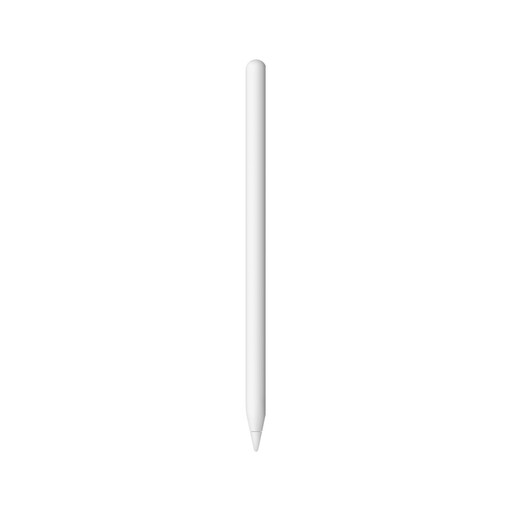 Image unavailable
Consider this pen for drawing and marking up plans if your iPad is compatible. Joybuy describes low-latency drawing input; check your app’s measurement and export tools separately, and verify physical dimensions where accuracy matters.
No. Apple lists specific compatible iPads for each Pencil, Samsung specifies the referenced S Pen for the Tab S10 and Tab S9 Series, and Surface Slim Pen features depend on compatible Surface hardware. Check the exact tablet model and charging arrangement before buying.
No. Pressure sensitivity affects drawing input, not the accuracy of room measurements. Check your app’s scale and measurement tools, then verify physical dimensions independently when the plan will guide purchases or building work.
Magicplan says its room-scanning features do not support Android devices. If scanning is central to your plans, check magicplan’s current device requirements before choosing a tablet; drawing a plan and scanning a room are different workflows.
For employees, the Health and Safety Executive says employers must assess workstations when display screen equipment is used daily as part of normal work, continuously for an hour or more. That condition does not make an assessment a requirement for every personal tablet purchase.
Avoid repeatedly removing and reinserting the tip unnecessarily. Microsoft warns that excessive cycles can damage internal parts and cause inking failures; follow its instructions when a tip does need attention.